
Loris: restaurant interior photography in Doha, from first light to golden hour
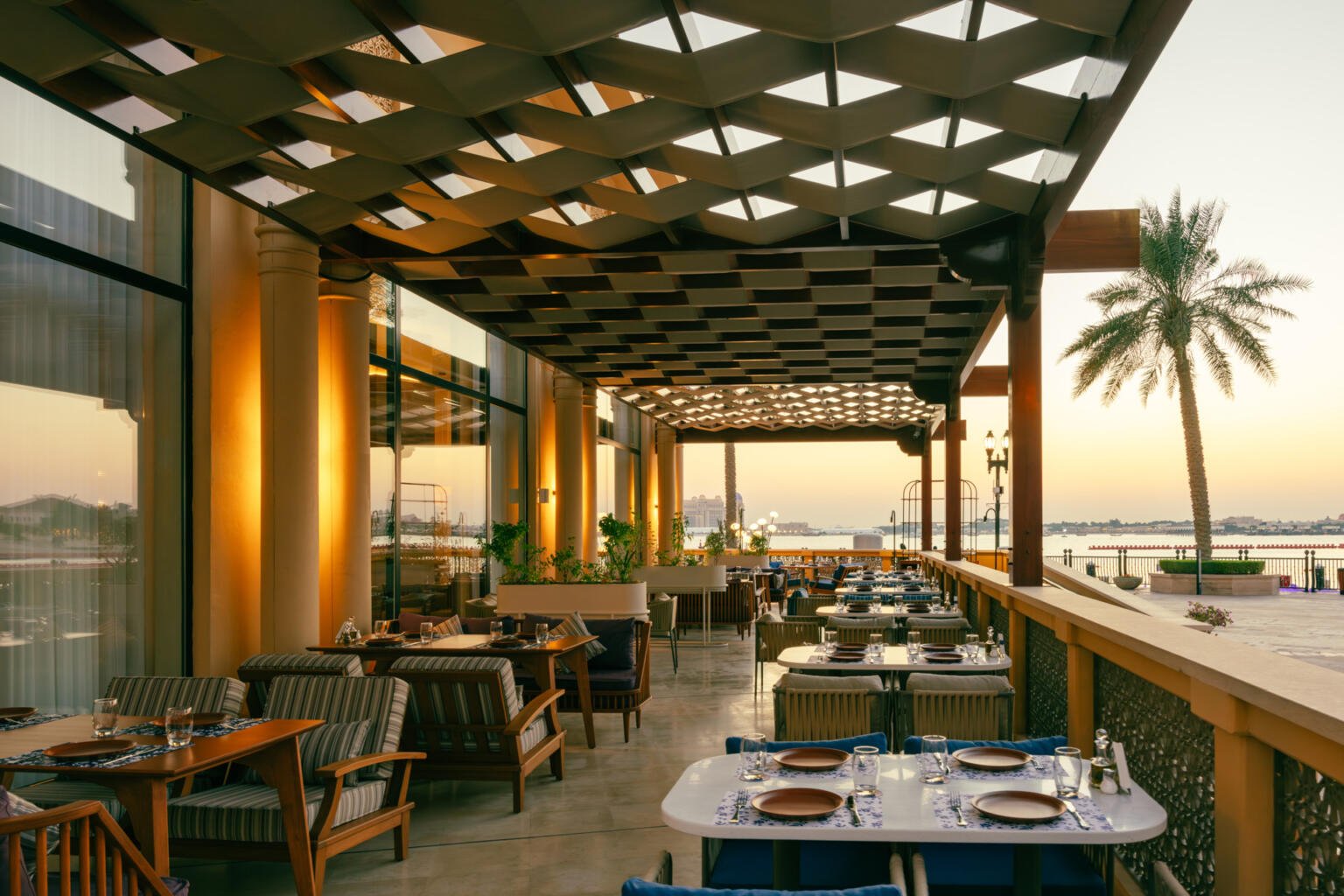
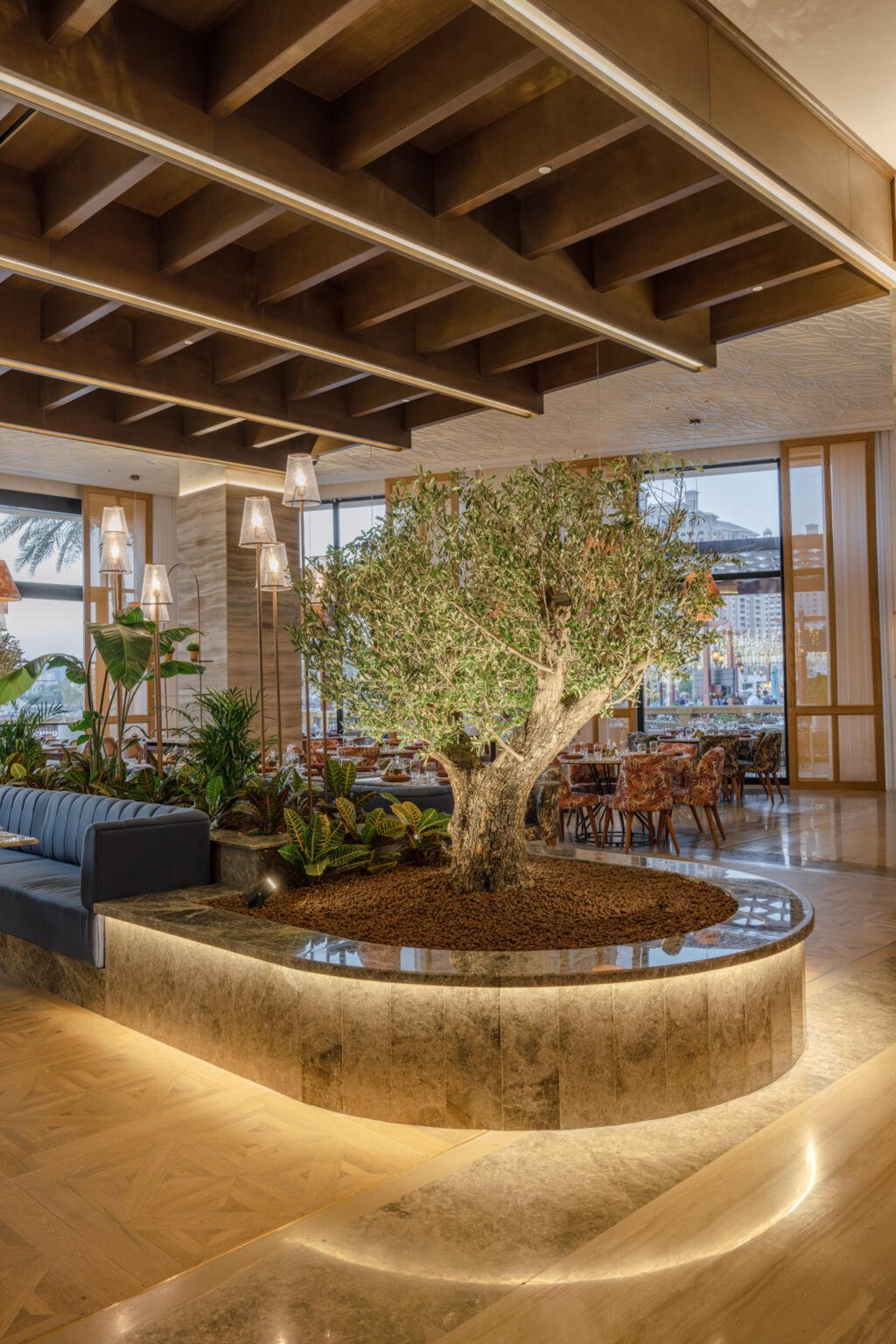
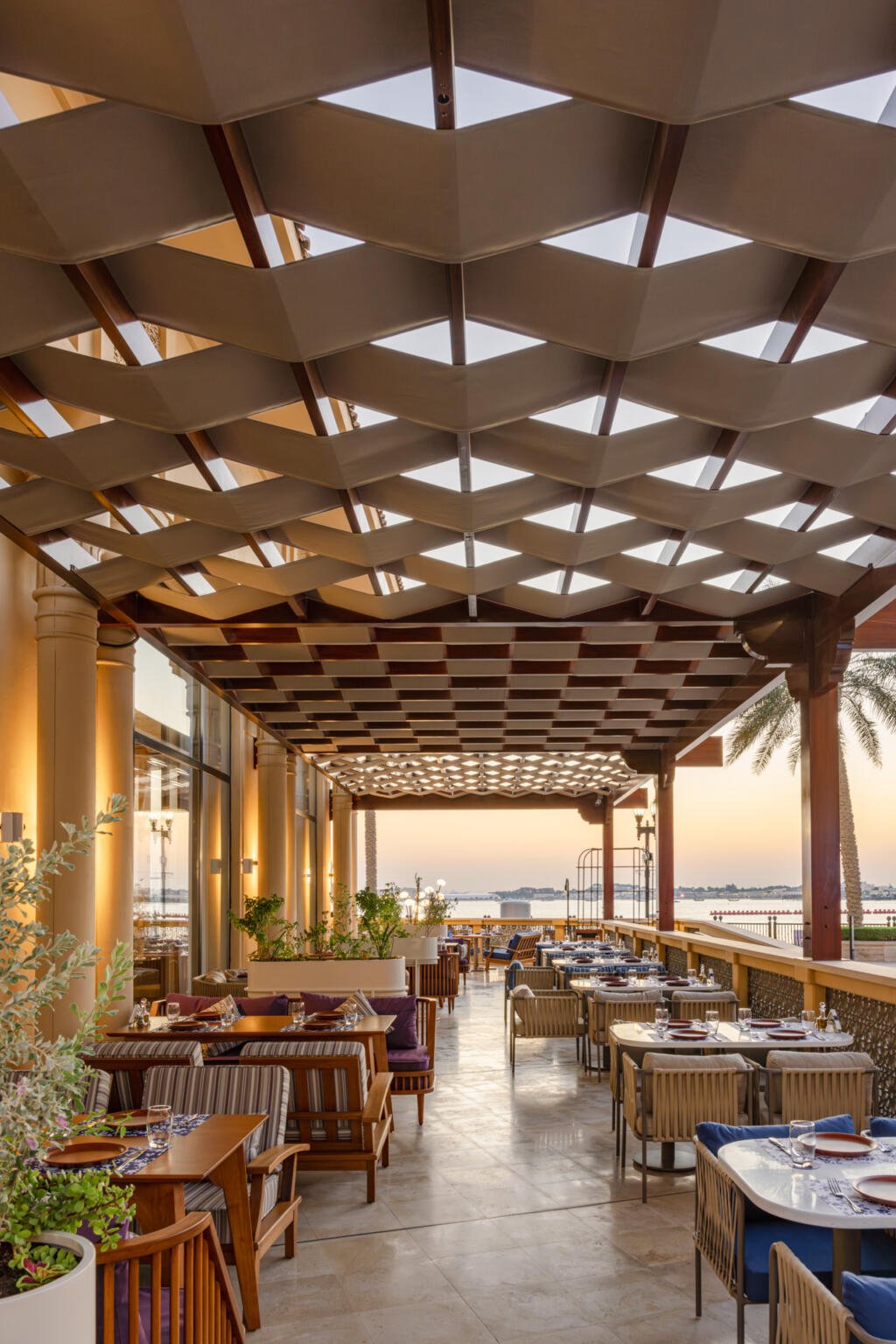
A waterfront restaurant with a timber lattice terrace, an olive tree at its heart and lanterns in printed fabric. I photographed Loris inside and out, so every image carries the same warmth guests feel when they walk in.
- Project
- Loris restaurant
- Location
- Waterfront, Doha
- Discipline
- Interior & architecture photography
- Coverage
- Exterior, terrace, dining rooms, details
Photograph the room the way it is lived in
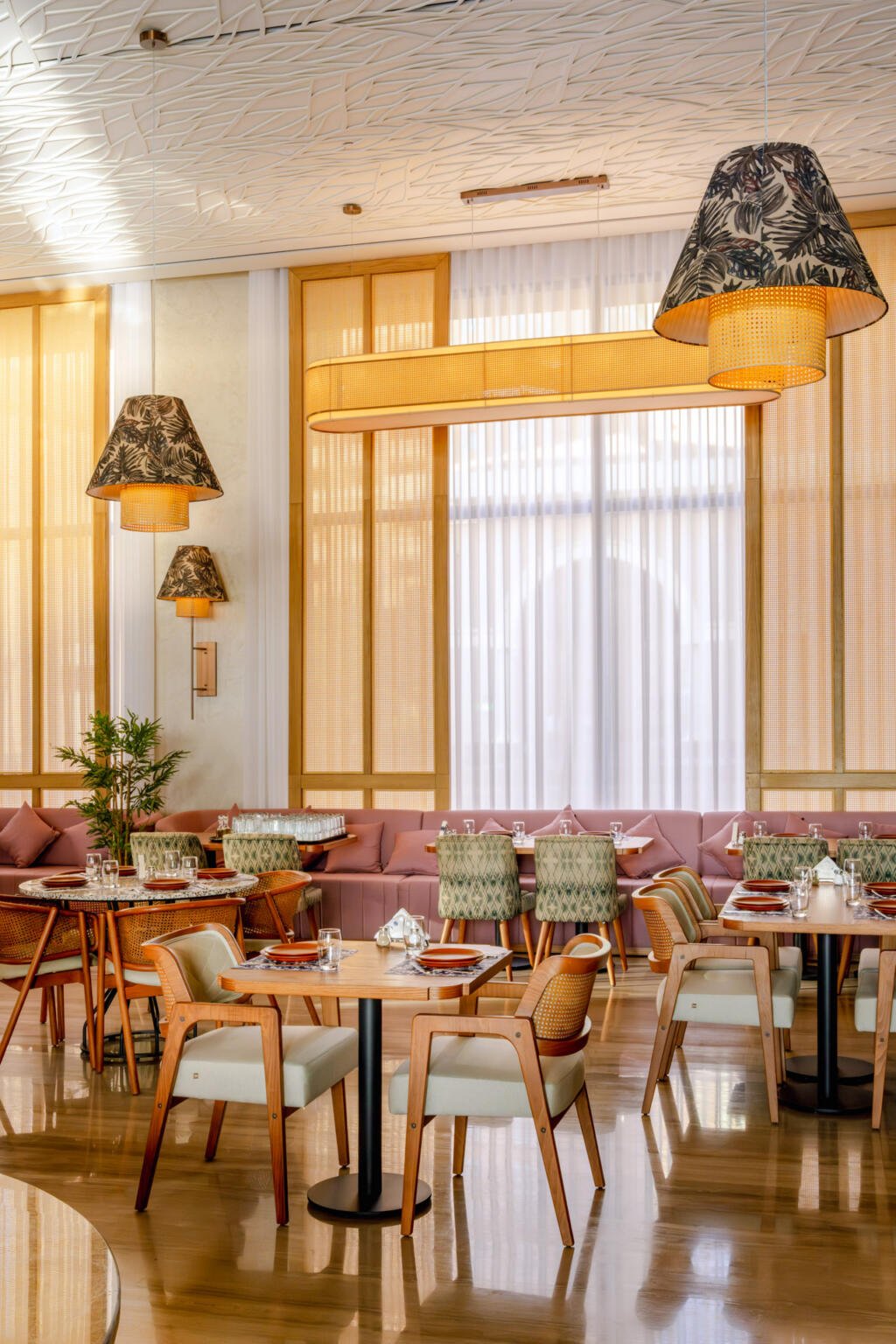
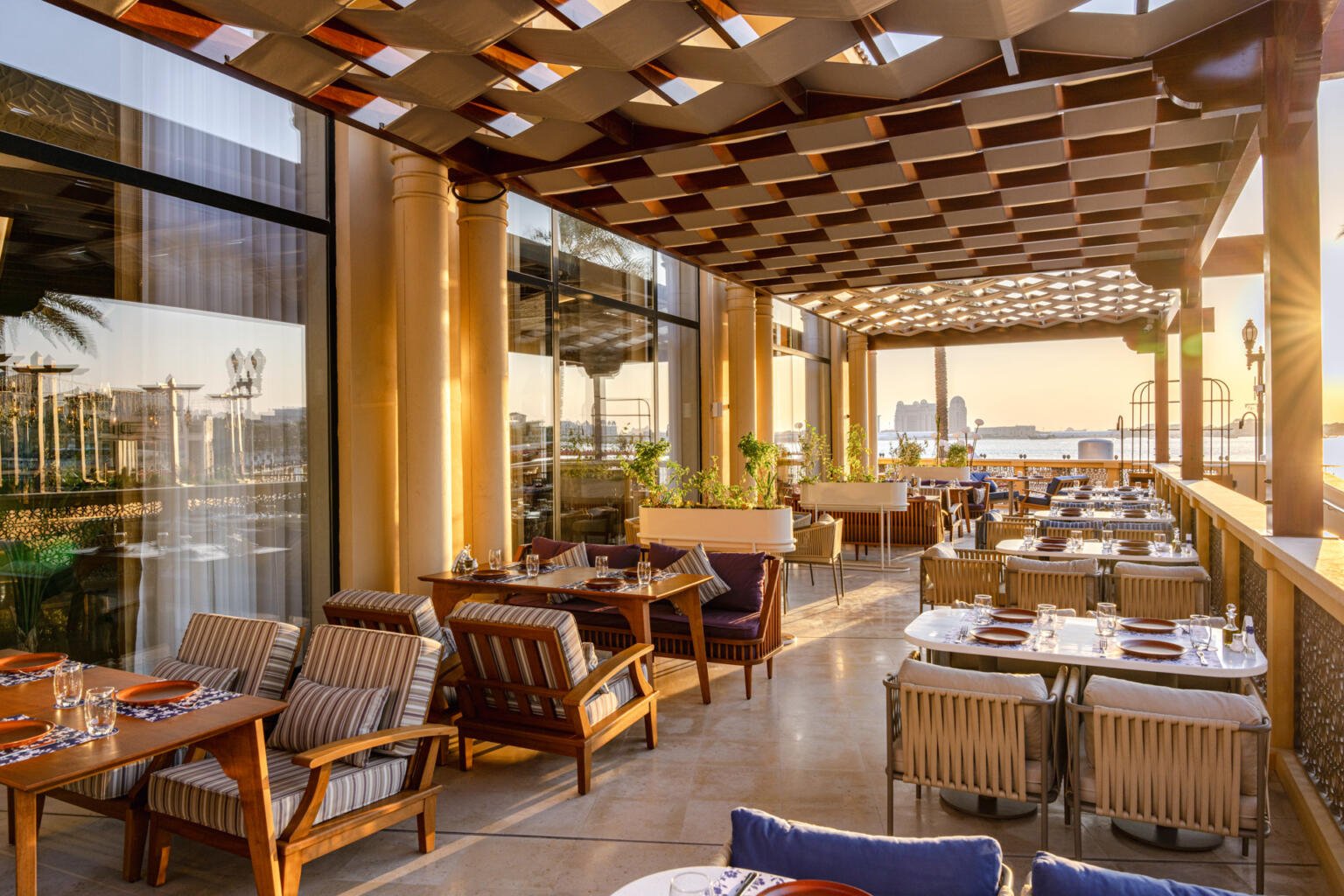
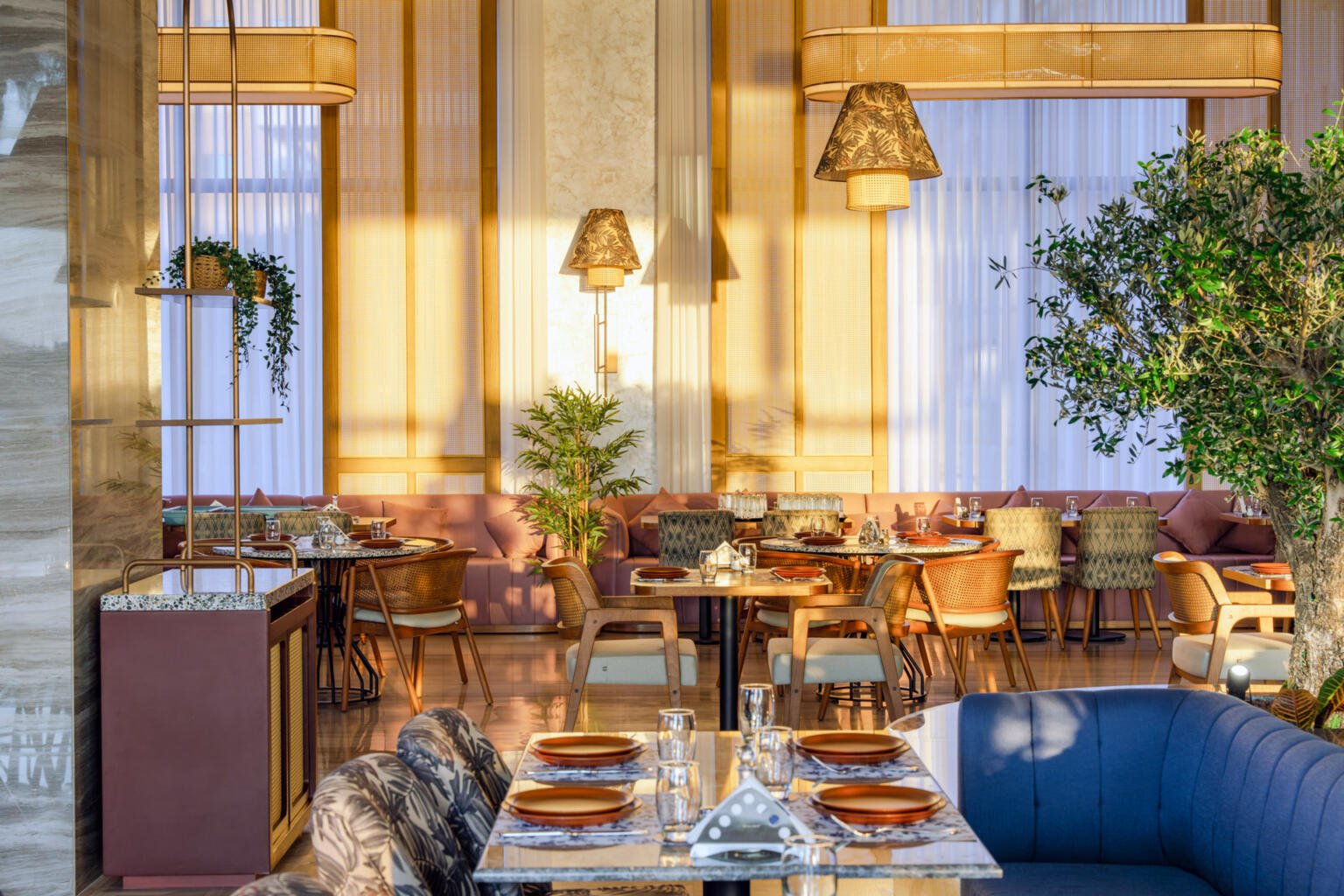
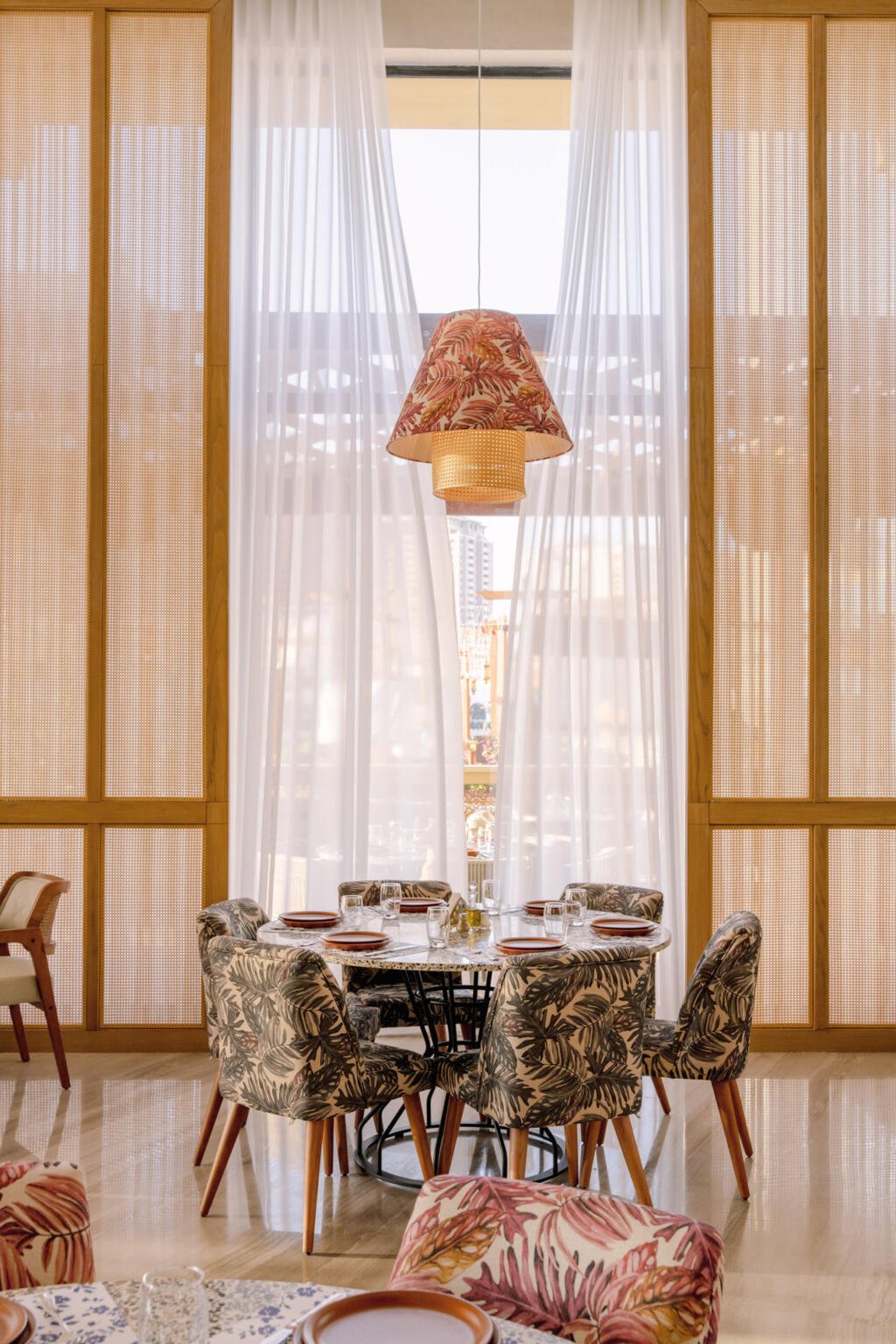
A restaurant interior is easy to flatten. Shoot it empty and grey, and the design reads as furniture; shoot it with the lights on and the sun in the right place, and it reads as an invitation. At Loris the architecture does a lot of the work: tall windows with sheer curtains, carved panels, pendant lanterns in printed fabric, blue banquettes, and a terrace roof of timber lattice that throws a pattern of light across every table.
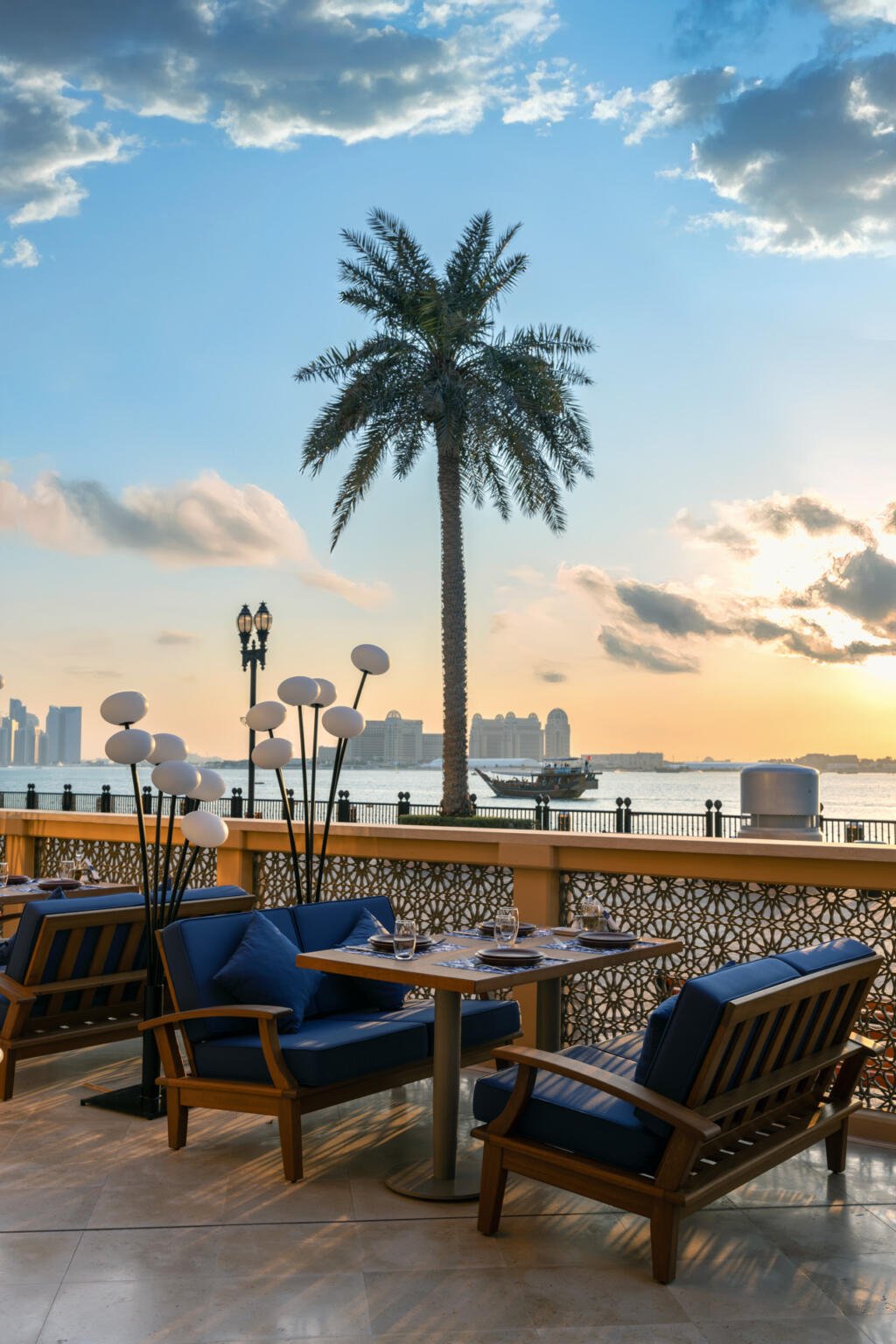
So the plan followed the light. Wide frames for the terrace as the sun dropped over the water, straight verticals for the dining rooms, and close details for the materials that make the place feel crafted rather than decorated.
- Exterior, terrace and every dining room in one coordinated set.
- Verticals true, windows held, warm light kept warm.
- Every frame delivered and shown whole, as composed.
On the water
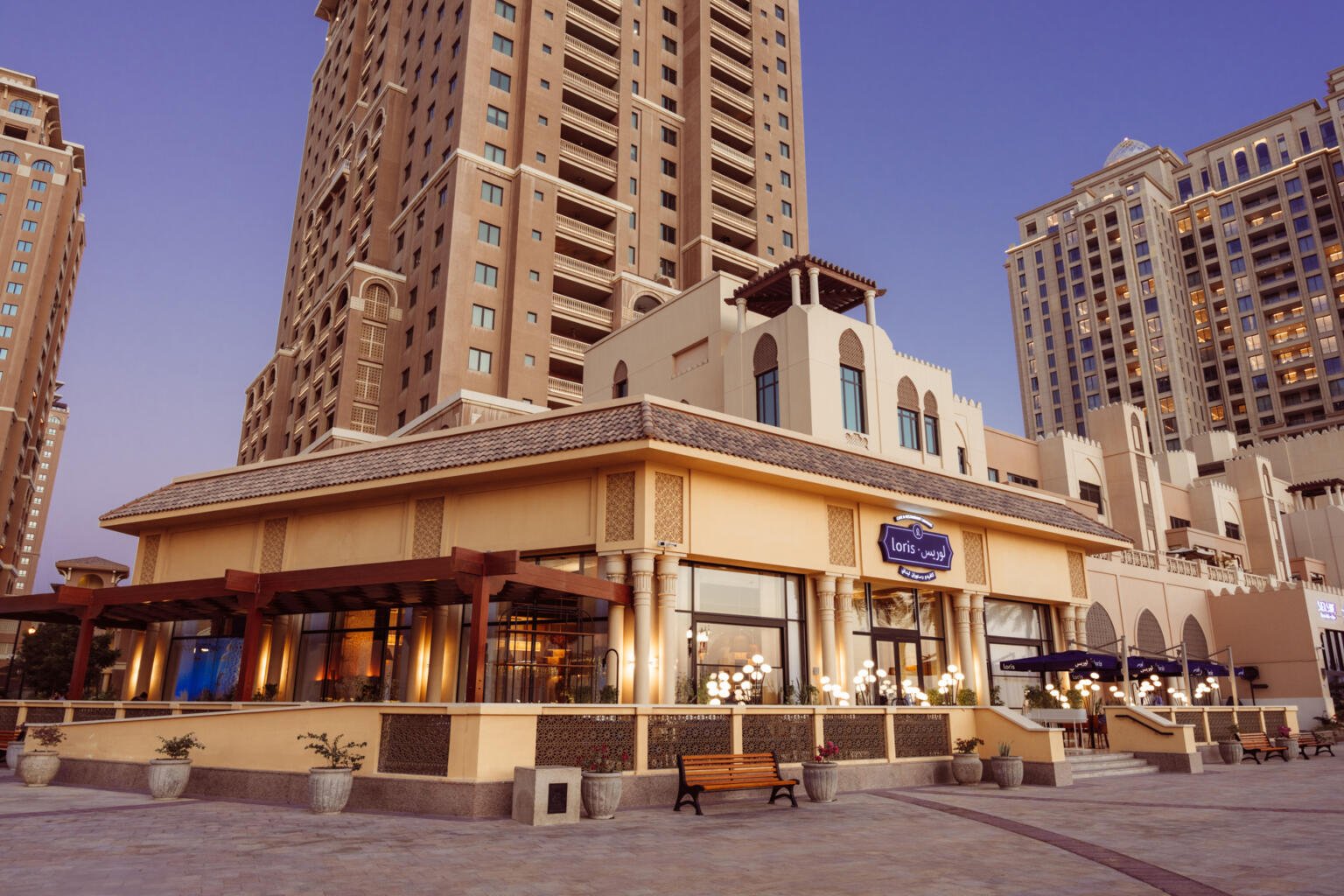
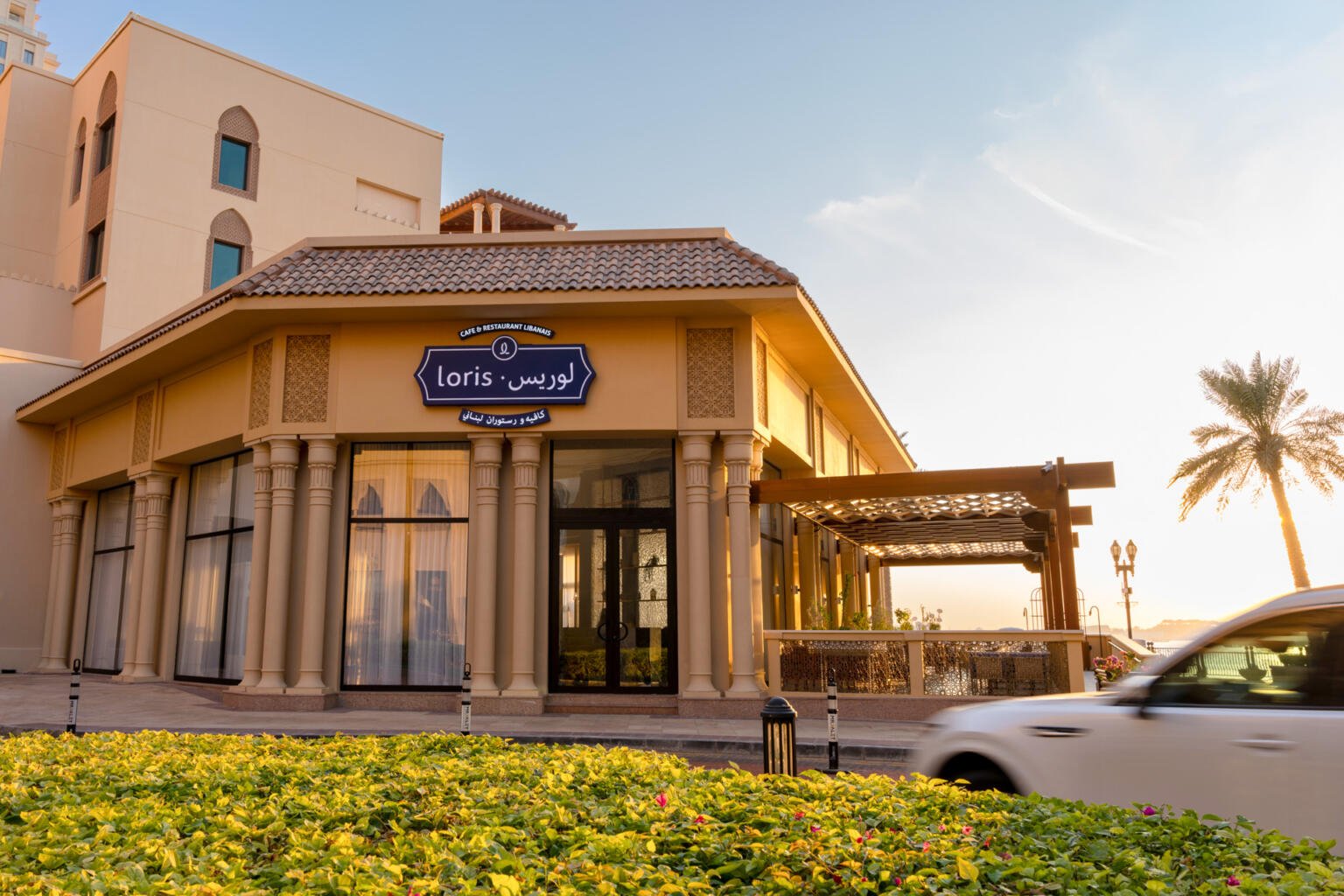
The building sits on the waterfront with the city’s towers behind it. The exterior frames give context first: where the restaurant is, how it meets the promenade and how its terrace opens to the sea.
Swipe or scroll · Exterior and terrace
An olive tree, lanterns and blue velvet
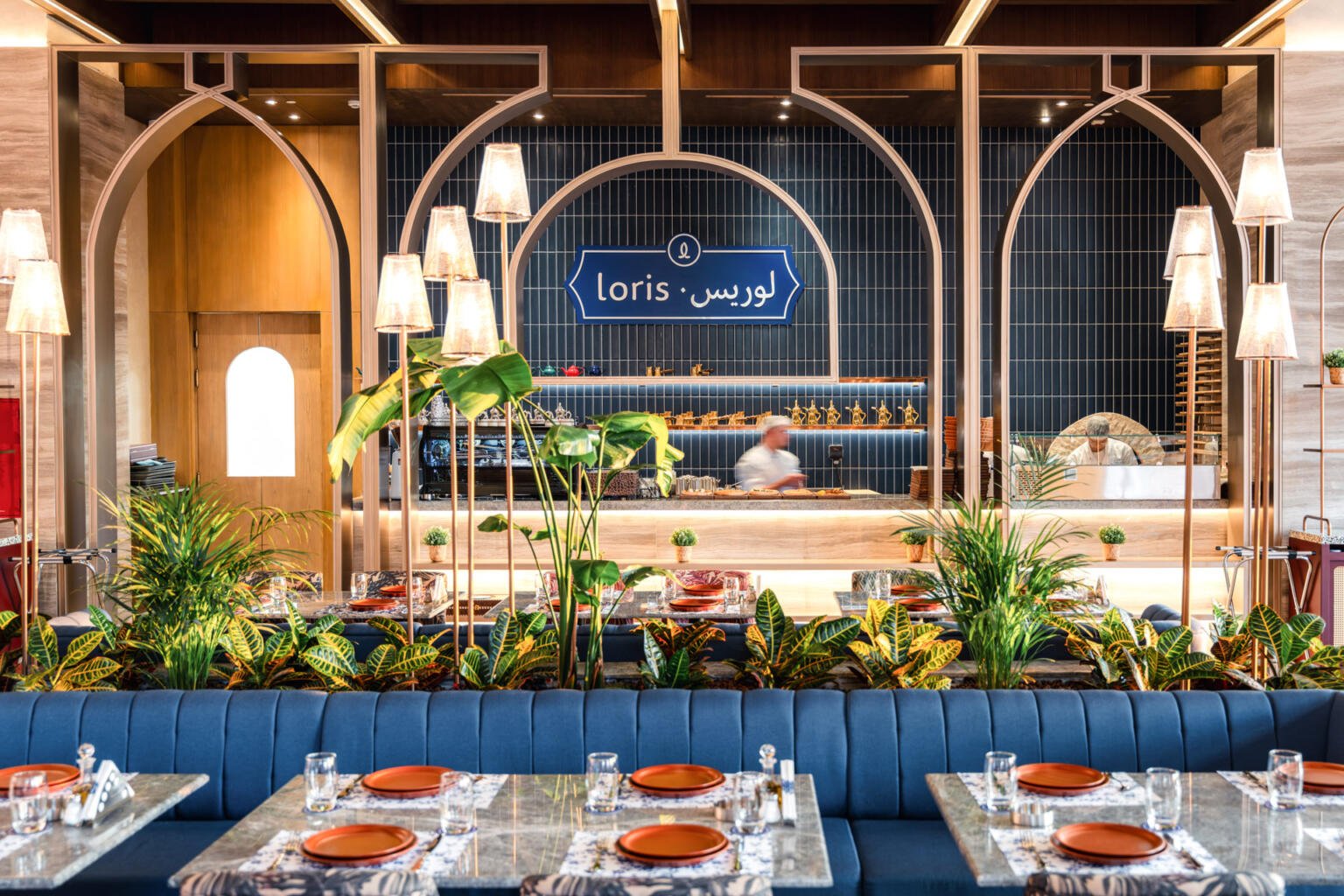
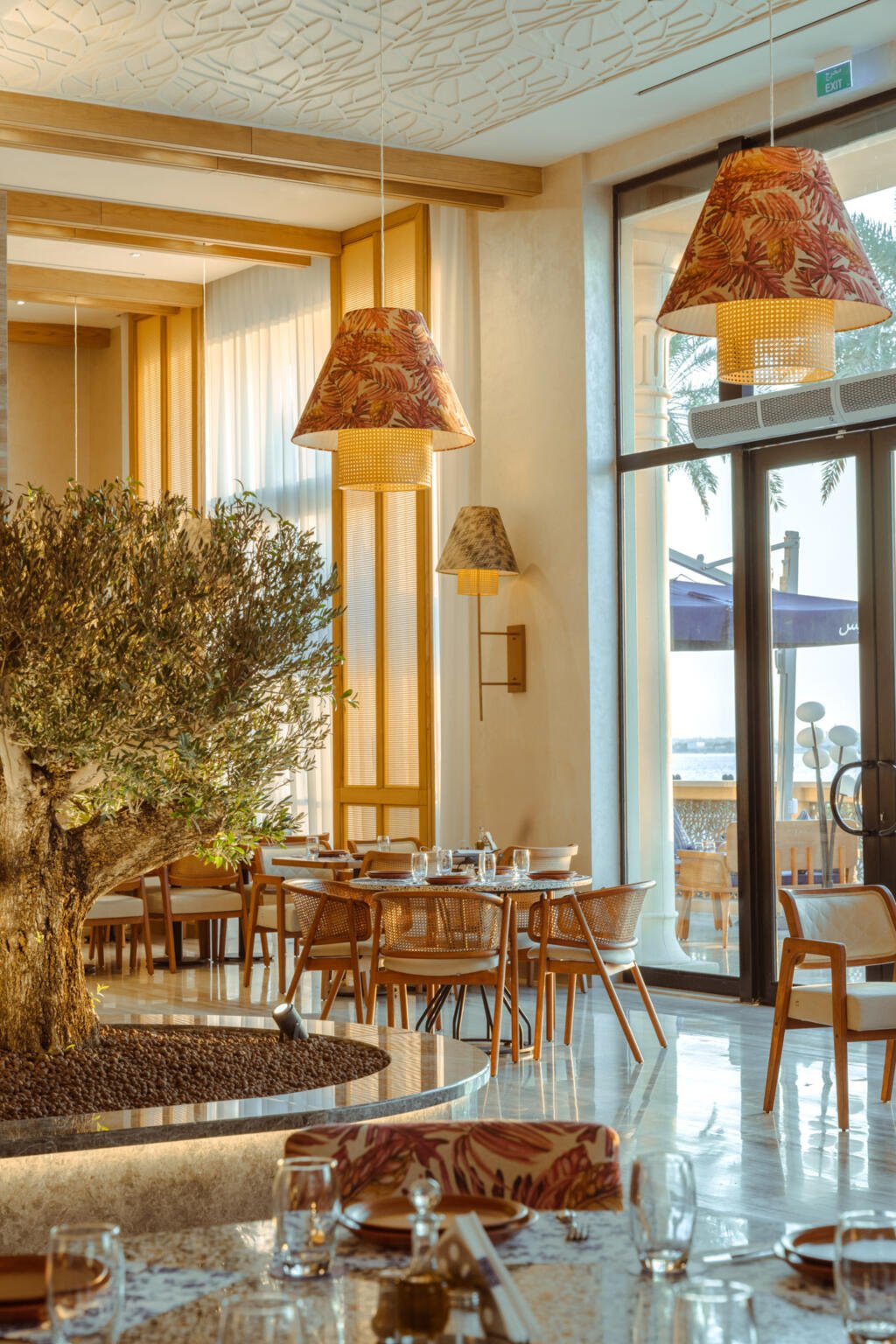
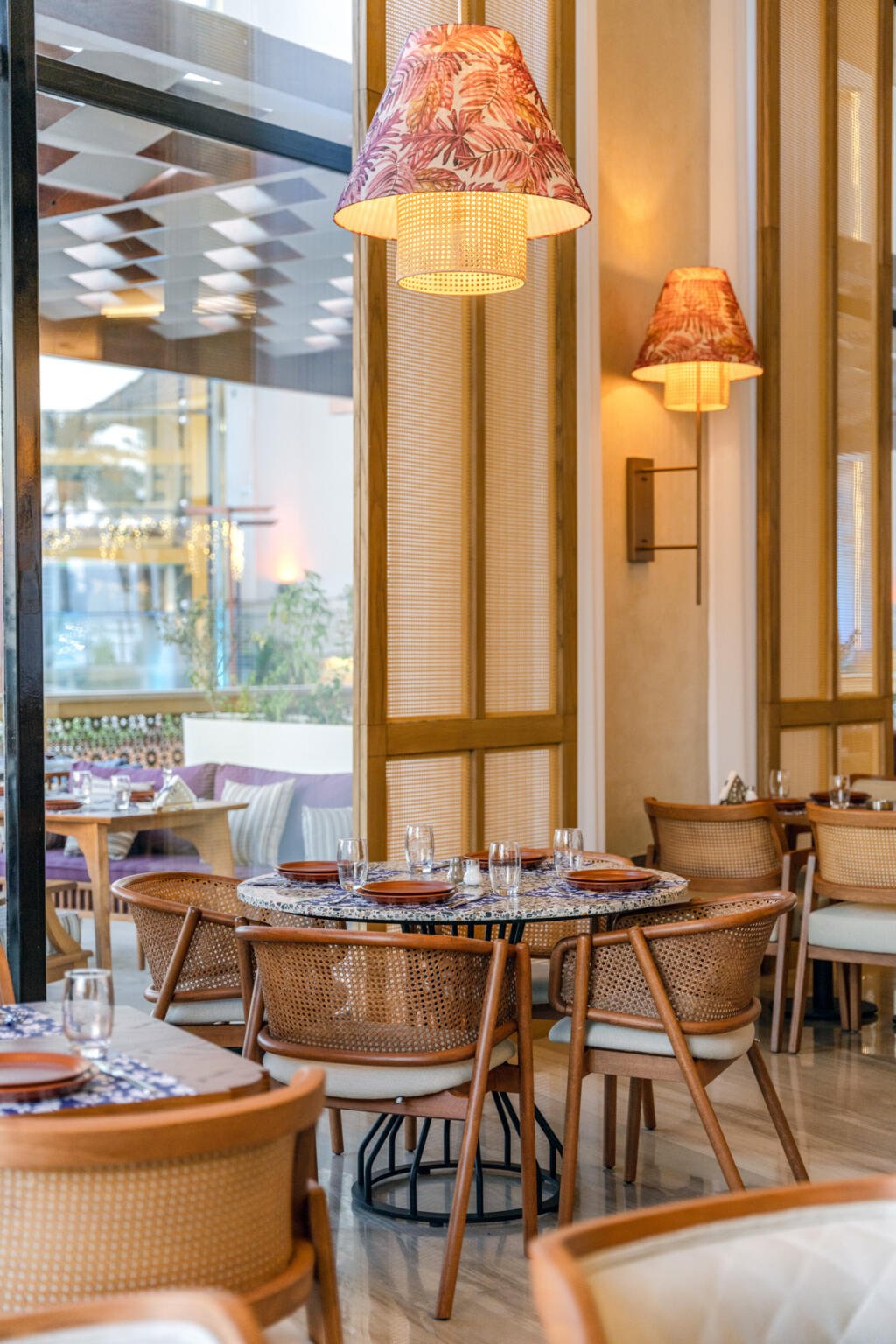
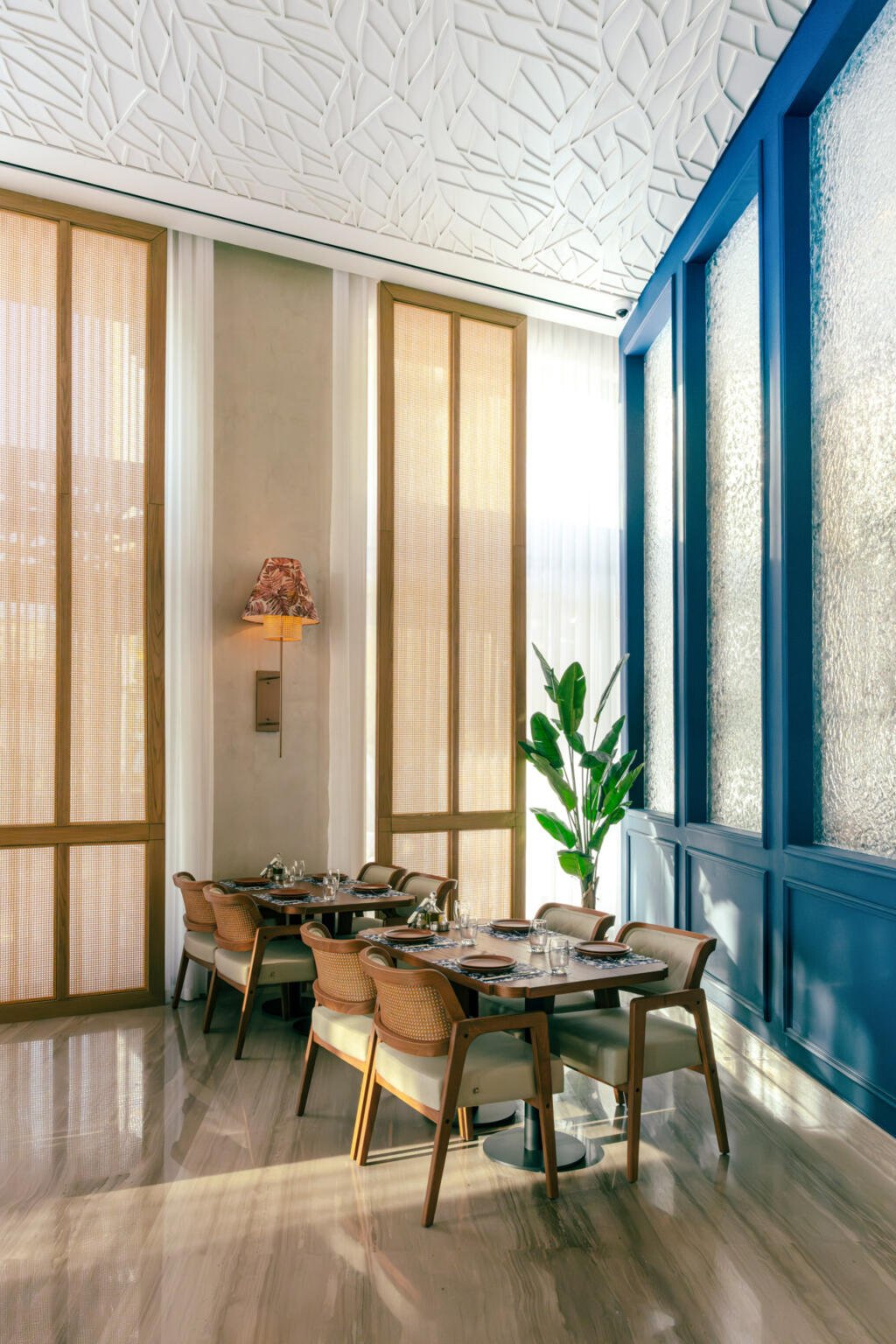
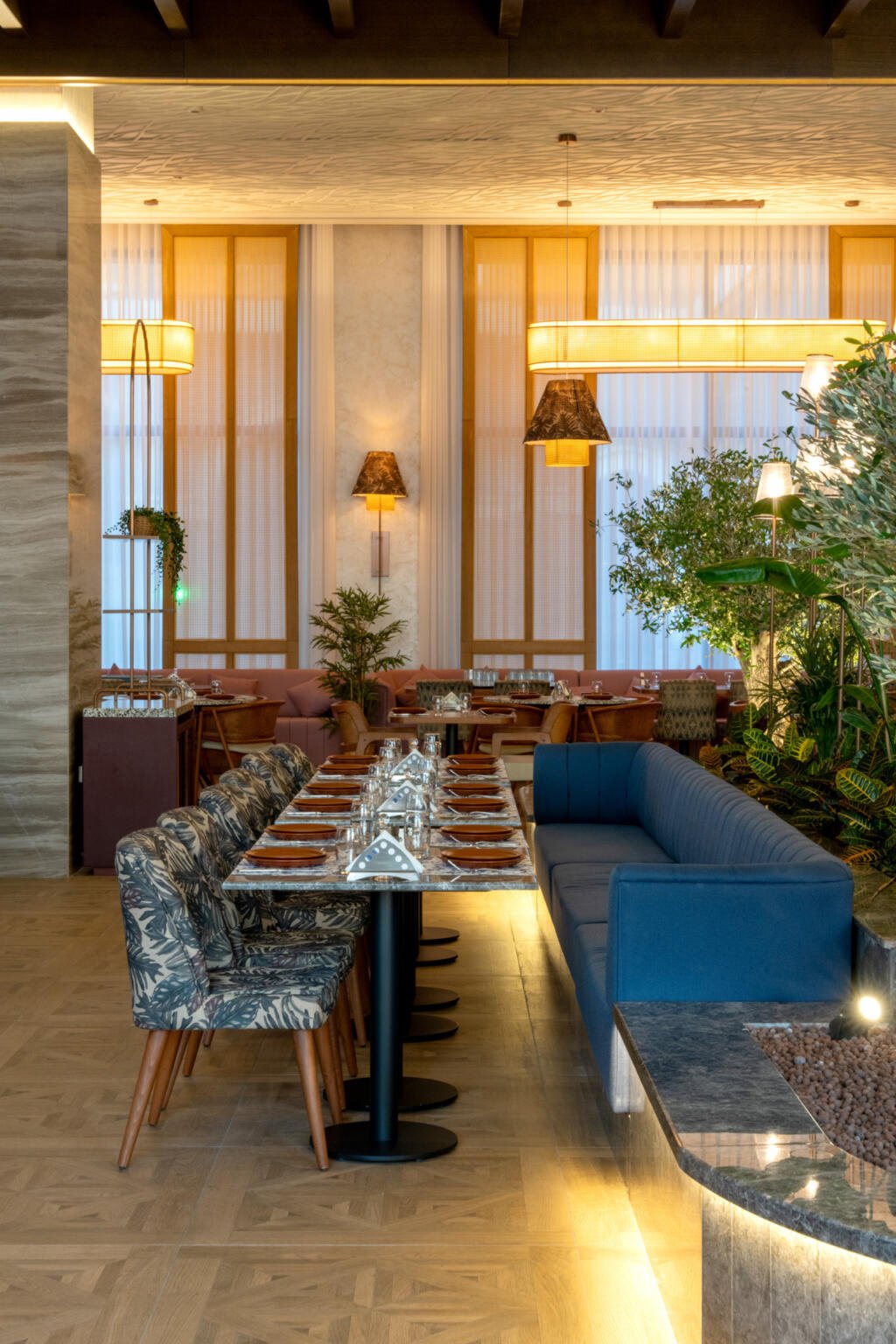
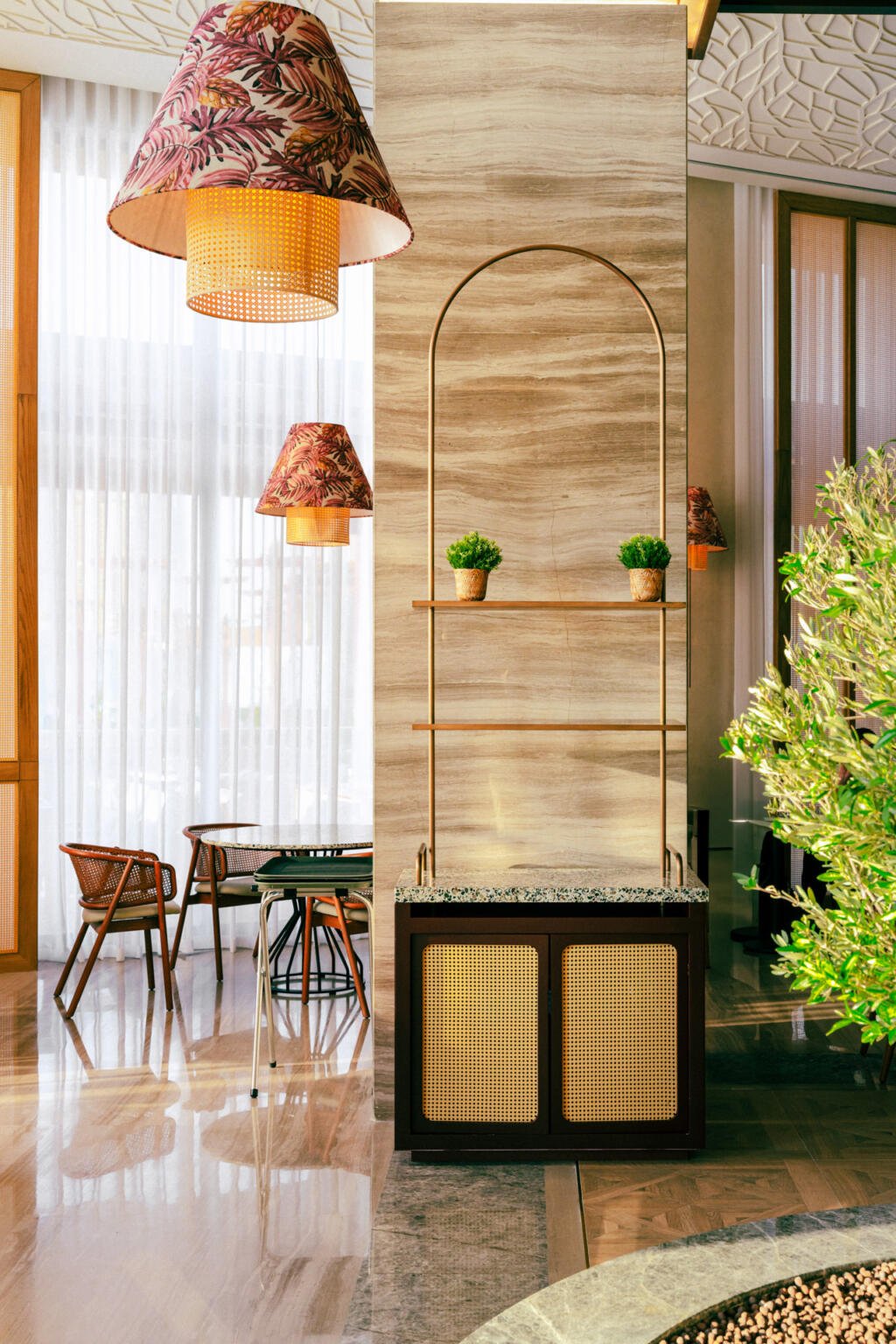
Inside, the rooms are built around a few strong gestures: an olive tree planted at the centre of the main room, lanterns in printed fabric, blue banquettes and carved wooden screens. Each frame keeps one of those gestures at its centre, so the set reads like a walk through the restaurant.
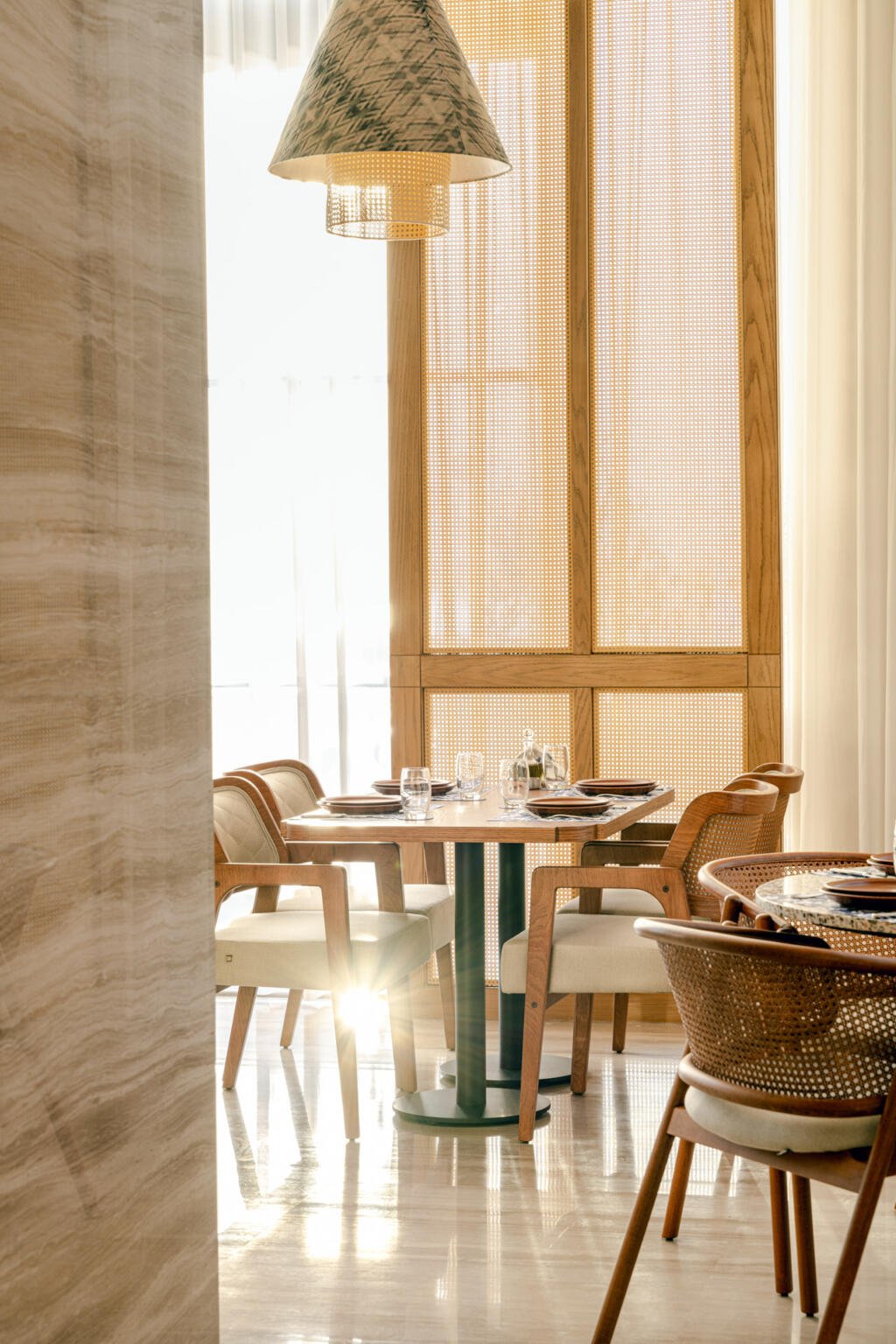
Restaurant interior photography, planned around the light
Walkthrough
Strongest angles chosen room by room, with the time of day each space looks its best.
Styled and lit
Tables set, lines tidied and lamps on before a frame is taken, so the room looks ready for guests.
True lines
Verticals kept straight and windows held, so the architecture reads exactly as it was designed.
One consistent set
Colour graded as a single story, ready for the website, menus, press and social.
A set built for every channel
The result is a complete library: exterior and terrace frames for arrival and booking pages, dining room wides for press, and close details for social. A selection also runs on my interior and architecture photography page.
Restaurant interior photography: five lessons from Loris, Doha
Every venue teaches something. Loris, Doha, is a restaurant where the design, the light and the location all pull in the same direction, which makes it a clear example of what good restaurant interior photography needs. These are the five lessons I take from it, and the ones I share with any owner, operator or designer planning a shoot of their own.
Lesson one: follow the light, not the floor plan
The easiest way to plan an interior shoot is room by room, in the order you walk through the building. The better way is to plan by light. At Loris the terrace belongs to the moment the sun drops over the water, when the timber lattice throws its pattern across the tables. The dining rooms, with their tall windows and sheer curtains, look their best in soft daylight. So the schedule was built around those windows of light, not around the floor plan.
For any venue, I start with a walkthrough and note when each space is at its best. A west-facing terrace and a north-facing dining room will never peak at the same hour, and trying to shoot them together means one of them loses.
Lesson two: build every frame around one gesture
Strong interiors are built on a few memorable gestures. At Loris they are the olive tree at the centre of the main room, the lanterns in printed fabric, the blue banquettes and the carved wooden screens. Rather than squeezing all of them into every wide shot, each frame keeps one gesture at its centre. The set then reads as a walk through the restaurant, with each image adding something new.
This is the most useful question to ask a designer before a shoot: what are the three or four things you want guests to remember? Those become the anchors of the shot list.
Lesson three: keep the architecture honest
Architecture photography has one rule that never bends: verticals stay vertical. Converging lines make a room look like it is falling over, and they undo the work of the architect in a single frame. At Loris the verticals were kept true and the windows held, so the view outside stays readable rather than blowing out to white. The rooms read exactly as they were designed.
Lesson four: style the room as if guests are minutes away
An empty restaurant can look closed. Before a frame is taken, tables are set, lines tidied and lamps switched on, so the room looks ready for service. It is a small amount of work that changes how every image feels: the photograph stops showing furniture and starts showing an invitation. Warm light is kept warm in the grade too, because that warmth is what guests remember.
Lesson five: shoot a library, not a handful of hero shots
A restaurant needs images for many jobs: the booking page, the menu, press features, social media, the designer’s portfolio. Loris was photographed as one coordinated set, exterior, terrace, every dining room and the details, graded as a single story. That gives the team a library that works across every channel, rather than three beautiful images that run out of use within a month.
Interior photography in Doha: working with the local light
Interior photography in Doha has its own conditions, and planning around them is half the job. The midday sun is hard and high, which flattens facades and pushes harsh contrast through any glass. The softer light comes early in the morning and in the hour before sunset, and that golden window is short, so a terrace shoot has to be ready to go the moment the light turns.
Glass is the other challenge. Many restaurants and hotels in the city face the sea or the skyline, with tall windows that are part of the appeal. Holding the view outside while keeping the room bright inside takes careful exposure and patience, and it is one of the main differences between a professional interior set and a phone snapshot.
Heat, humidity and the terrace
Outdoor spaces bring practical issues: condensation on lenses when moving from air conditioning into the heat, haze over the water on humid days, and furniture that needs resetting after wind. None of this is dramatic, but it is why I always build extra time into a terrace schedule.
Timing around service
Most venues cannot close for a day. I plan the interior frames around service, often shooting the dining rooms before opening and the terrace as the sun goes down, so the restaurant loses as little trade as possible. Talking this through early with the operations team makes the day calm for everyone.
Colour that stays true
Mixed light is common in Doha venues: cool daylight from the windows, warm lanterns and pendants inside, sometimes coloured accent strips. Left alone, a camera turns that mix into odd casts across walls and fabrics. I balance it on location and finish it in the grade, so the blue of a banquette or the tone of a timber ceiling looks the way the designer chose it.
A hospitality photography checklist for owners and designers
Good hospitality photography starts with preparation on the venue’s side. These are the things I ask restaurant and hotel teams to arrange before I arrive, so the day is spent making images rather than fixing rooms.
Finished rooms
Snagging done, plants in place, signage installed. Anything unfinished will show, and retouching it later costs more than fixing it now.
A styling plan
Table settings, linen, glassware and flowers agreed in advance, with someone from the team on hand to reset between frames.
Lights checked
Every bulb working and matched in colour, dimmers set, and any harsh downlights noted so they can be balanced.
Clear channels
A list of where the images will run, from booking platforms to print, so the shot list covers each format and crop.
Where architecture photography meets hospitality
Restaurant interiors sit between two disciplines. Architectural photography asks for precision: straight lines, accurate proportions, a clear sense of space. Hospitality photography asks for feeling: warmth, atmosphere, the promise of a good evening. A strong restaurant set needs both at once, and the balance shifts from frame to frame.
The wide frames at Loris lean towards architecture photography, showing how the lattice ceiling, the windows and the long banquettes work as a whole. The details lean towards hospitality: a table for two under a printed lantern, brass and wood beside a carved panel, pattern on pattern around a round table. Together they tell guests what the place looks like and how it will feel to be there.
Why the details matter as much as the wides
Wide shots win the booking page and the press feature. Details win social media, where people scroll on a phone and a single texture or colour has to stop them. A restaurant interior photography set without details feels cold; one without wides feels confusing. I plan both from the walkthrough so neither is left to chance.
Interiors, food and people
Many venues want more than the room. Food, drinks and the team at work can be added to the same project, either on the same day or in a separate session closer to a menu launch. You can see that side of my work in food and beverage photography and in the menu photography case study for Zuma and Carbone. For hotels, the hotel and hospitality photography page covers rooms, spas and public spaces too.
Doha’s dining scene keeps growing, and many of the city’s most visited restaurants appear in guides such as Visit Qatar. In a crowded market, the photographs are often the first impression a guest has of a venue, long before they see the menu.
How a restaurant interior photography project runs
Whether the venue is a new opening or a refresh, the process follows the same shape as the Loris, Doha, set. It is simple on paper and it works because each step is agreed before the next one starts.
1. The brief and the walkthrough
We start with what the images are for and who will see them: guests booking a table, journalists writing a feature, a designer adding the project to a portfolio. Then I walk the venue, ideally at the time of day we plan to shoot, and choose the strongest angles room by room. For a restaurant on the water, that walk always includes the terrace at sunset.
2. The shot list and schedule
From the walkthrough I build a shot list grouped by light rather than by room, with the exterior, terrace, dining rooms and details each given their best hour. The venue team receives it in advance, so styling and staff time can be planned around it.
3. The shoot
On the day, each frame is styled, lit and checked before it is taken: tables set, lamps on, lines straight. I review images on a large screen as we go, so the team can see the set taking shape and flag anything that needs another look while we are still in the room.
4. The edit and delivery
The final selection is colour graded as one story and delivered in the sizes each channel needs. Every frame is shown whole, as composed, so the architecture stays exactly as it was photographed. That is how the interior photography in Doha I deliver stays consistent from the first image to the last.
Who this approach suits
The same method works for restaurants, cafes, hotel lobbies, lounges and private dining rooms, and for interior designers documenting a finished project. It also scales to residential and commercial interiors. If you are comparing photographers, my guide on how to hire a photographer in Doha lists the questions worth asking, and you can see more projects in the case studies.
For hospitality photography, what you are really buying is consistency: a set where every image feels like the same place on the same good evening. That is what Loris, Doha, shows, and it is what I aim for on every venue I photograph.
Restaurant interior photography: your questions
How long does a restaurant interior shoot take?
It depends on the number of spaces and how many light windows they need. A venue with a terrace and several dining rooms, like Loris, is planned around the best light for each space, which often means working from morning into sunset. I confirm the schedule after a walkthrough.
Does the restaurant need to close for the shoot?
Usually not. I plan interior frames around service where possible, shooting rooms before opening or in quiet periods, and terraces at the right hour. We agree the plan with the operations team in advance.
Do you also photograph food and the team?
Yes. Food, drinks and people can be added to an interior project or booked as a separate session. Many venues combine them so the website and menus share one consistent look.
Can the designer and the restaurant both use the images?
Yes, as long as usage is agreed up front. I discuss who needs the images and where they will run before the shoot, so licensing is clear for the venue, the designer and any press.
What is the difference between interior and architecture photography?
Architecture photography focuses on the building and its spaces: structure, lines and proportion. Interior photography looks closer at how a room is furnished and lived in. Restaurant interior photography needs both, which is why a set like Loris, Doha, mixes precise wides with warm, close details.
Should we shoot before or after the opening?
Ideally just before opening, once the rooms are finished and styled but before daily wear shows. If the launch date is fixed, a first set before opening and a second session with guests and food a few weeks later works well for hospitality photography.
Can you shoot video of the venue as well?
Yes. I also work as a videographer and director of photography, so short films and social clips can be planned alongside the stills. See brand film and video production for examples.
Do you work outside Doha?
I am based in Lusail, Doha, and photograph interiors across Qatar. For projects further afield, send the details and I will tell you what is possible.
How much does interior photography in Doha cost?
Every venue is different, so I quote per project. My photography prices guide explains what affects the cost, and the quote form is the quickest way to get an exact figure.
Book an interior shoot
Tell me about the venue, the date and where the images will run. I reply within one business day.