
Travel journal · Documentary photography · 8 stops
Thailand Vietnam Itinerary in Three WeeksTemples, lanterns and monsoon light
This Thailand Vietnam itinerary covers three weeks, two countries and eight stops, told through documentary travel photography and film. At the end of August we flew out of Doha with two cameras and a loose plan: follow the coast of southern Thailand, cross to central Vietnam, climb north to Hà Nội, then circle back to Bangkok.
The southwest monsoon was still blowing, which meant short storms, low skies and a light that turned everything the colour of tea. This is the route we took, what we saw, and what we learned about the cultures along the way. If you are planning a Thailand and Vietnam trip of your own, the day-by-day plan, culture notes and practical tips are all here. Every photograph and film clip on this page is original and was shot on the trip.
Three weeksTwo countries8 chapters64 photographs8 films
The Thailand Vietnam itinerary at a glance
We flew into Phuket, followed the Andaman coast to Krabi, crossed to central Vietnam by air, travelled north to Hà Nội, and returned to Thailand for Pattaya and Bangkok. Tap a stop to jump to its chapter.
Day by day: dates, highlights and how to get there
| Dates | Stop | Highlights | Getting there |
|---|---|---|---|
| 29 Aug | Phuket Old Town | Por Tor shrines, Sino-Portuguese shophouses, morning market | Fly into Phuket International |
| 30 Aug – 1 Sep | Krabi & Railay | Longtail boats, Phra Nang cave shrine, karst sunsets | About 2.5 hours by road from Phuket, then longtail from Ao Nang |
| 3 – 4 Sep | Hội An | Lantern-lit old town, Thu Bồn river, tailors and street food | Fly to Đà Nẵng, then 45 minutes by road |
| 5 Sep | Mỹ Sơn Sanctuary | Cham brick temples and sandstone carvings | Half-day trip, about 1 hour from Hội An |
| 6 – 7 Sep | Đà Nẵng | Dragon Bridge fire show, Linh Ứng Pagoda on Sơn Trà | 30 to 45 minutes from Hội An |
| 9 – 12 Sep | Hà Nội | Old Quarter streets, Hoàn Kiếm Lake at dawn, egg coffee | Domestic flight from Đà Nẵng, about 1 hour 20 |
| 14 Sep | Pattaya | Quiet off-season beach and promenade | Fly to Bangkok, then about 2 hours by road |
| 16 – 18 Sep | Bangkok | Old city temples, Yaowarat Chinatown, Chao Phraya at night | About 2 hours by road from Pattaya |
The documentary
One Monsoon
The whole journey in under three minutes: eight places, one monsoon, scored and graded from the footage on this page.
Chapter one Thailand 29 August
Phuket Old Town
ภูเก็ต7.88° N, 98.39° E
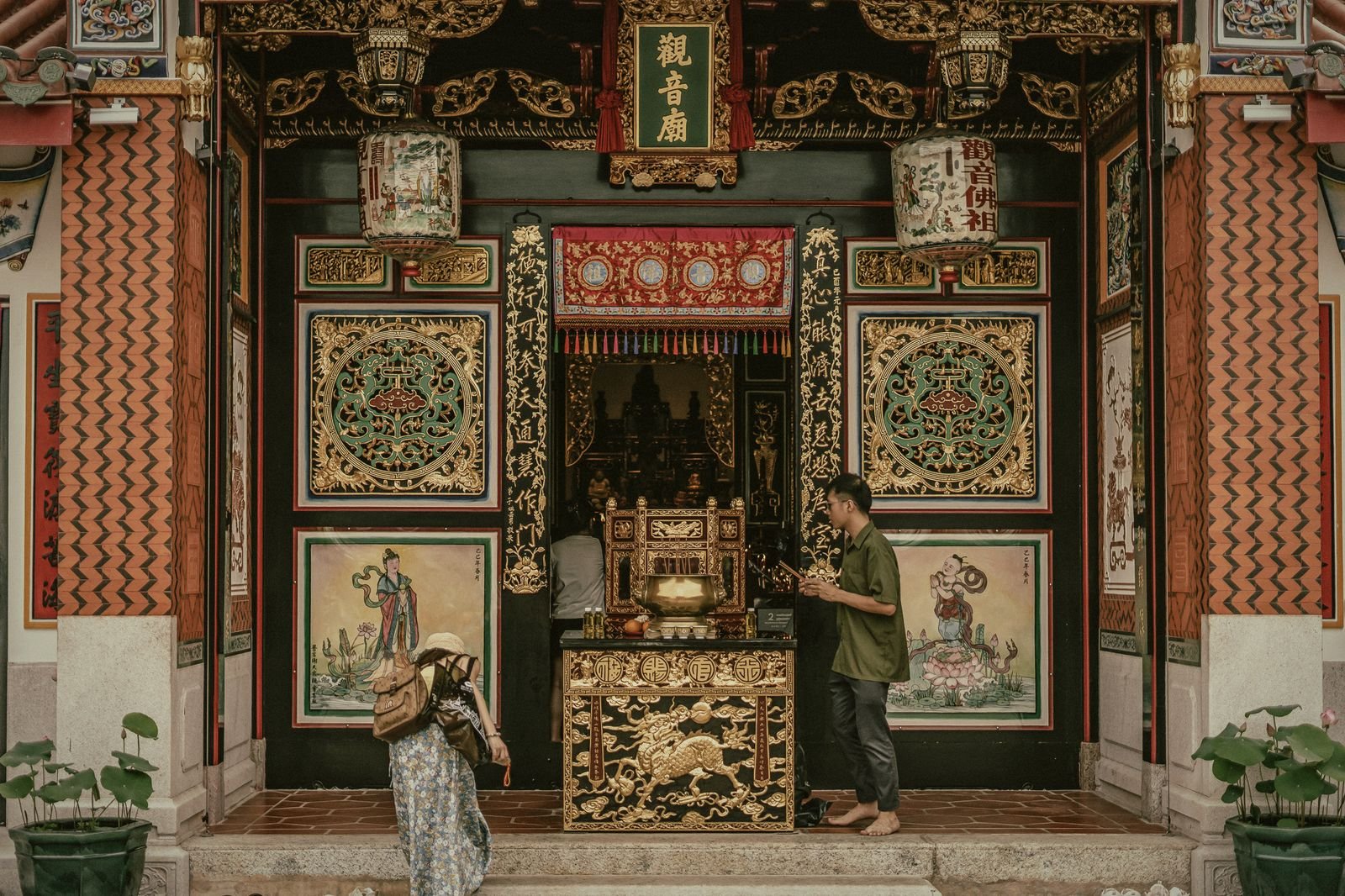
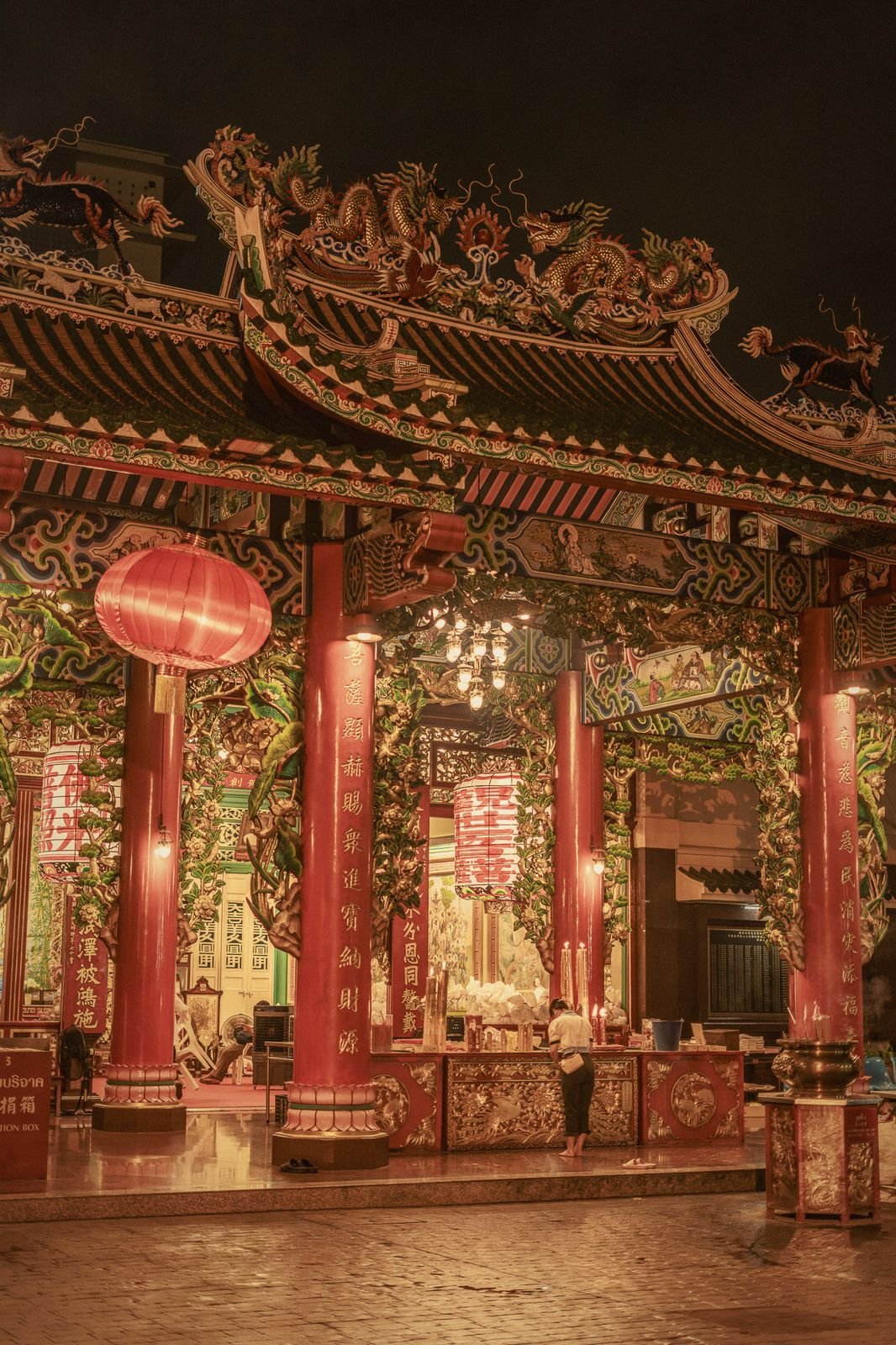
Plate 01The carved gold-and-red facade of a Guan Yin shrine in Phuket Old Town
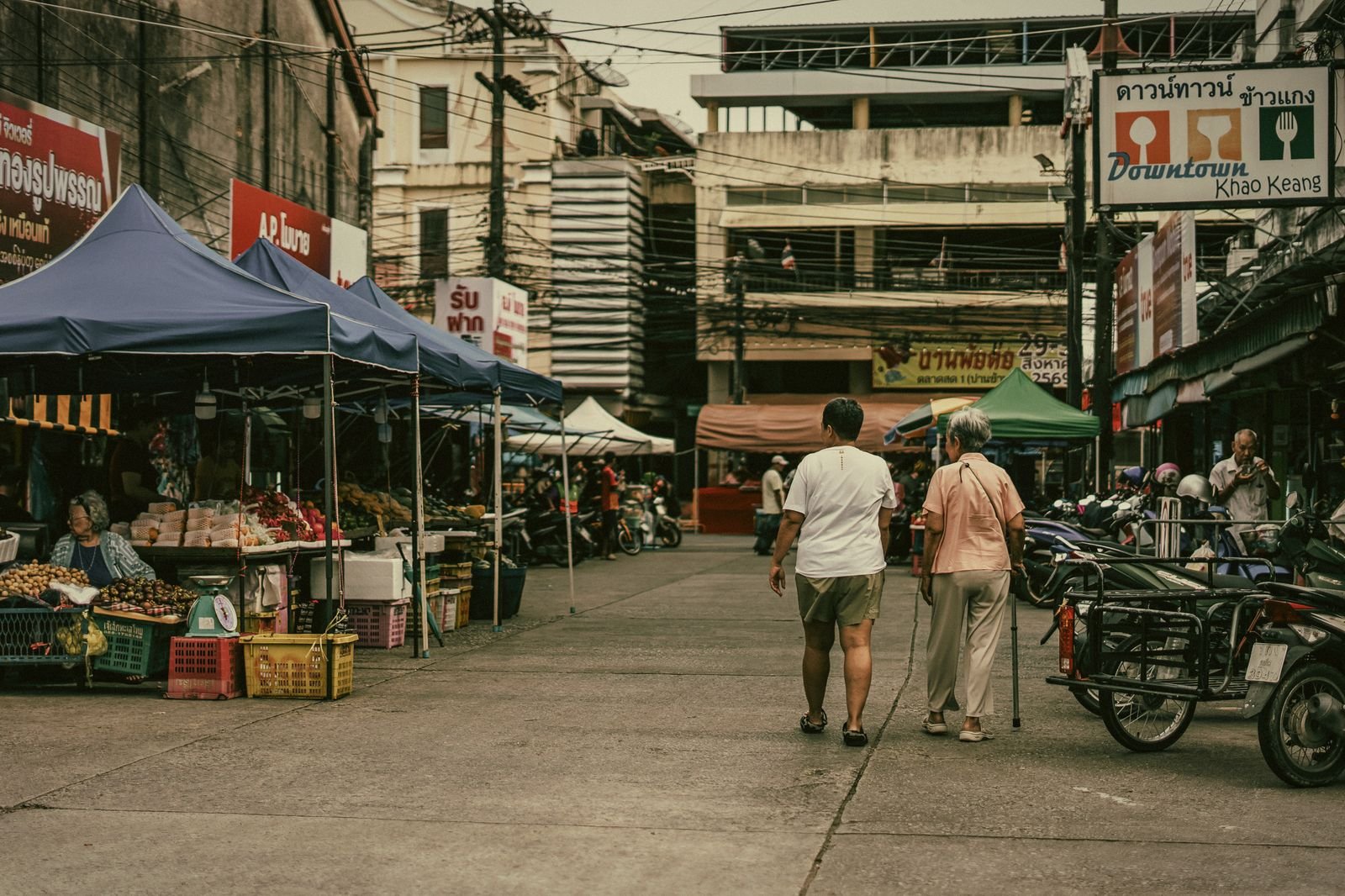
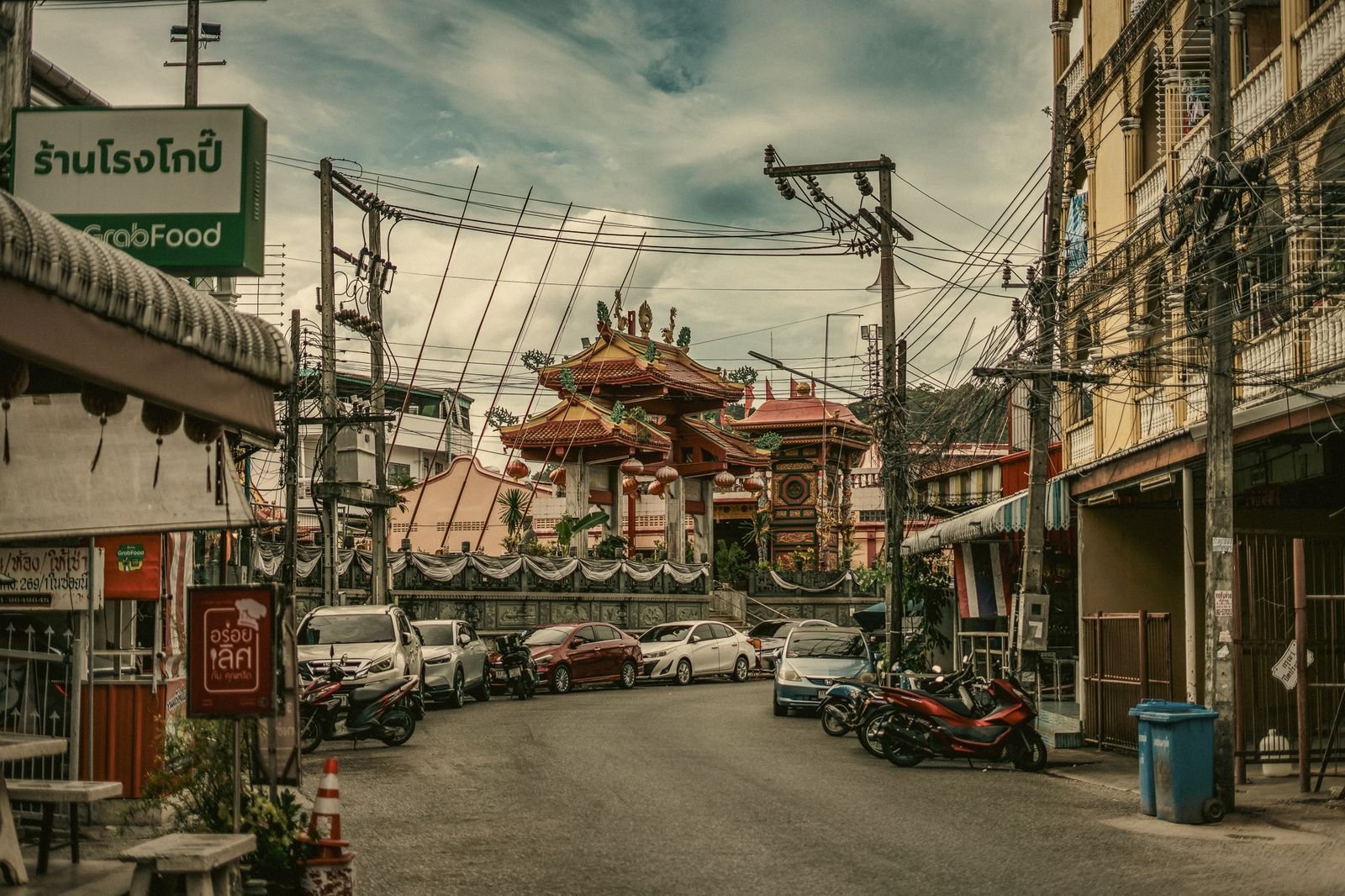
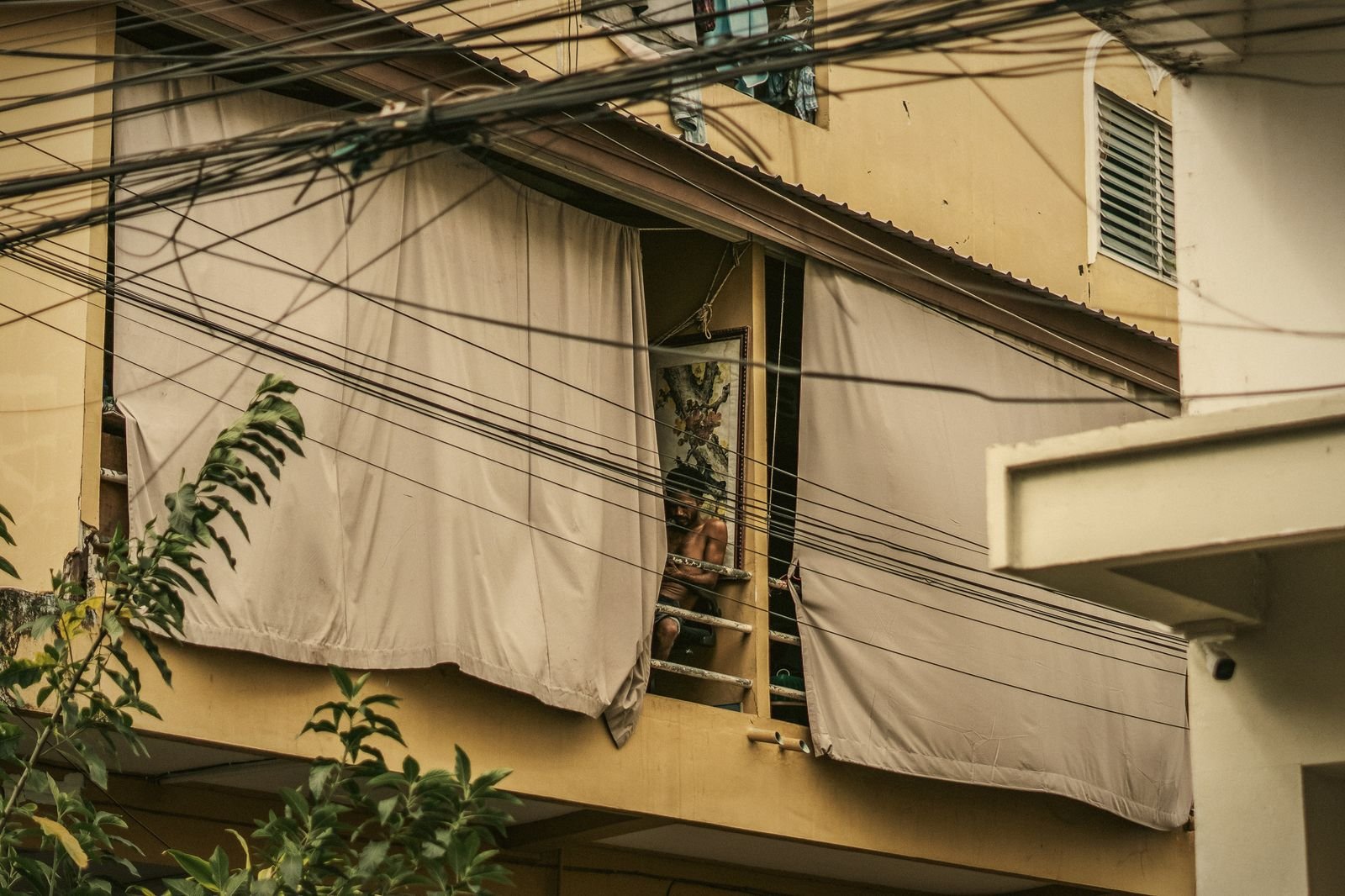
Most people meet Phuket on its beaches. We started in the old town instead, and it set the tone for the whole trip. Phuket Town grew rich on tin in the 19th century, and the Hokkien Chinese merchants who came for the mines built the streets you still walk today: narrow two-storey shophouses with arched five-foot walkways, pastel plaster and carved shutters, a style locals call Sino-Portuguese.
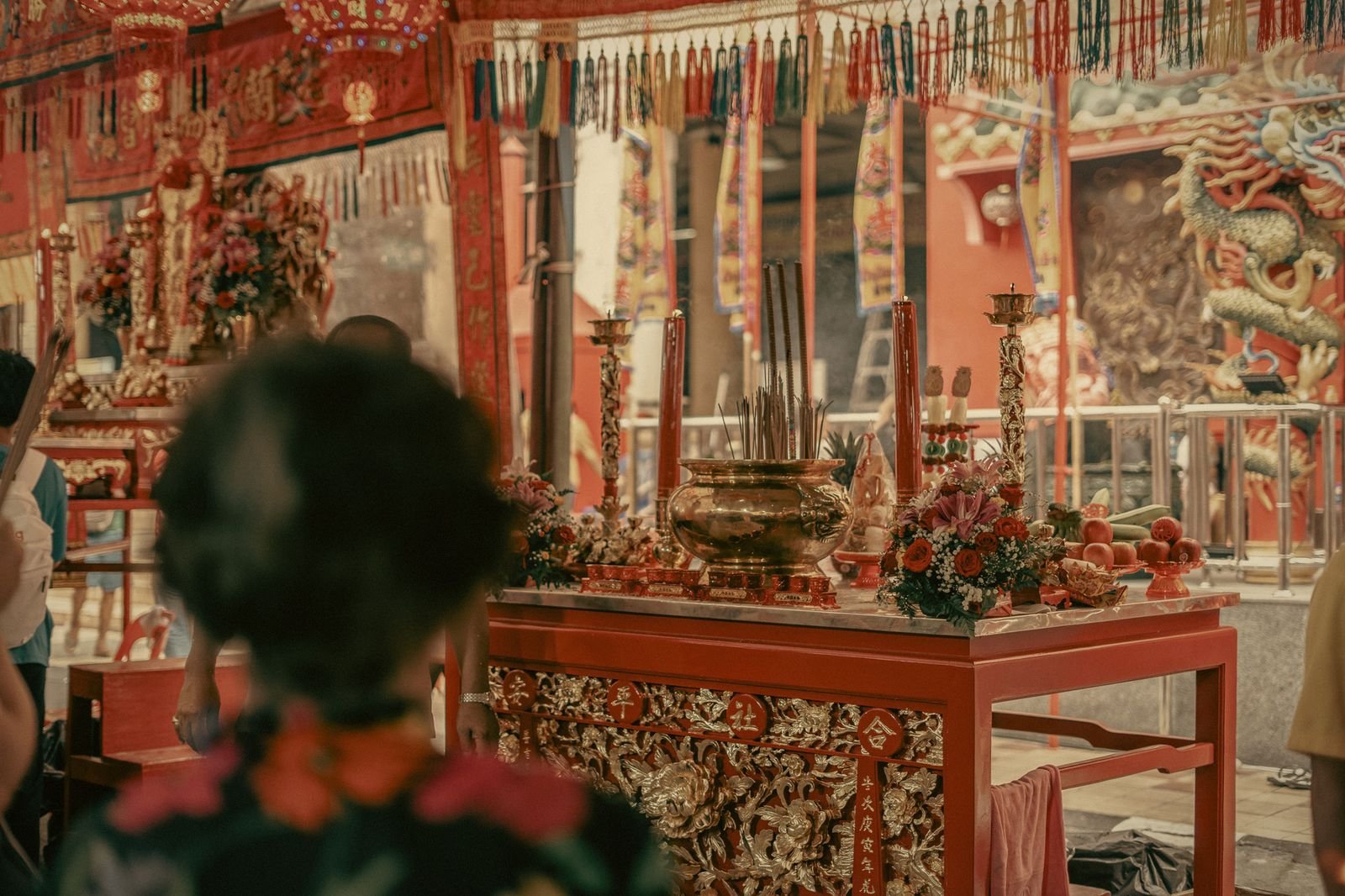
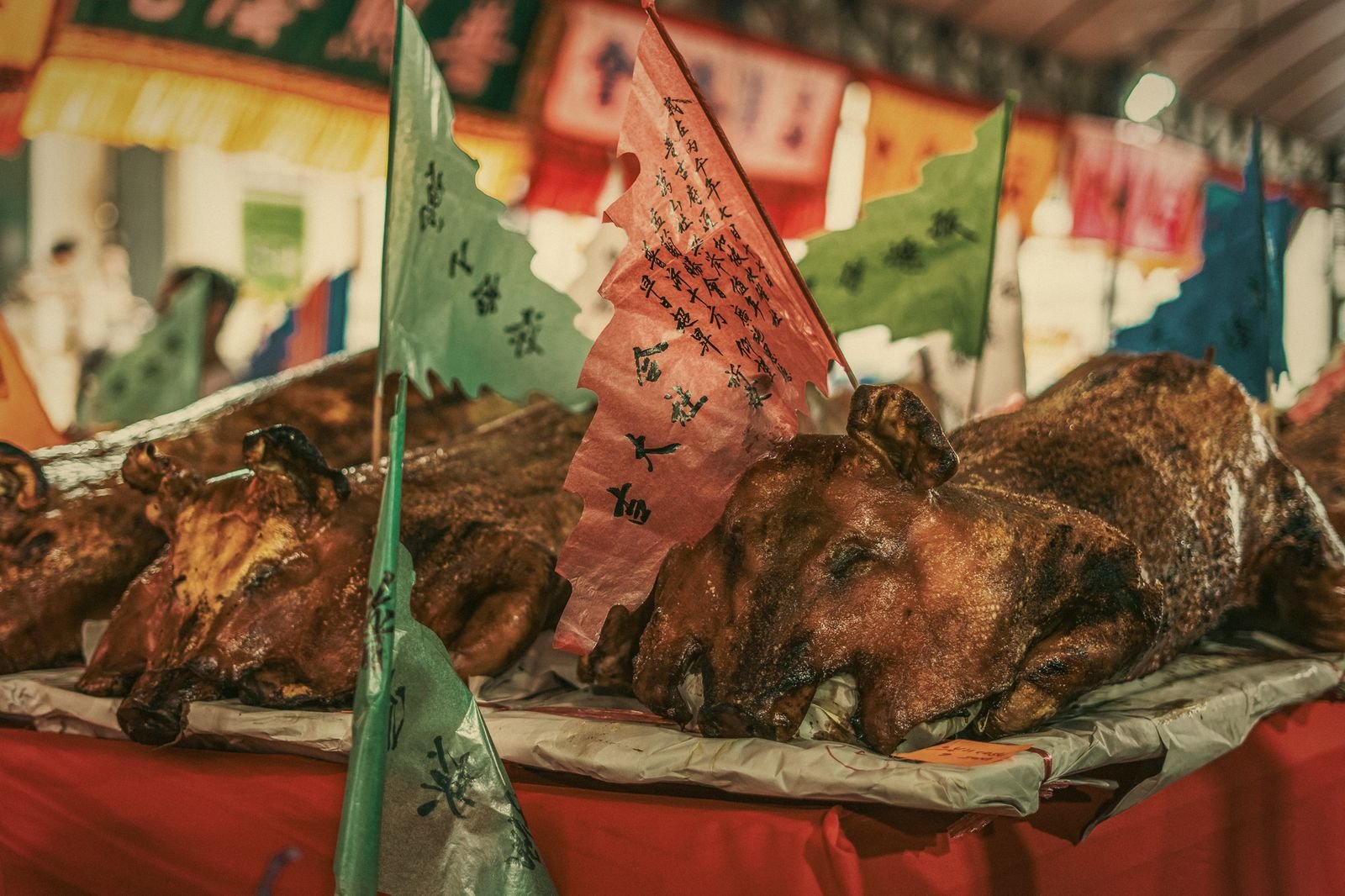
The smoke of joss sticks hung under the awnings.
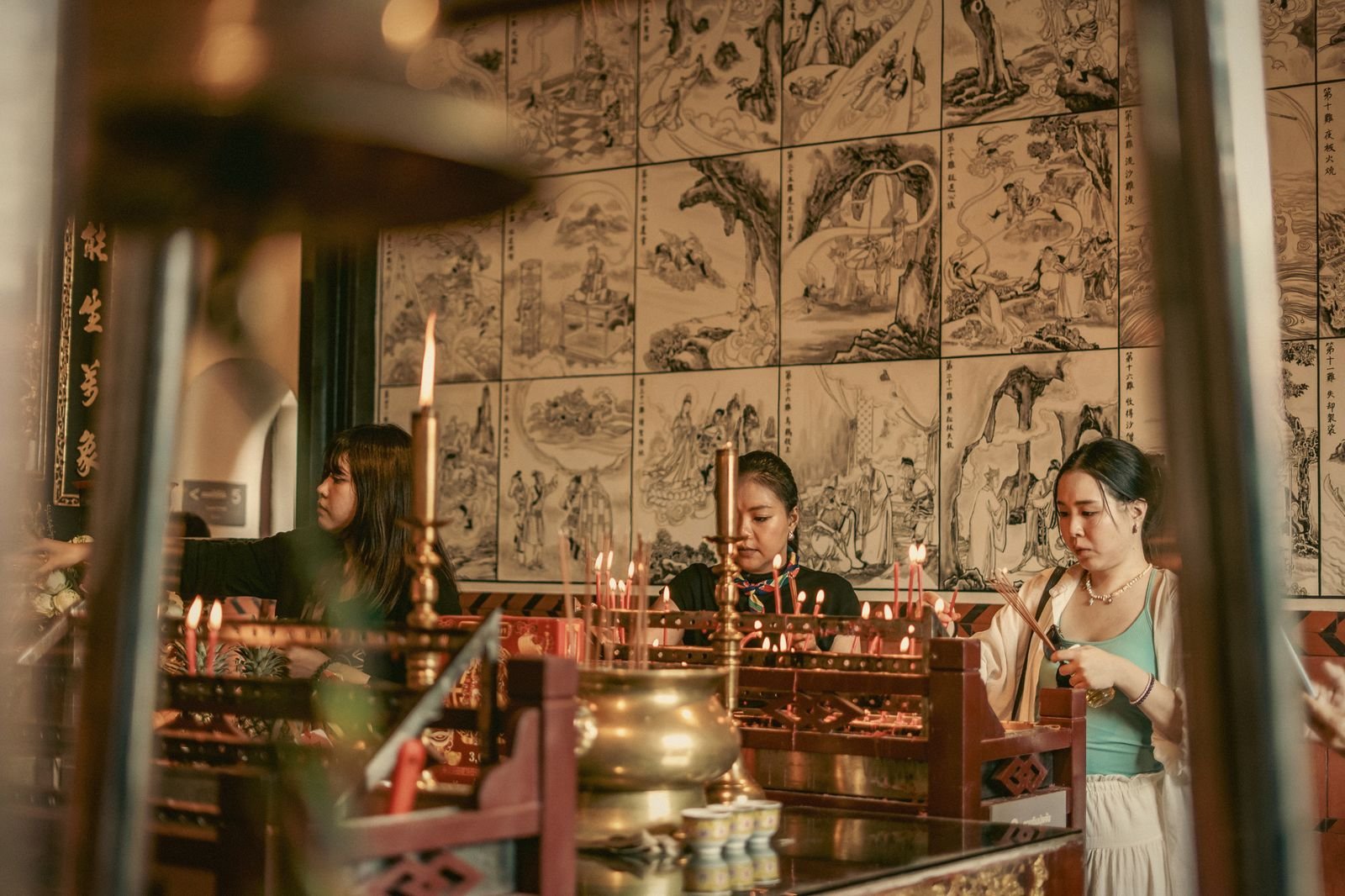
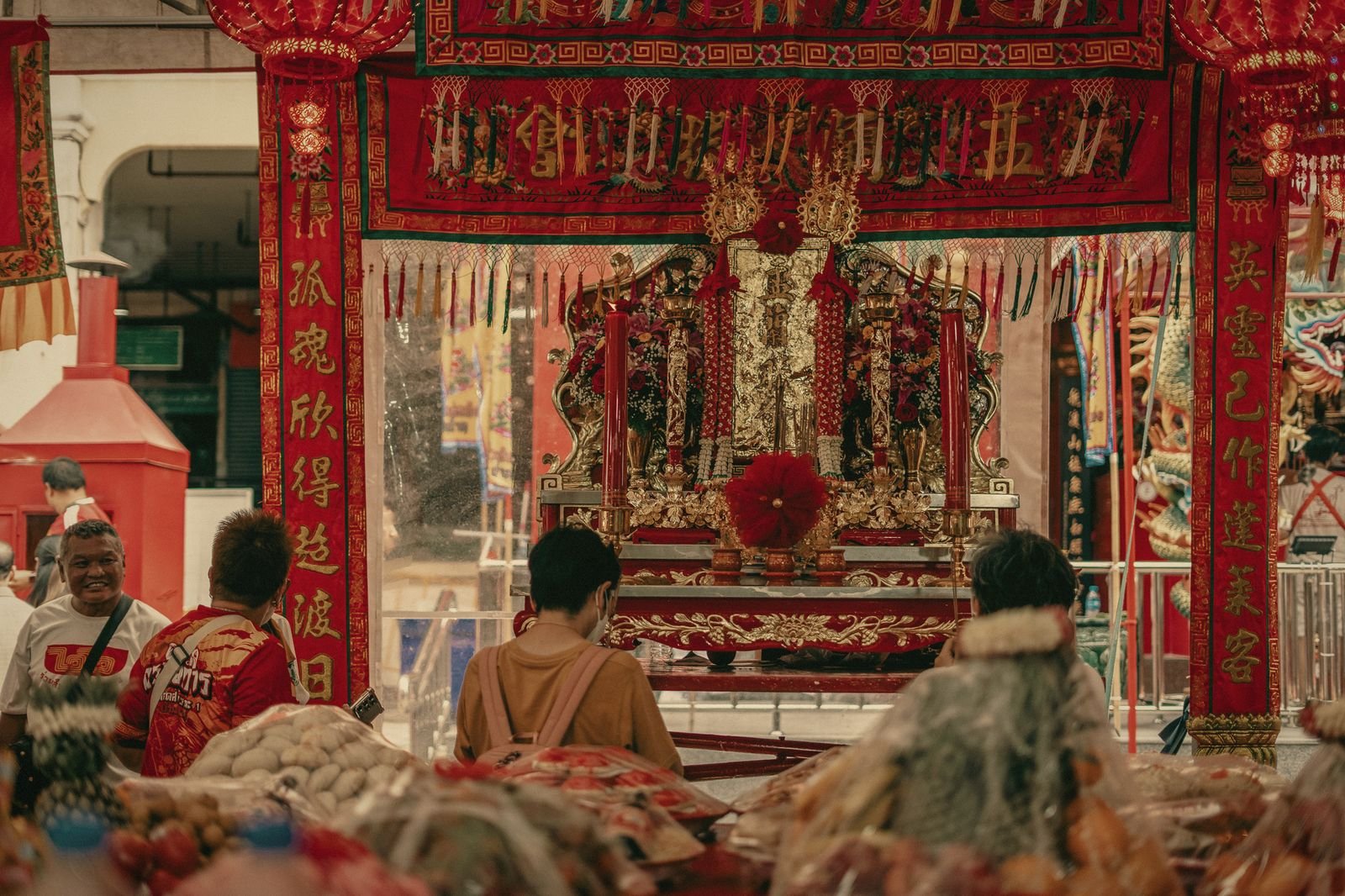
We arrived during the seventh lunar month, the season of Por Tor, Phuket’s Hungry Ghost Festival. In 2026 it ran from 19 August to 6 September. Families set out food and incense for their ancestors and for the wandering spirits who have no one to feed them. Shrines fill with offerings: whole roast pigs, fruit piled into towers, and red turtle-shaped cakes called ang ku, a wish for long life. We spent the morning moving between a Guan Yin shrine and the market streets, where the smoke of joss sticks hung under the awnings.
Field notes Phuket Old Town: culture and practical tips
Culture note
Shrines in Phuket Town are working places of worship, especially during Por Tor. Walk around the altar clockwise, keep clear of anyone praying, and never step over offerings on the floor. A small donation for incense is welcome.
If you go
- Stay in or near the old town (Thalang, Dibuk and Krabi roads) and explore on foot early, before the heat.
- Por Tor follows the lunar calendar, so check the dates for your year. The main shrine celebrations happen in the evenings.
- The old town is quiet on weekday mornings and busy at the Sunday walking street market.
Chapter two Thailand 30 August – 1 September
Krabi and Railay
กระบี่8.09° N, 98.91° E
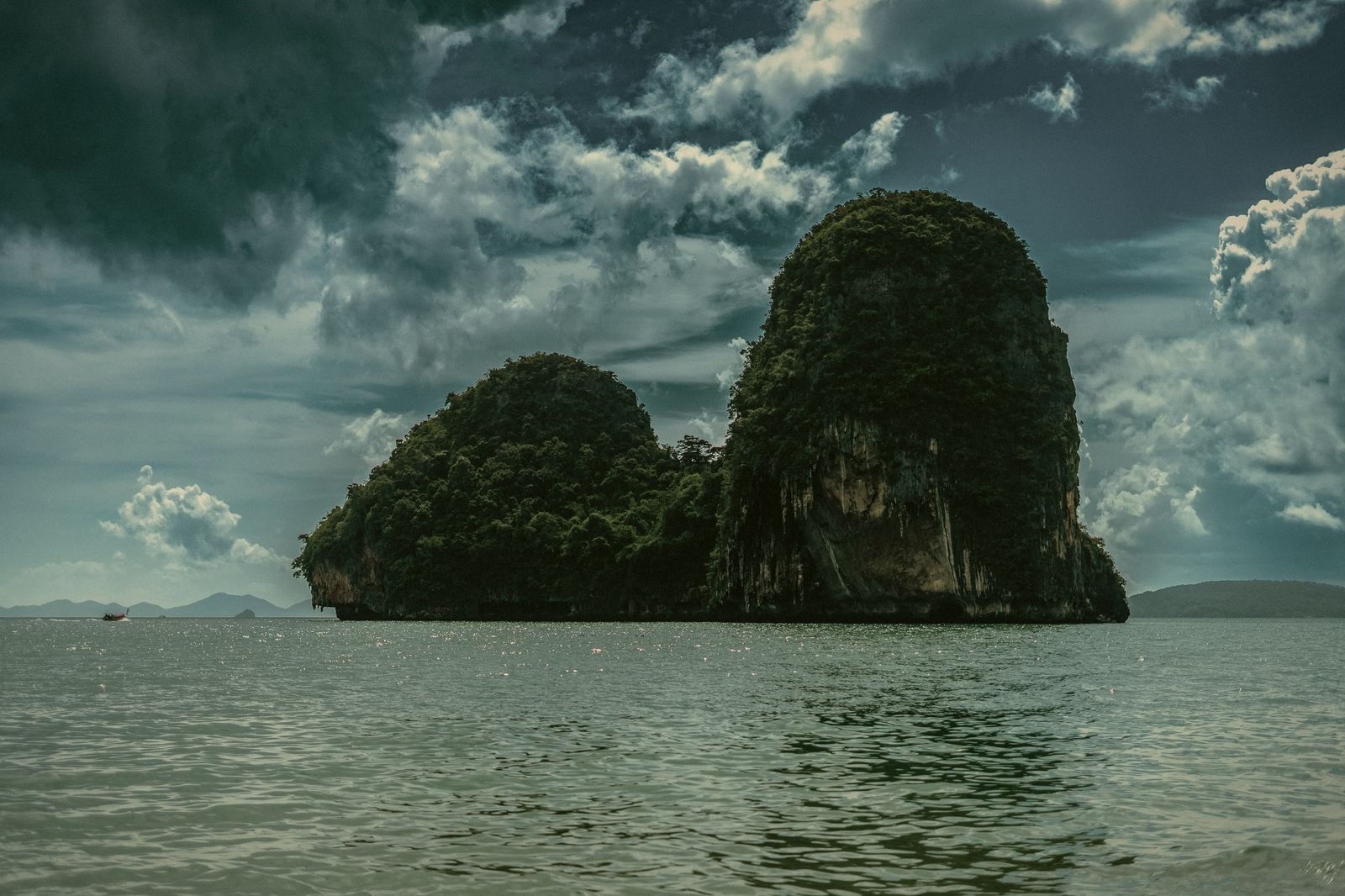
Plate 09Jungle-topped karst island rising out of the Andaman Sea near Krabi
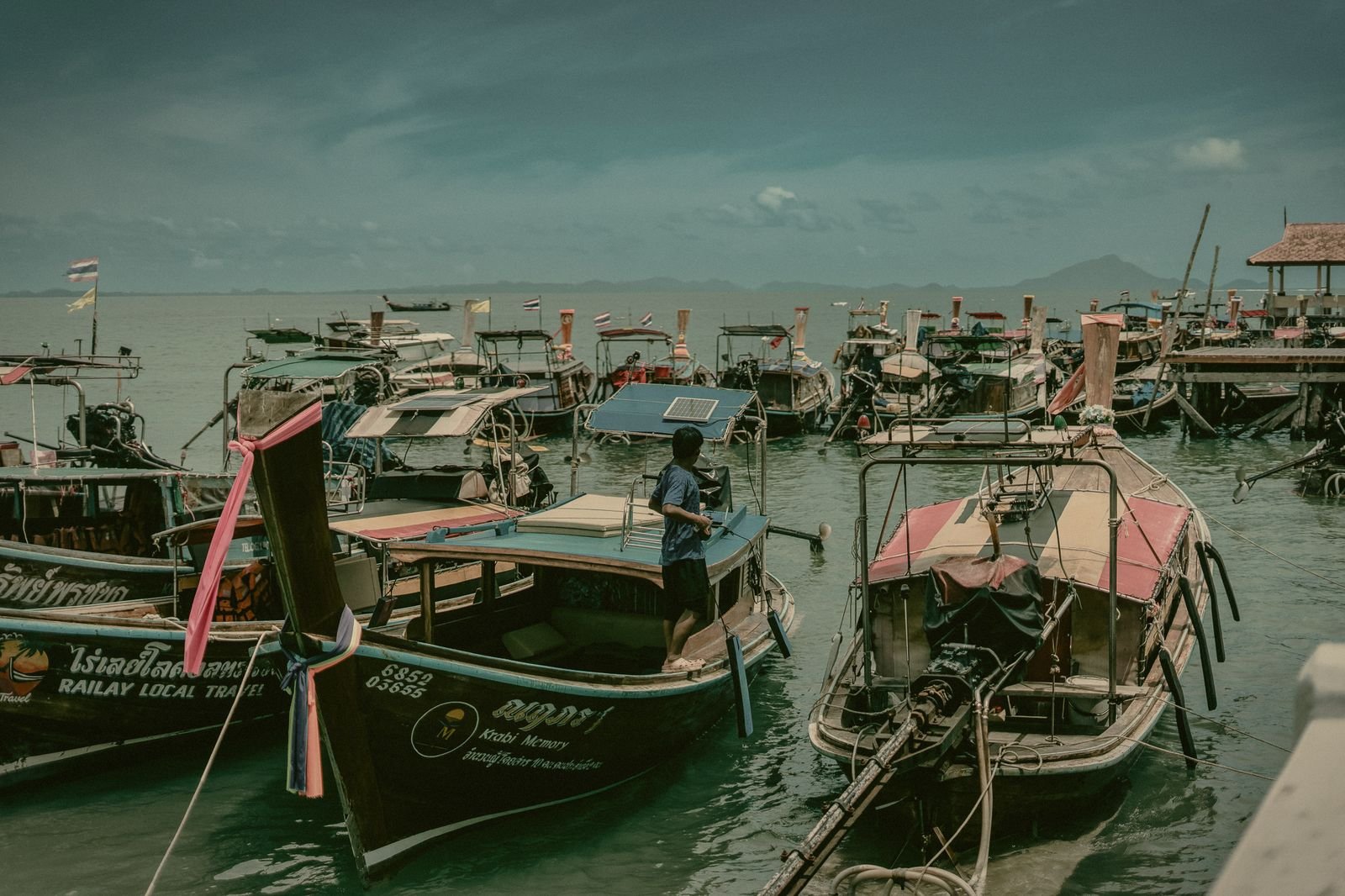
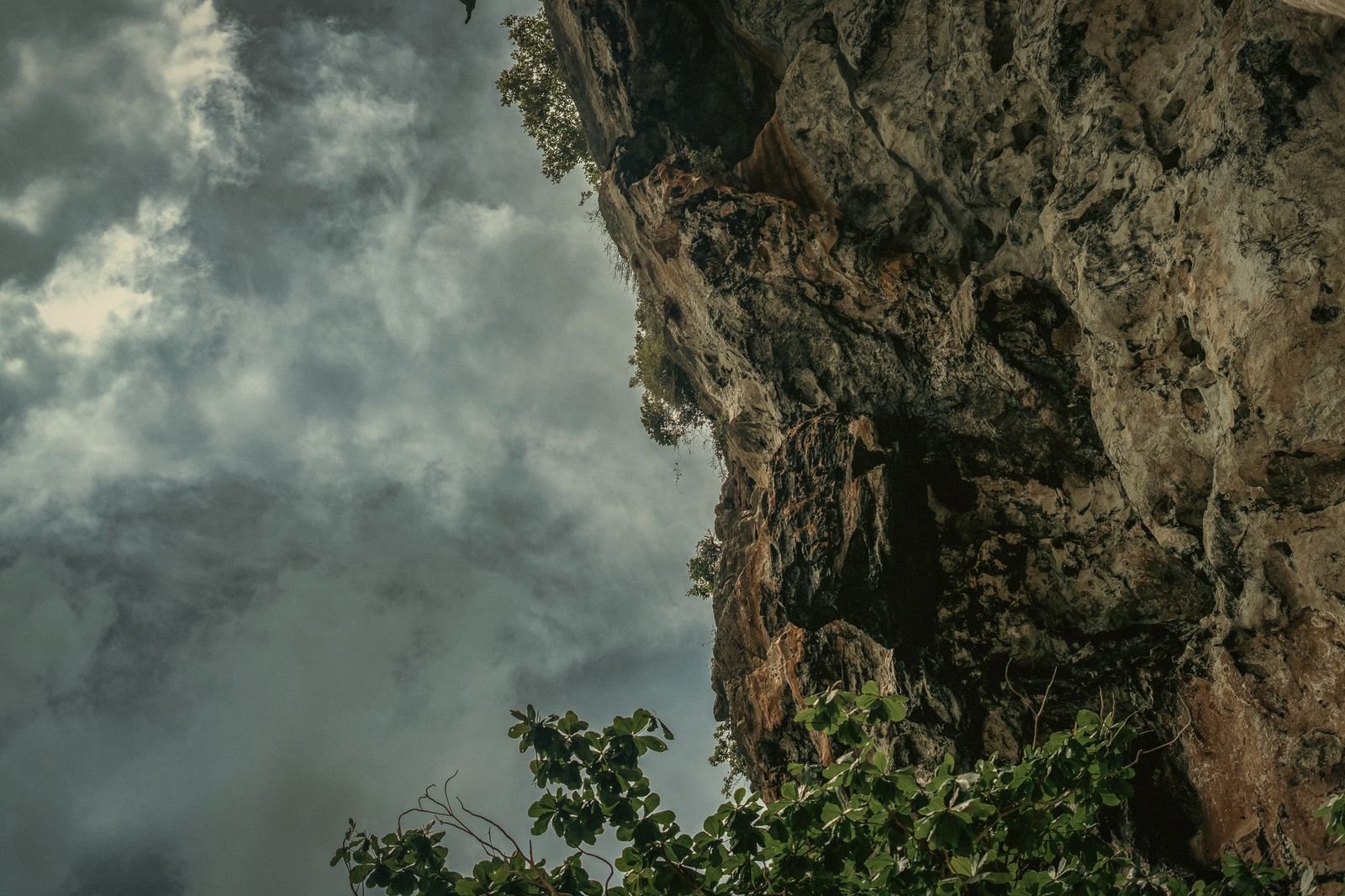
East of Phuket, the Andaman coast turns to limestone. Krabi’s karst towers rise straight out of the sea, draped in jungle, streaked orange and grey where water has run down them for thousands of years. Railay and Phra Nang beach sit on a peninsula cut off by those cliffs, so most people arrive the way we did, on a longtail boat from Ao Nang.
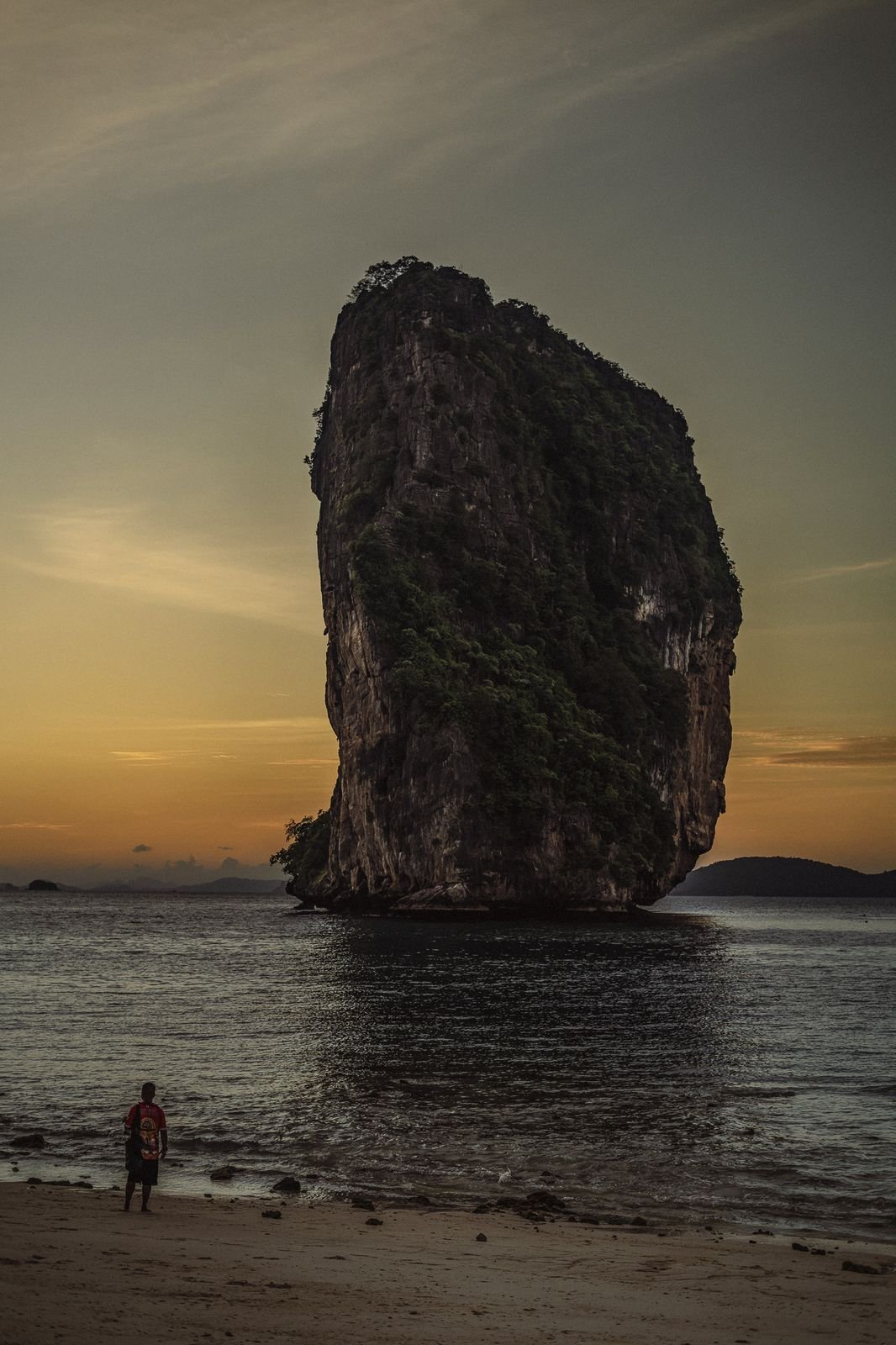
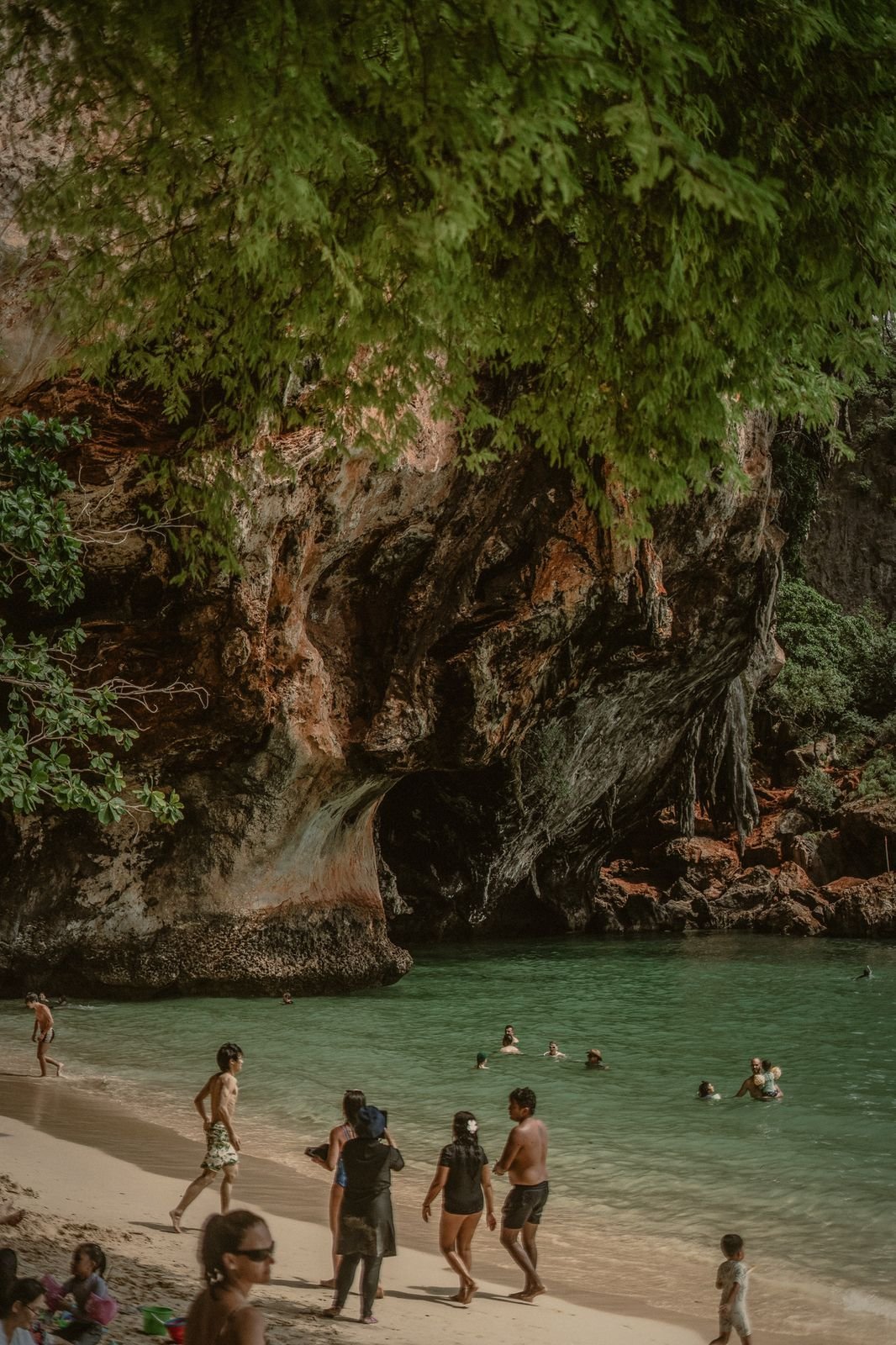
The storm clouds broke just enough to light the sea stacks gold.
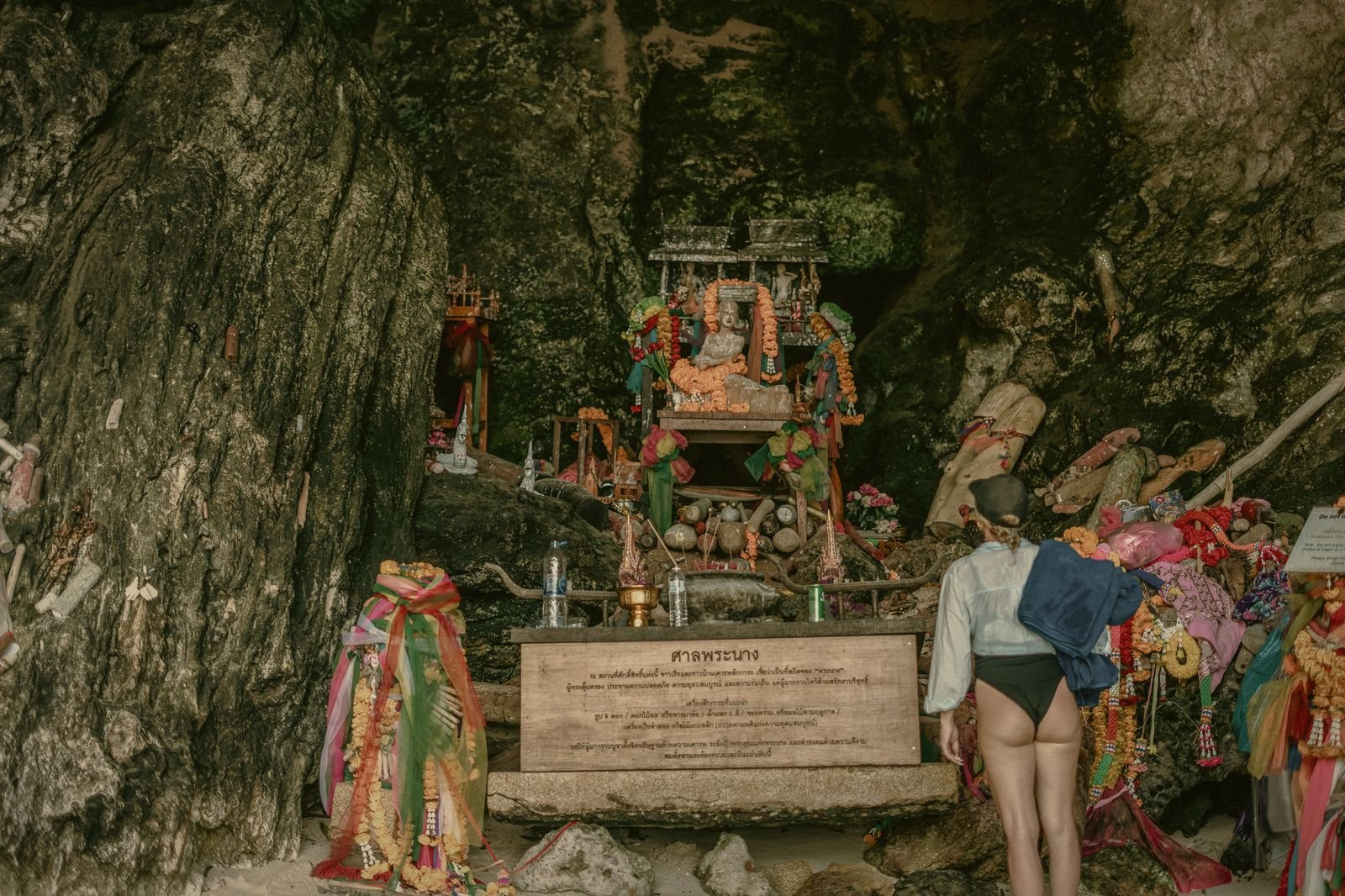
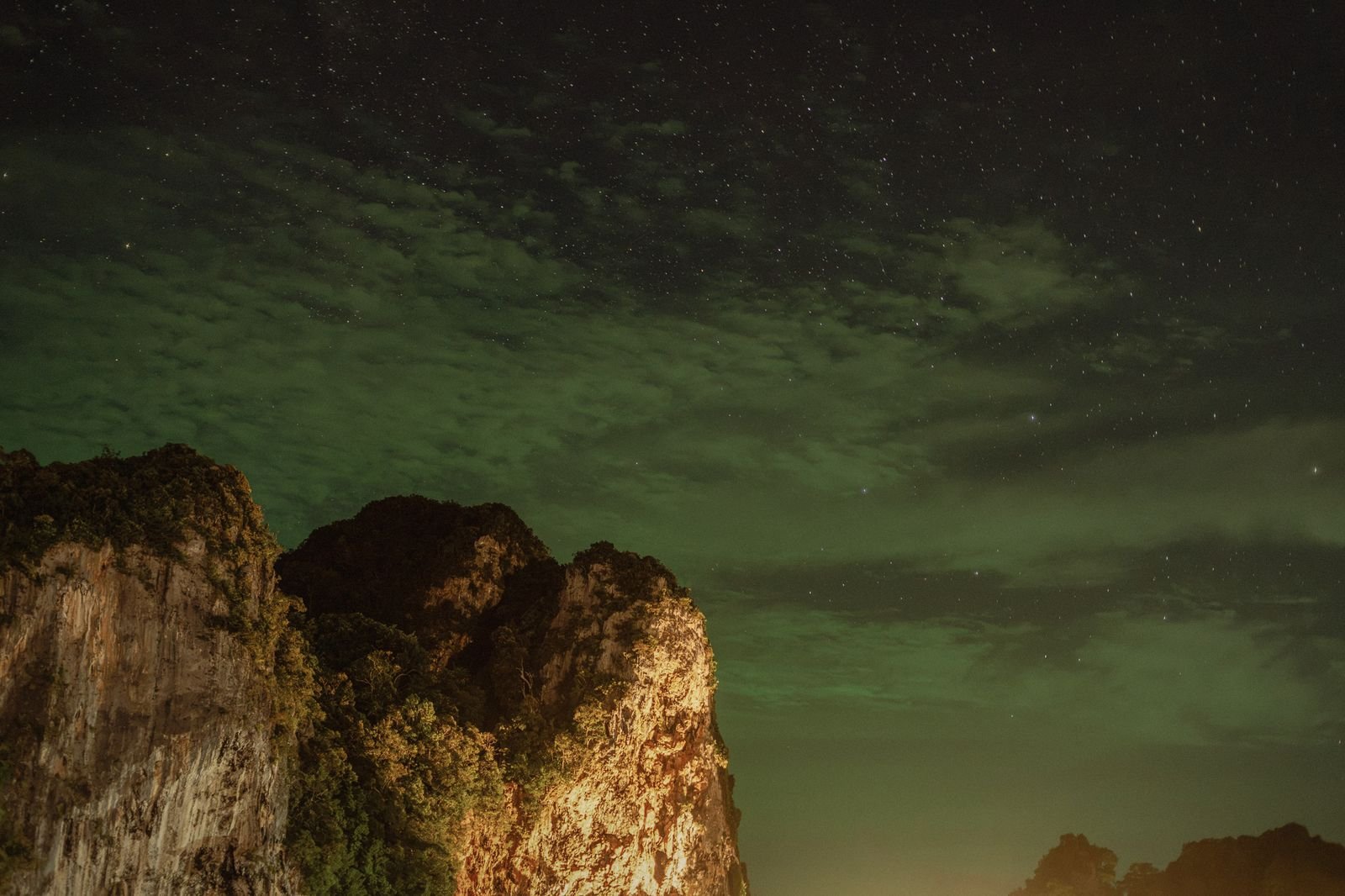
The longtail is the soul of this coast: a narrow wooden hull, a car engine on a long propeller shaft, and coloured ribbons tied to the bow for the boat’s guardian spirit. At the end of Phra Nang beach is a cave shrine to a sea princess, sacred to local fishermen, who leave carved wooden offerings asking for safe passage and for children. We stayed for the sunset, the storm clouds breaking just enough to light the sea stacks gold, and stayed again for a fire show on the sand.
Field notes Krabi and Railay: culture and practical tips
Culture note
The ribbons on a longtail’s bow honour Mae Ya Nang, the goddess of the boat. Don’t sit on the bow or step over it. The Phra Nang cave shrine is a place of prayer, not a photo prop, so look but don’t touch.
If you go
- Island-hopping boats leave Ao Nang in the morning. Go early to have the beaches before the day trips arrive.
- Late August is monsoon season on the Andaman coast. Expect short heavy showers and rougher seas, and plan a flexible day.
- Pack reef-safe sunscreen and a dry bag for camera gear on the longtails.
Chapter three Vietnam 3 – 4 September
Hội An
Hội An15.88° N, 108.33° E
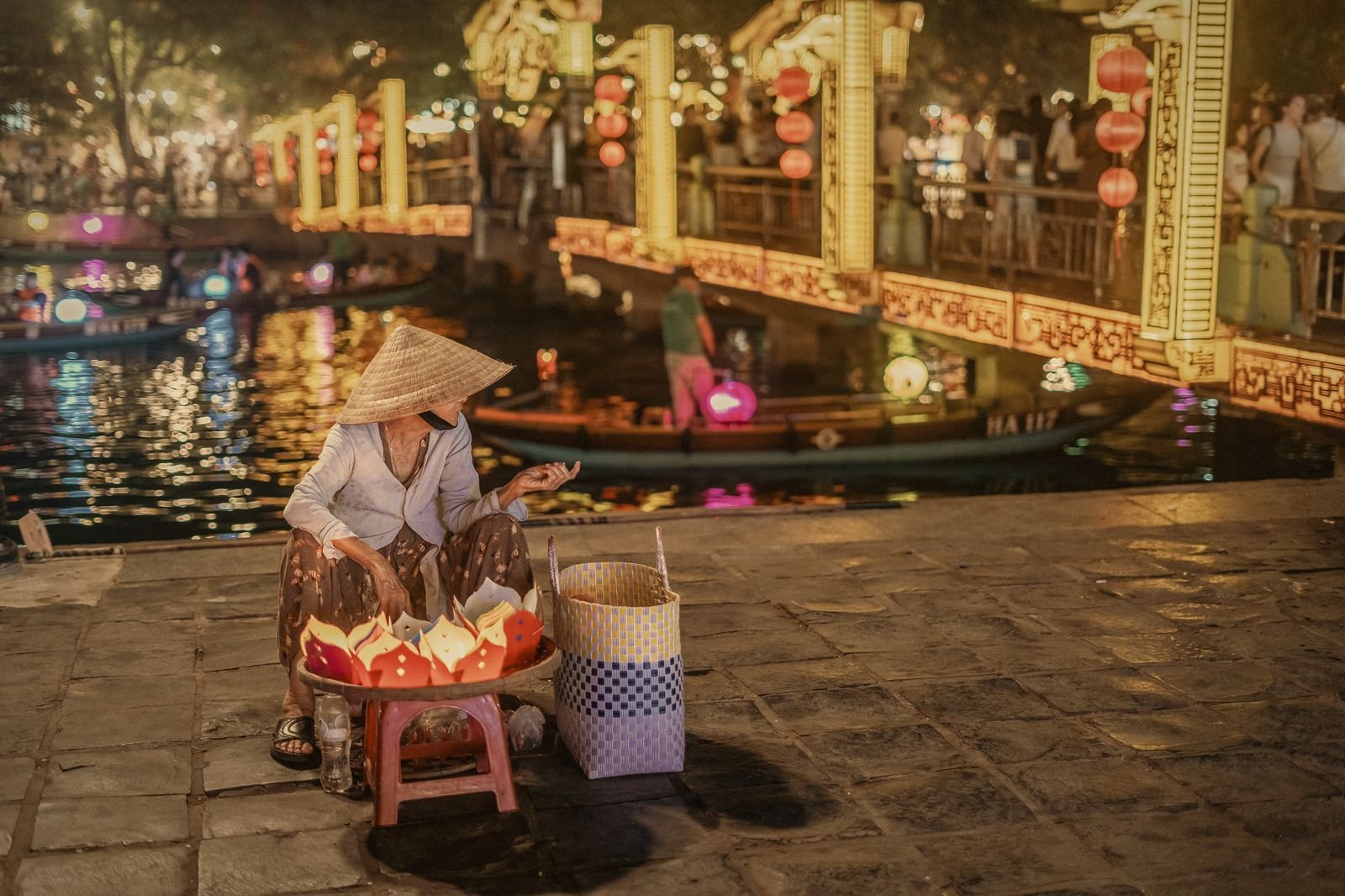
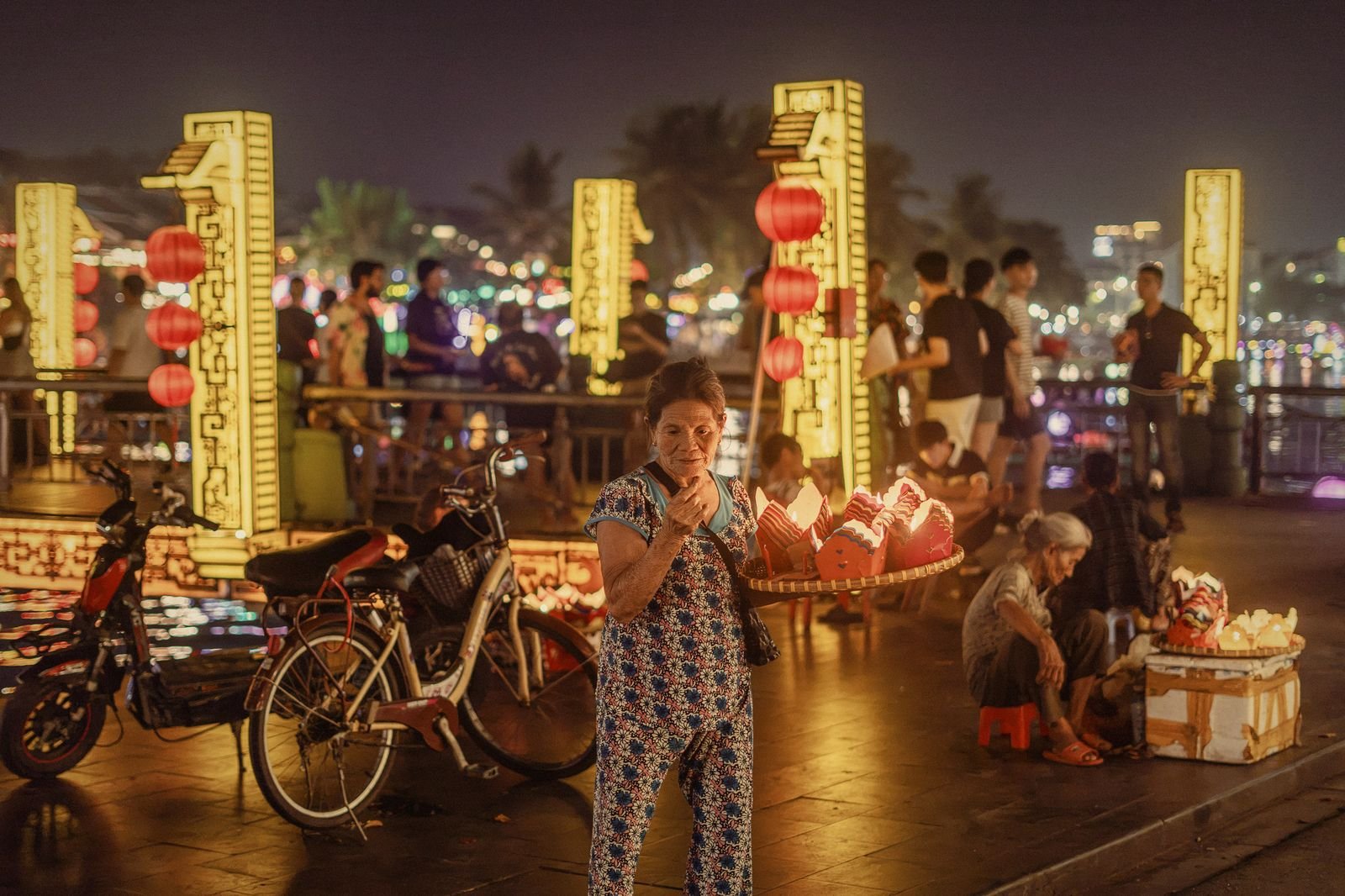
Plate 17Lantern seller on the Thu Bồn riverbank in Hội An at blue hour, a highlight of this Thailand Vietnam itinerary
A flight took us from Krabi to Đà Nẵng, and an hour’s drive south brought us to Hội An. From the 15th to the 19th century this was one of Southeast Asia’s great trading ports, where Japanese, Chinese and European merchants met on the Thu Bồn river. Its old town survived almost intact and was listed as a UNESCO World Heritage Site in 1999.
After dark, Hội An becomes a town of light.
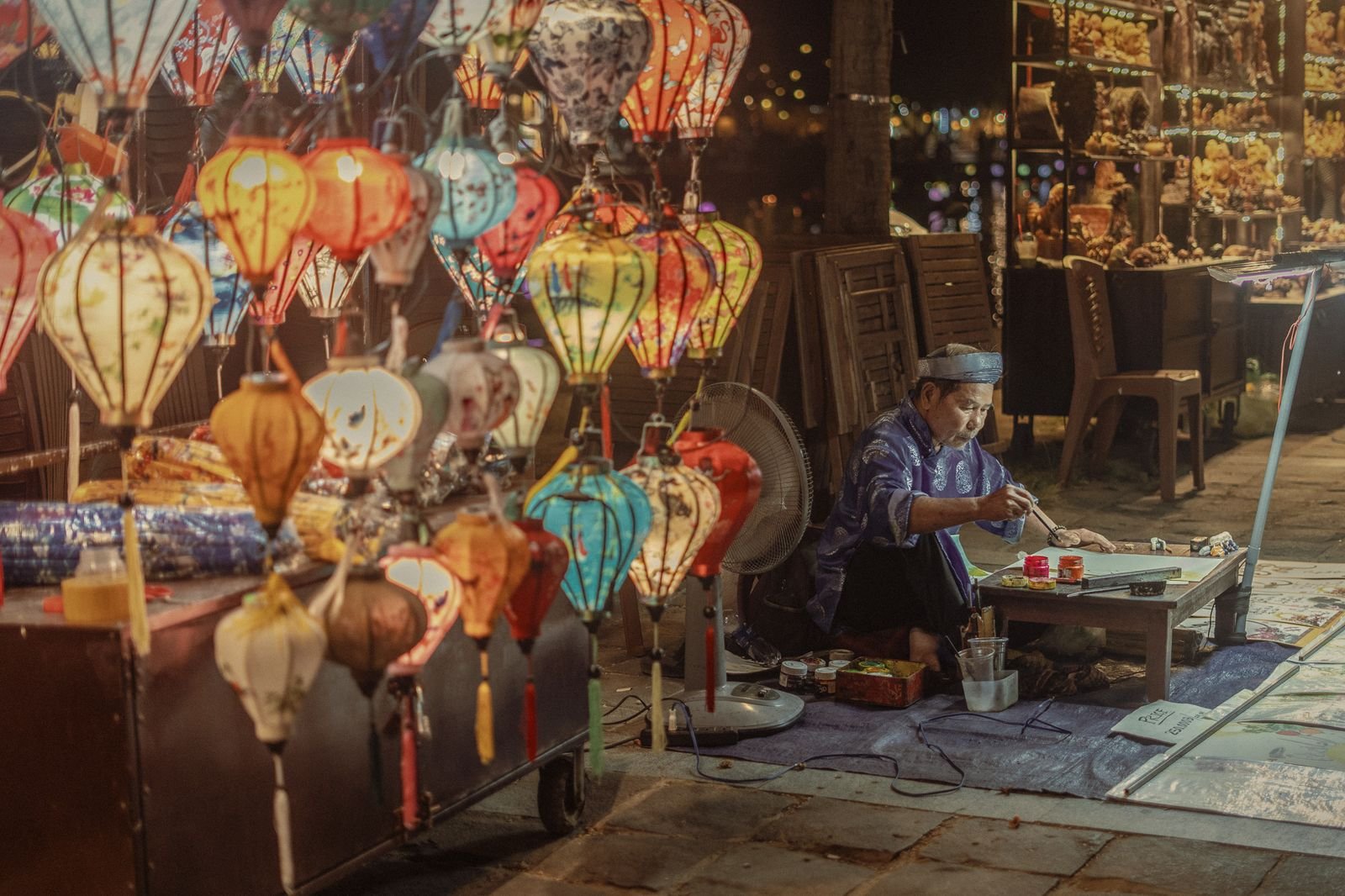
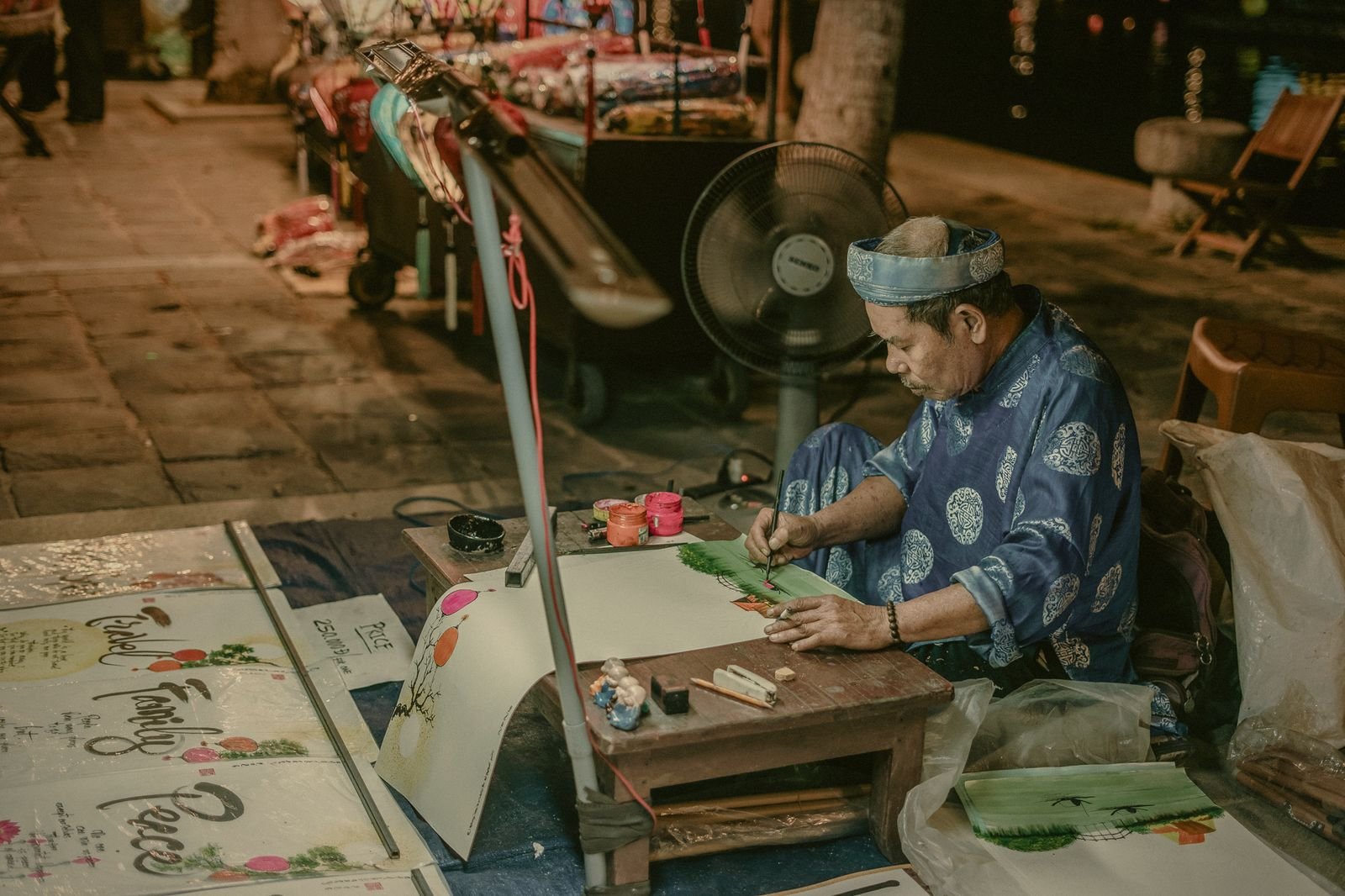
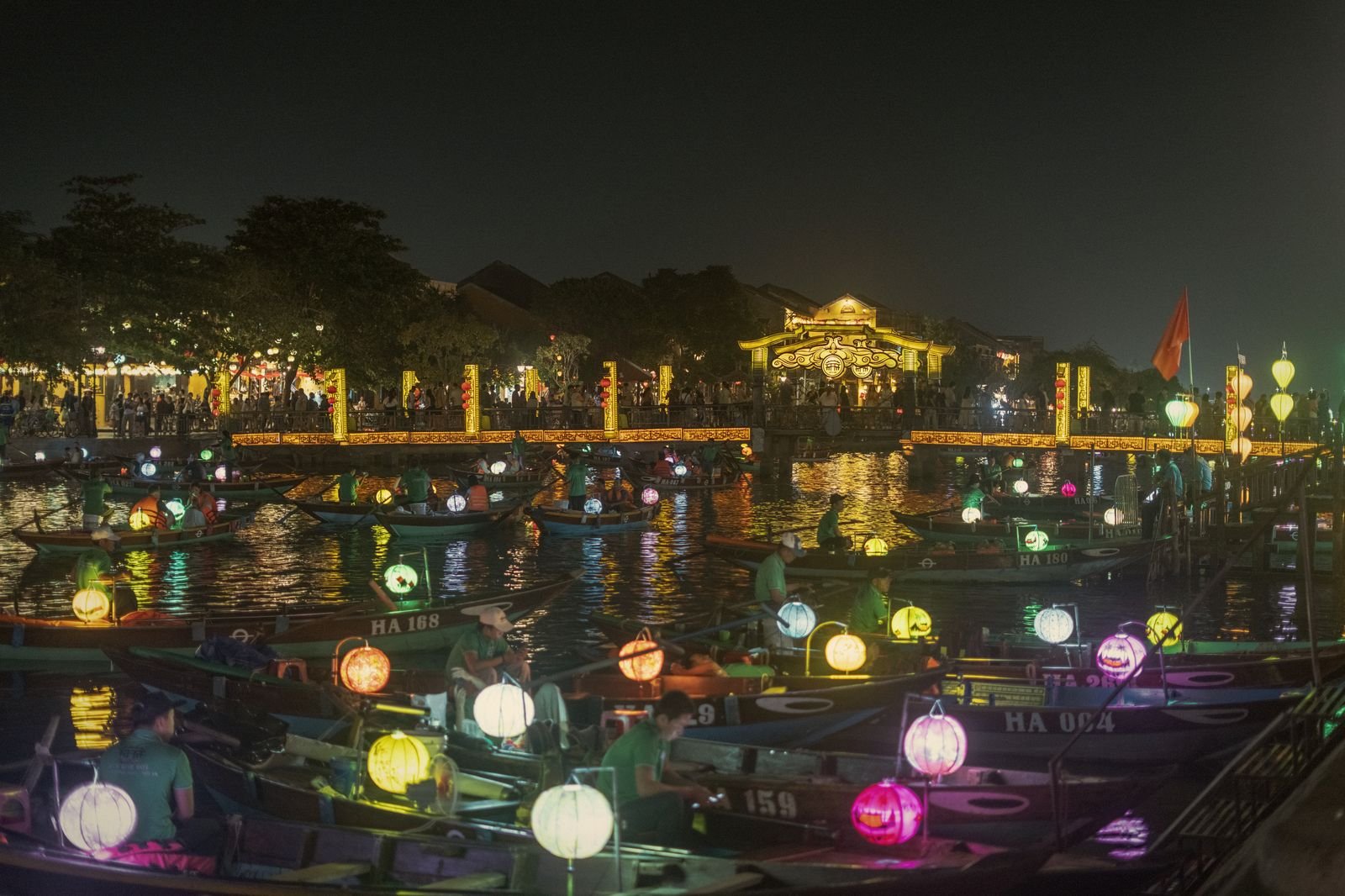
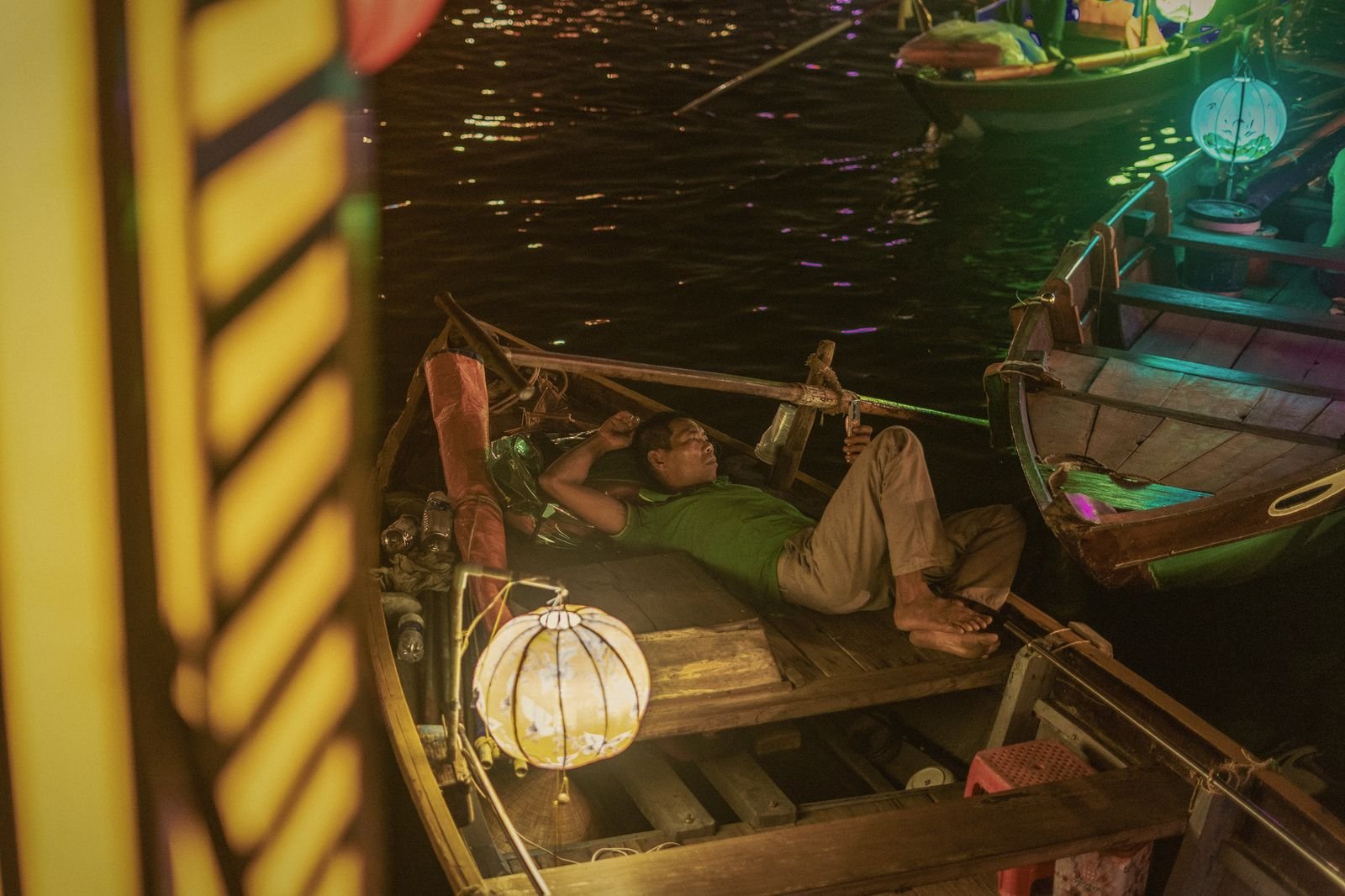
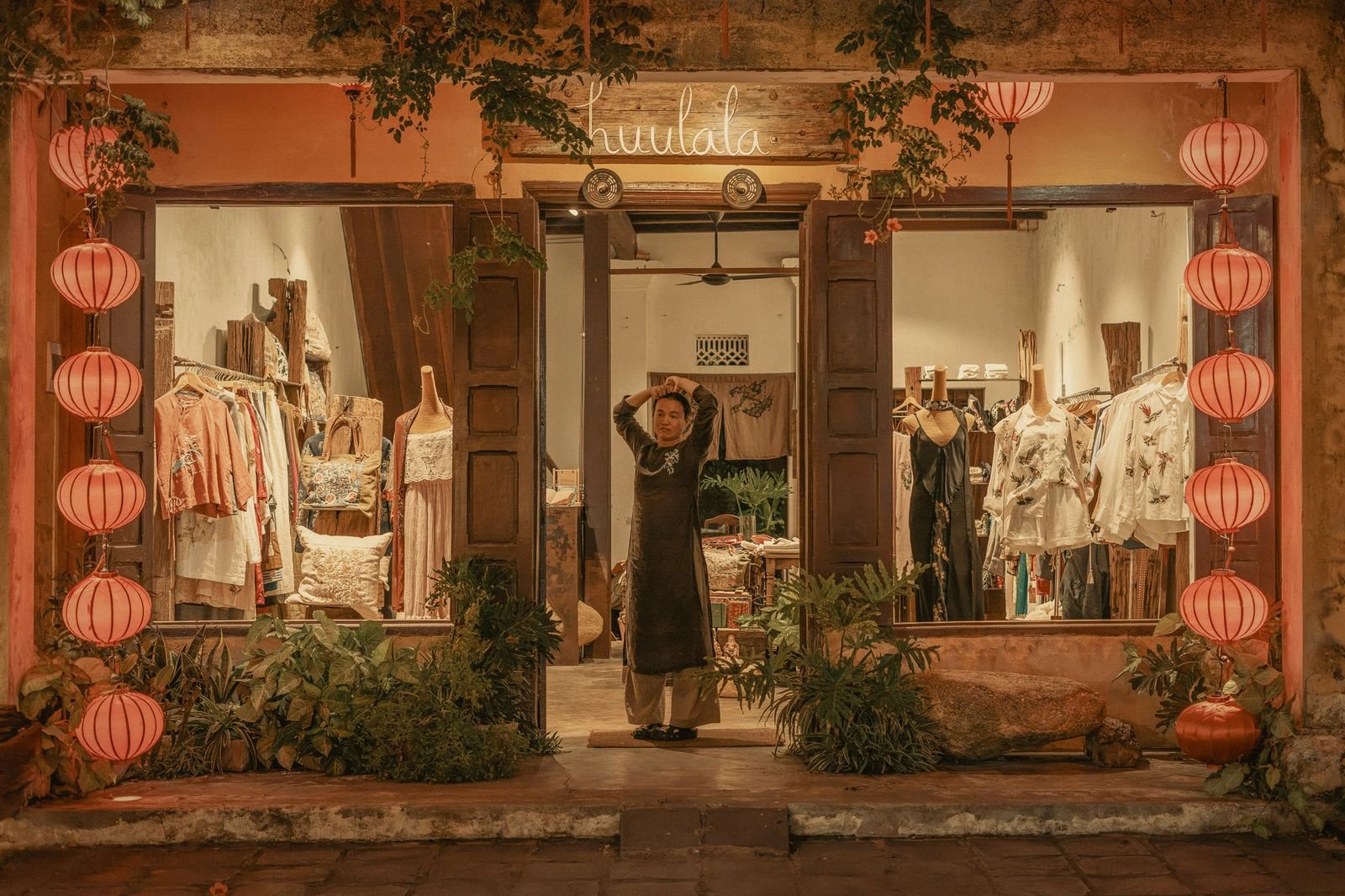
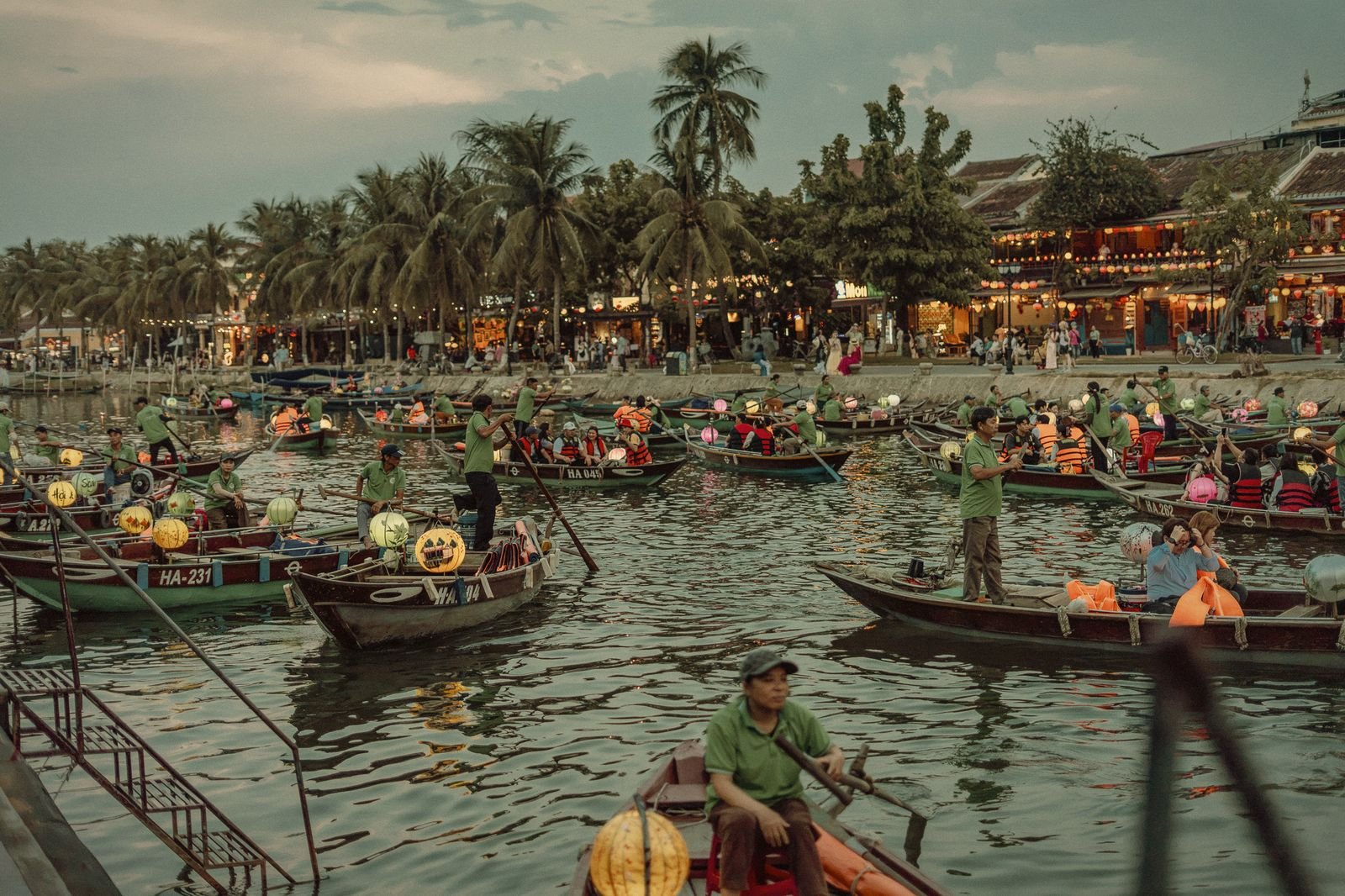
By day it is ochre walls, bougainvillea and tailors. After dark it becomes a town of light. Silk lanterns hang over every street, and boatwomen paddle visitors out to set small paper lanterns afloat with a candle and a wish. We spent an evening with a lantern maker, watching her stretch silk over a bamboo frame and paint each panel by hand, then followed the boats down the river until the lights were scattered all the way to the bridge.
Field notes Hội An: culture and practical tips
Culture note
Releasing a floating lantern is a gesture of remembrance and good luck, made most often on the full moon of each lunar month, when the old town dims its electric lights. Buy from the older women on the riverbank. For many of them it is their livelihood.
If you go
- The old town charges a ticket that covers entry to a set number of historic houses and assembly halls.
- Come at blue hour, about 30 minutes after sunset, when the lanterns are lit but the sky still holds colour.
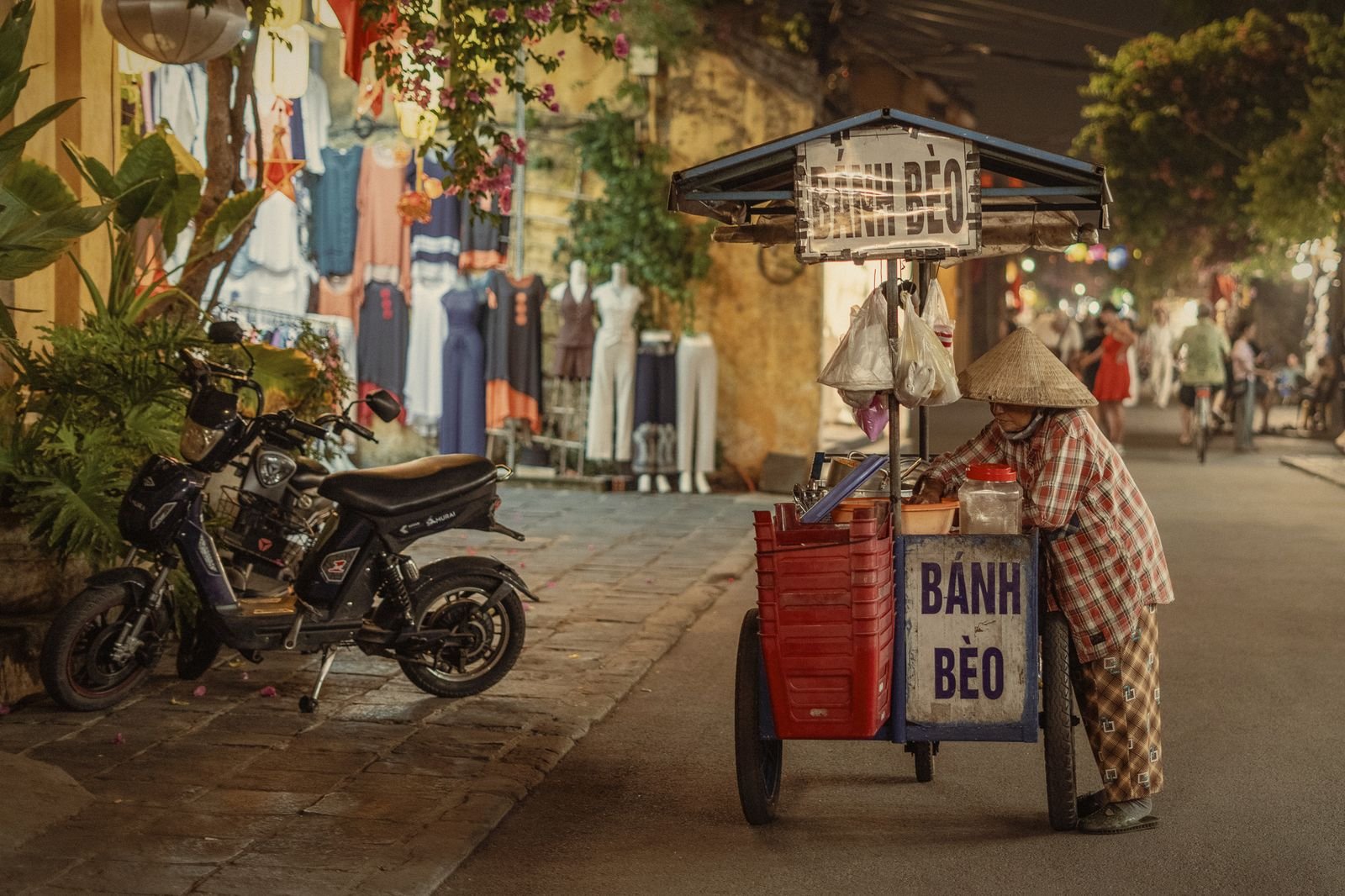
- Try cao lầu, the noodle dish found only in Hội An, and bánh bèo from the street carts.
Chapter four Vietnam 5 September
Mỹ Sơn Sanctuary
Thánh địa Mỹ Sơn15.76° N, 108.12° E
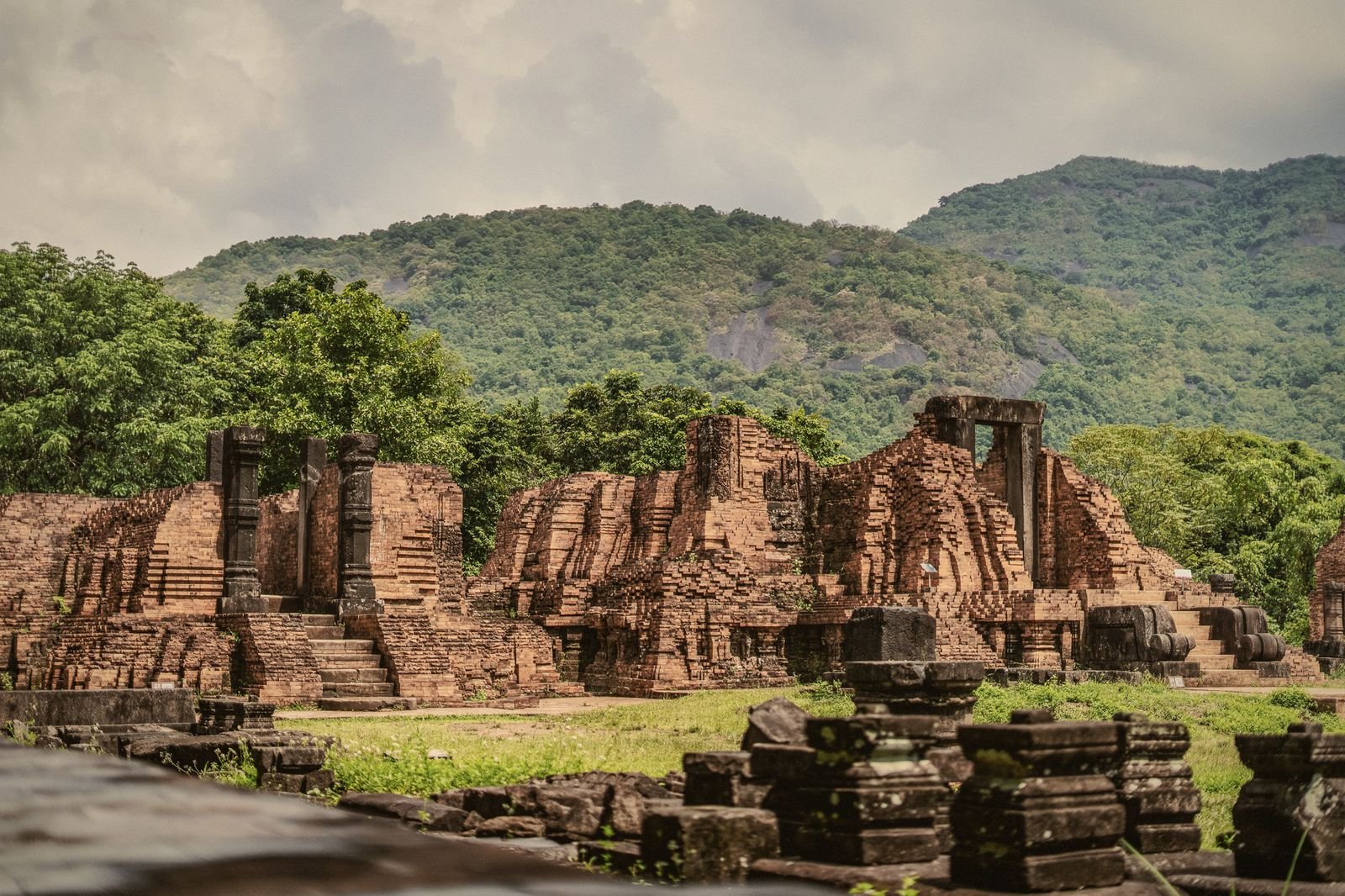
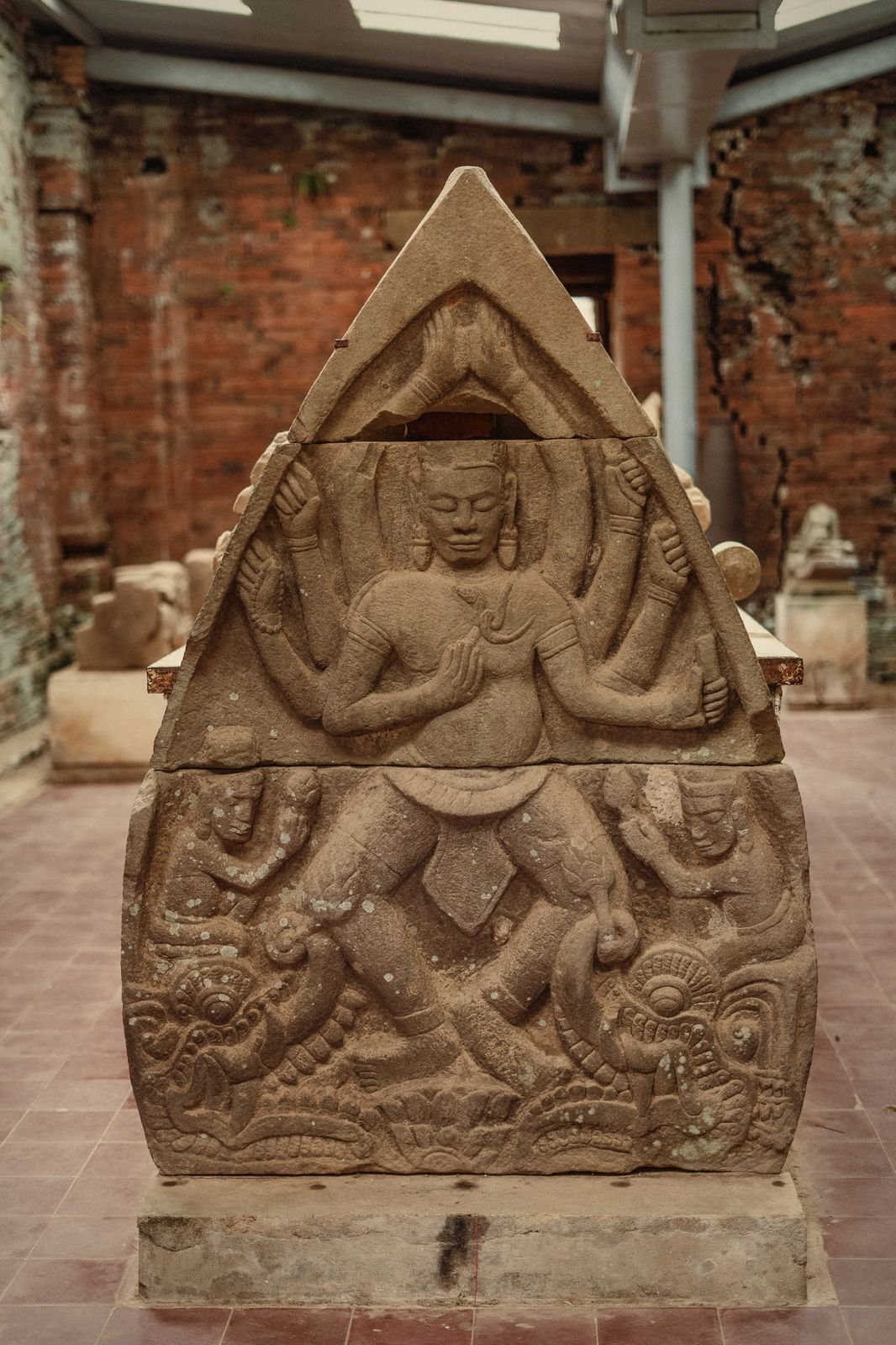
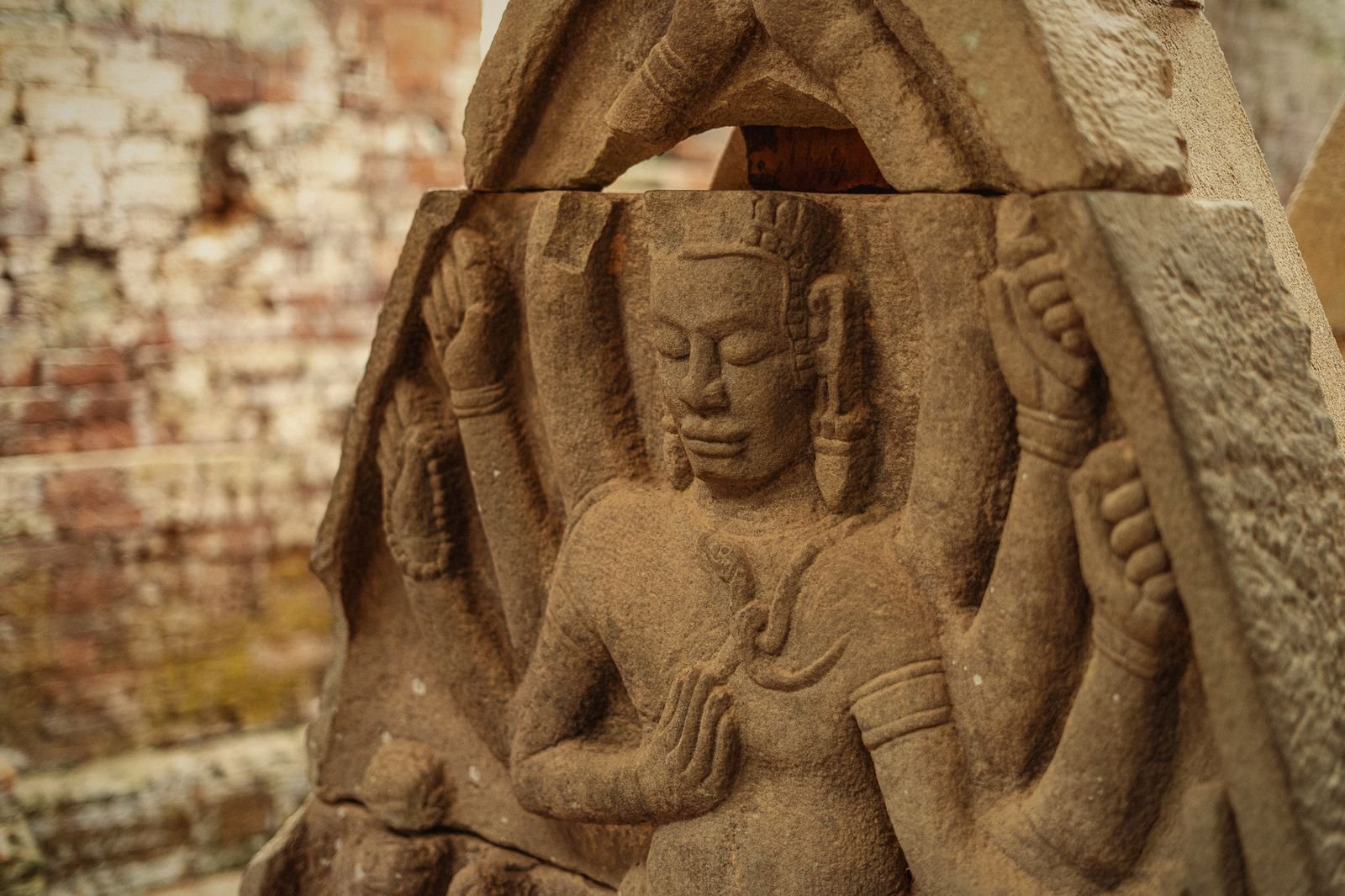
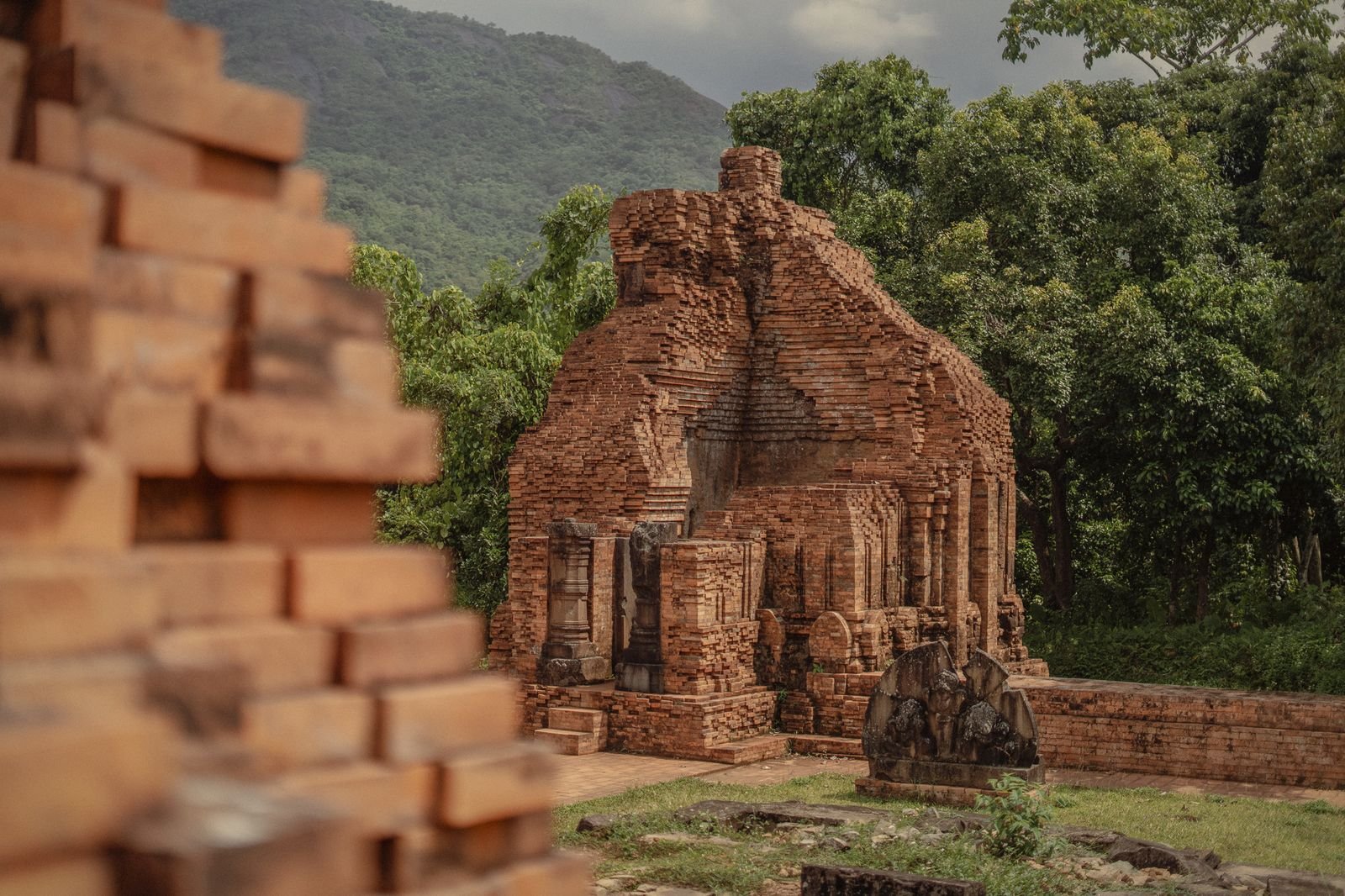
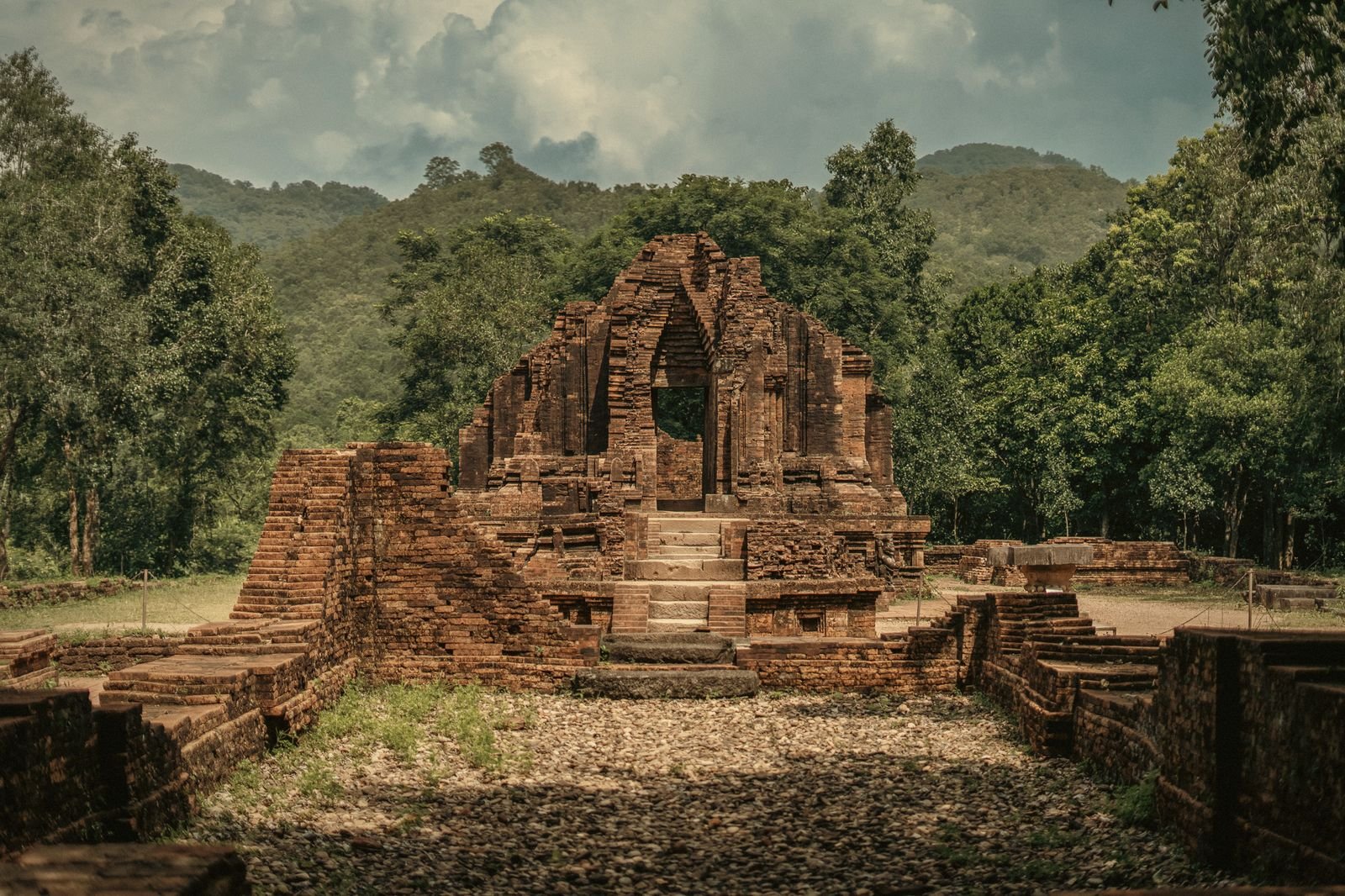
Plate 26The brick tower-temples of My Son Sanctuary below forested mountains
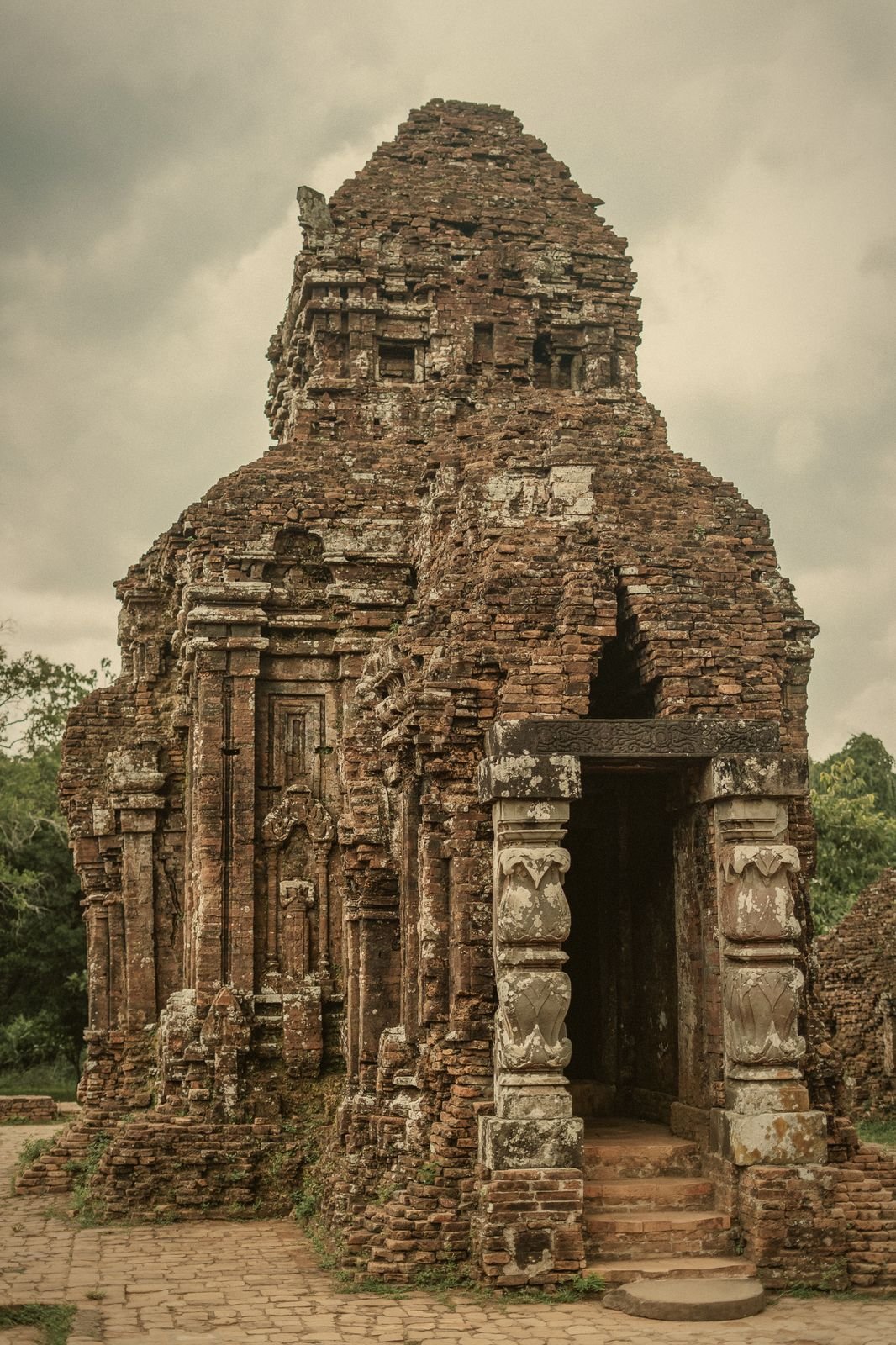
An hour inland from Hội An, in a valley ringed by jungle, are the remains of the Champa kingdom’s holiest site. Between roughly the 4th and 13th centuries the Cham built more than seventy tower-temples here, most dedicated to the Hindu god Shiva. Mỹ Sơn was the kingdom’s religious and political heart, and it joined UNESCO’s World Heritage list in the same year as Hội An.
Walking through it, with the forest pressing in on every side, felt closer to Angkor than to anything else in Vietnam.
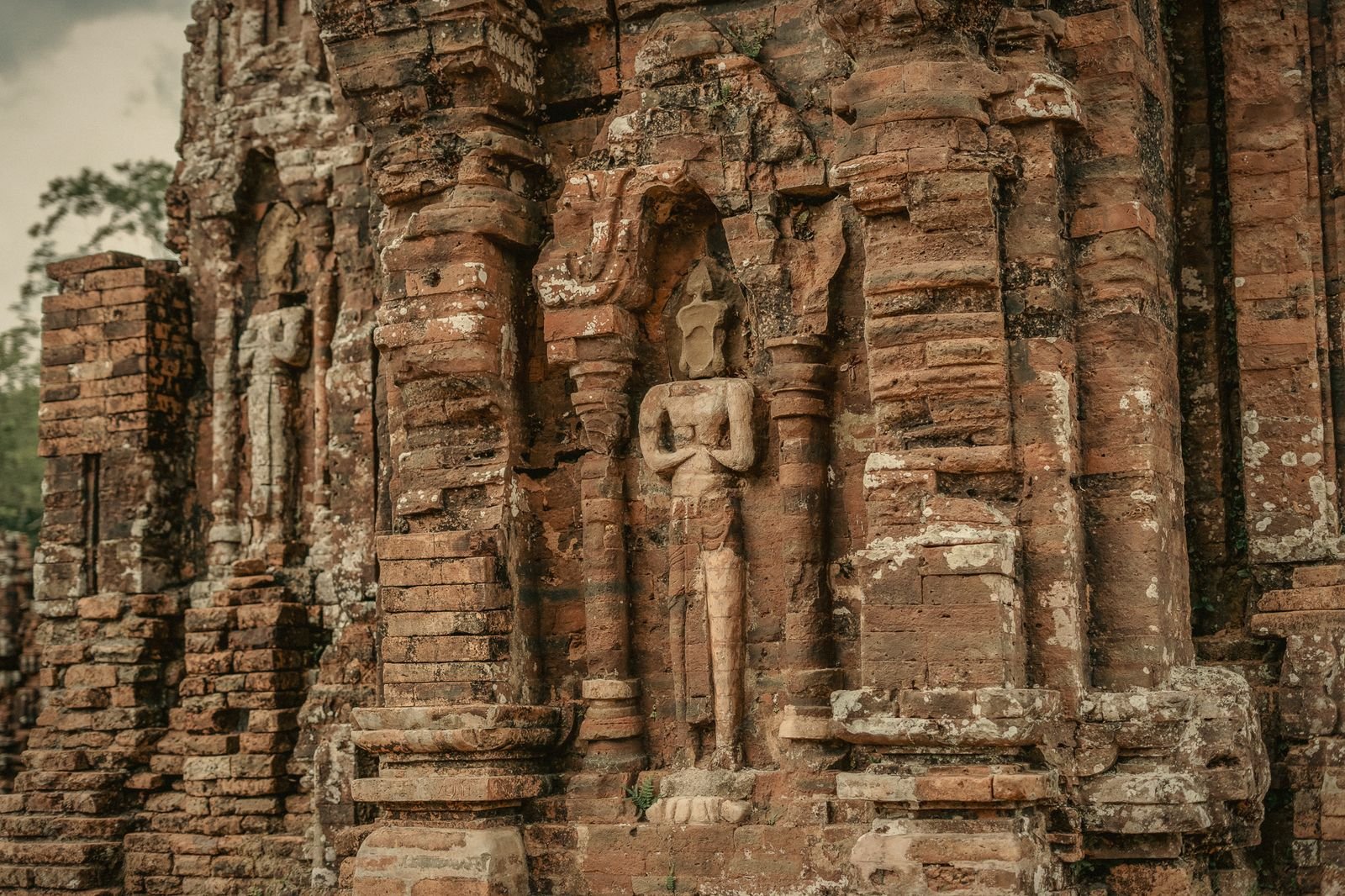
The Cham worked in fired brick laid without visible mortar, and nobody is completely sure how they bonded it. Many towers were damaged by bombing during the war, and what stands now is part ruin, part careful restoration. Walking through it in the late-morning humidity, with the forest pressing in on every side, felt closer to Angkor than to anything else in Vietnam. Look for the sandstone carvings: dancing deities, guardian figures and lingas, some still in place, others gathered in the small site museum.
Field notes Mỹ Sơn Sanctuary: culture and practical tips
Culture note
Mỹ Sơn is still revered by the Cham people of central Vietnam. Stay on the marked paths, don’t climb the ruins, and dress with shoulders and knees covered.
If you go
- Arrive at opening time. By late morning the heat and the tour buses arrive together.
- Combine Mỹ Sơn with Hội An as a half-day trip; the drive is about an hour each way.
- Bring water and insect repellent. There is little shade between the temple groups.
Chapter five Vietnam 6 – 7 September
Đà Nẵng
Đà Nẵng16.05° N, 108.21° E
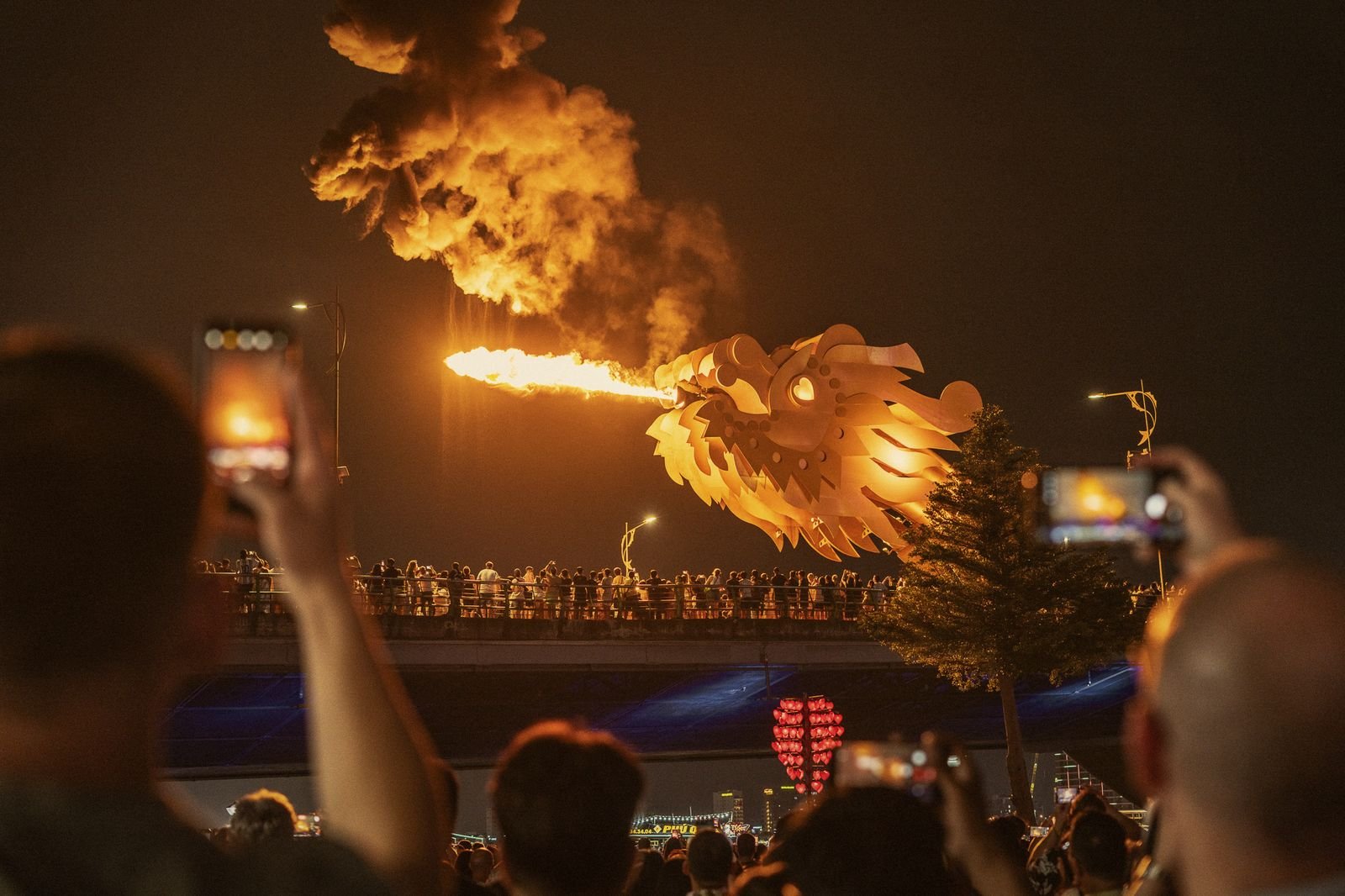
Plate 33The Dragon Bridge breathing fire over the Han River in Da Nang
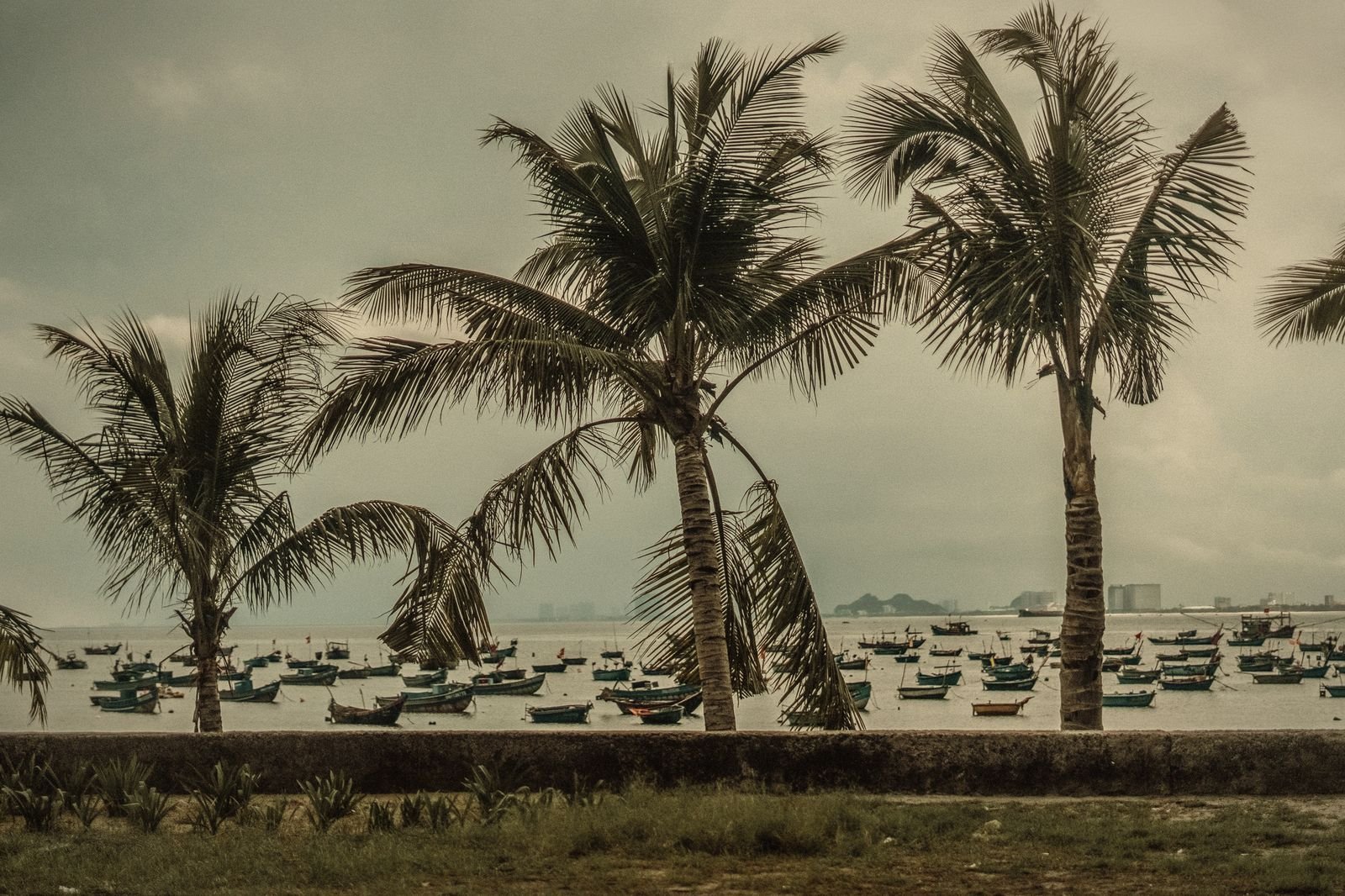
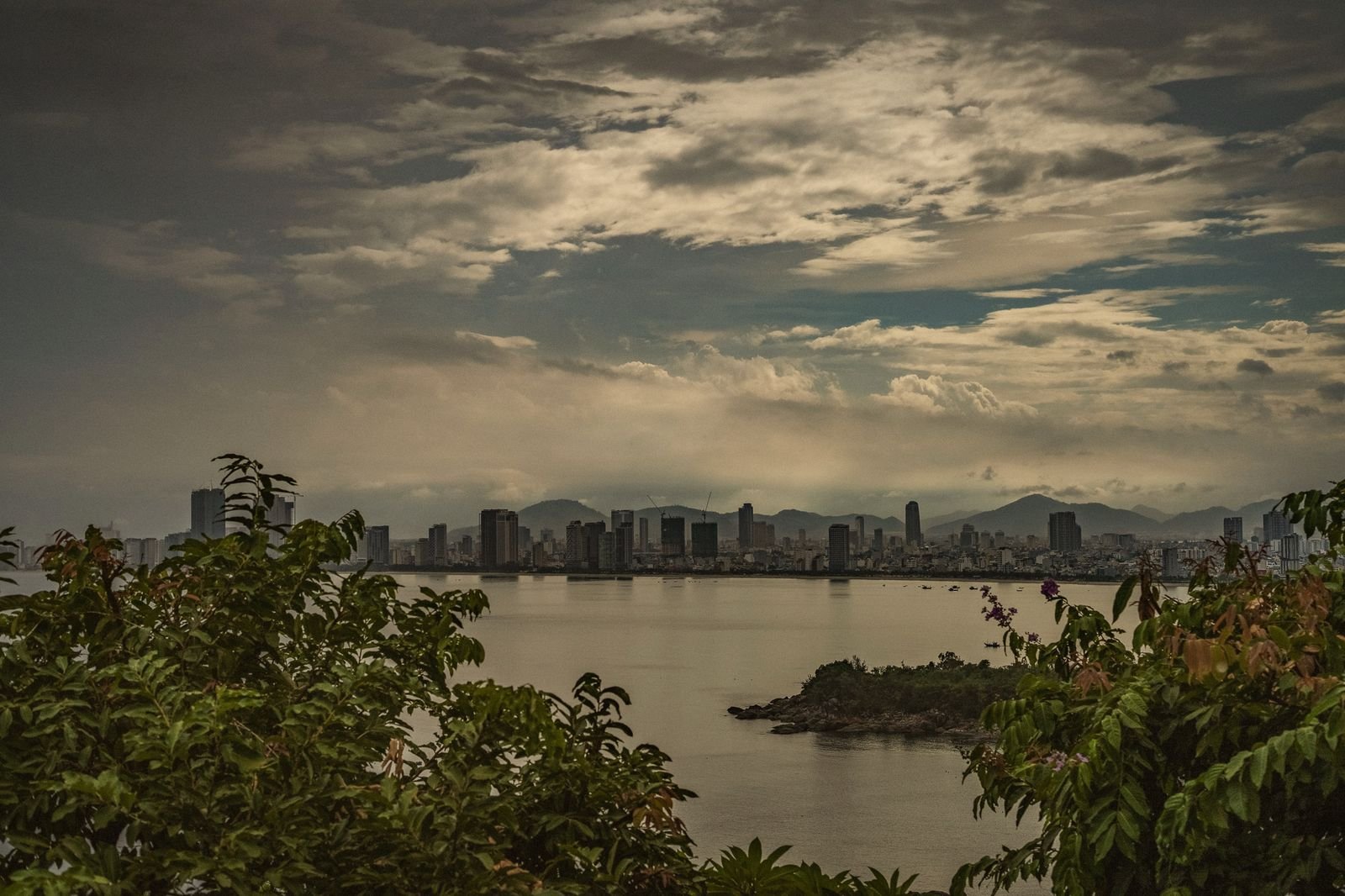
Đà Nẵng is central Vietnam’s modern face: a long beach, a skyline of glass along the Hàn River, and a bridge shaped like a dragon. On weekend nights at 9pm the Dragon Bridge breathes fire and then water over the crowd, and on a Sunday in early September the whole riverbank turned out to watch, phones raised, children on shoulders.
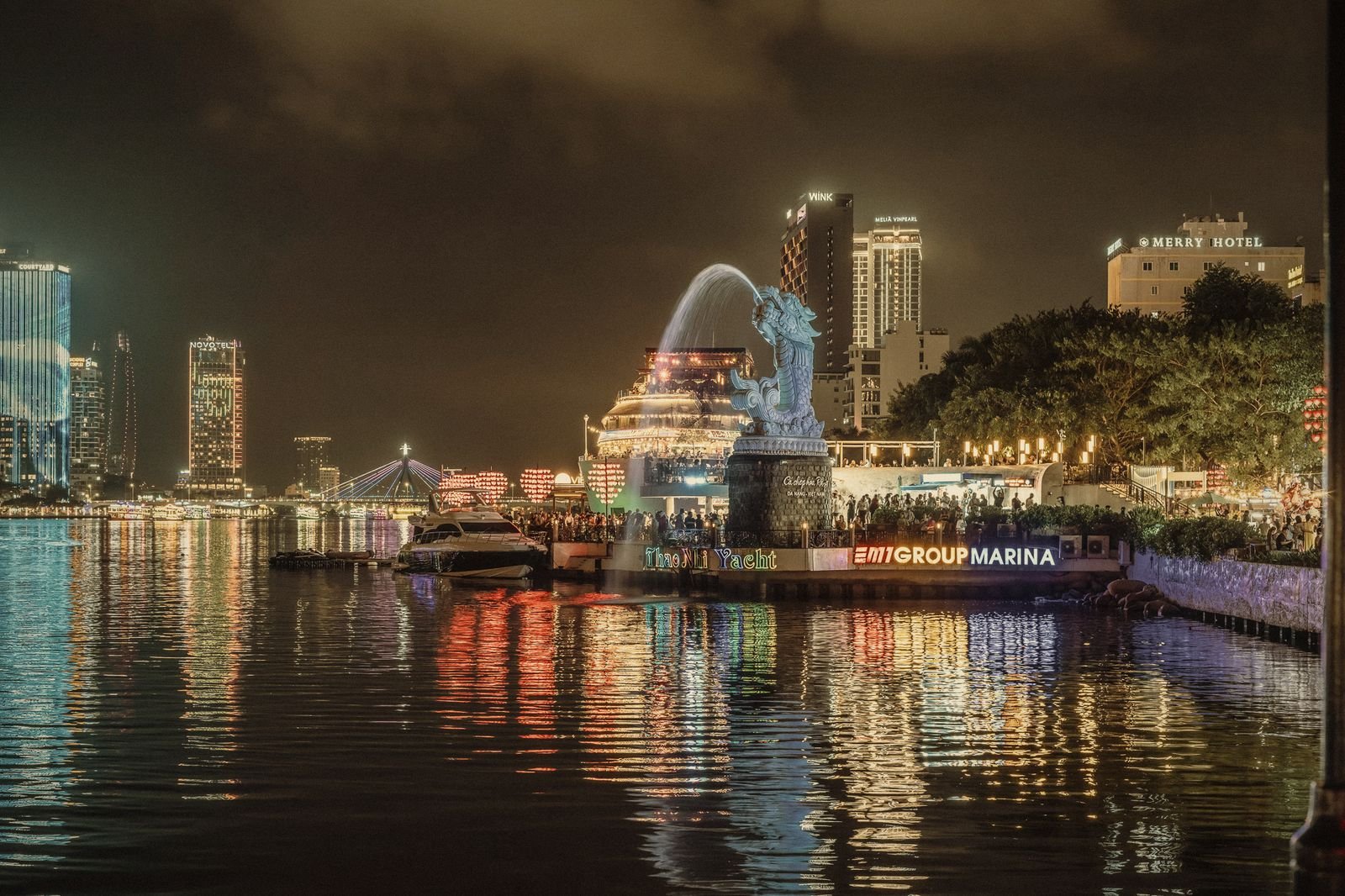
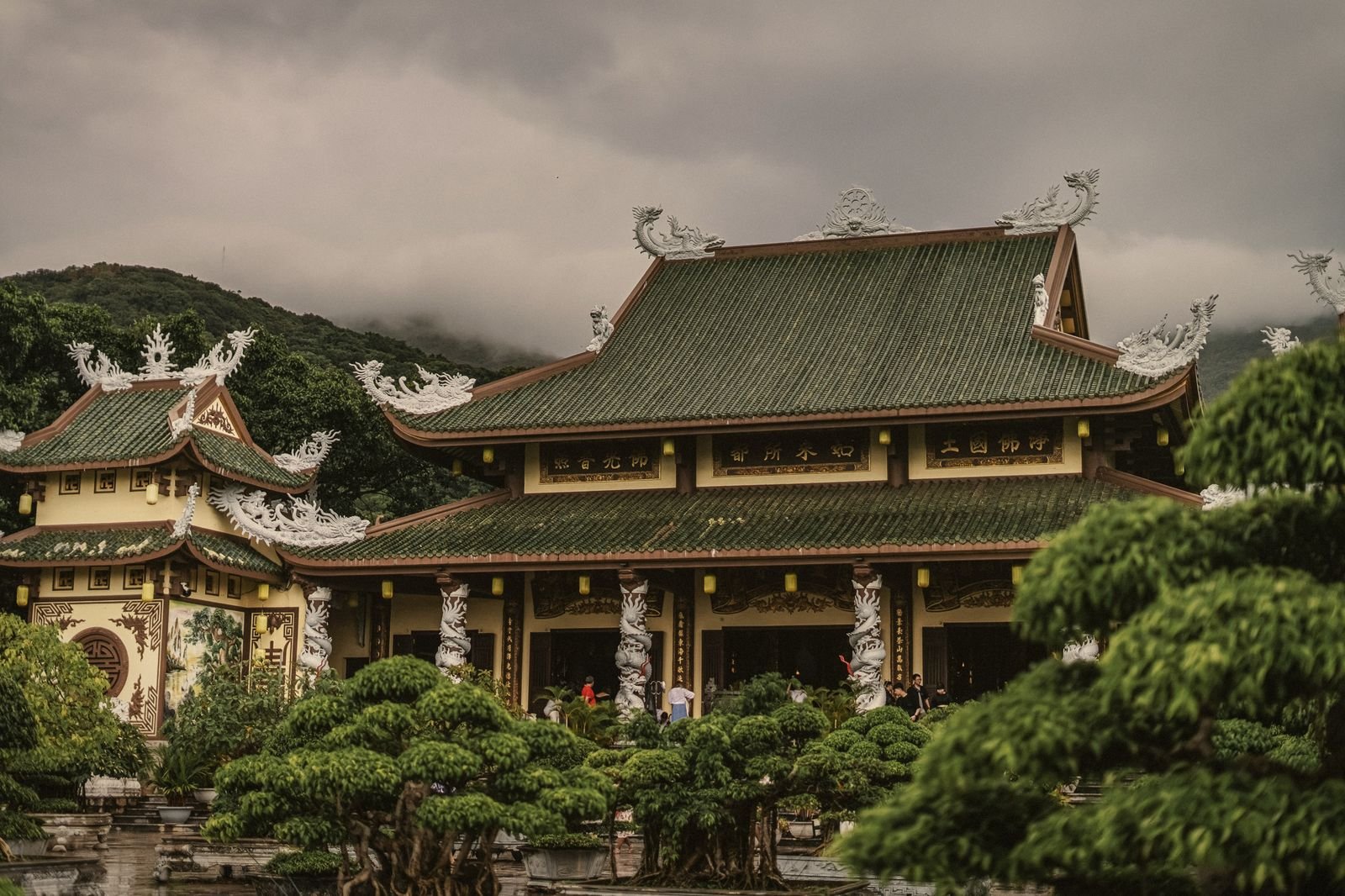
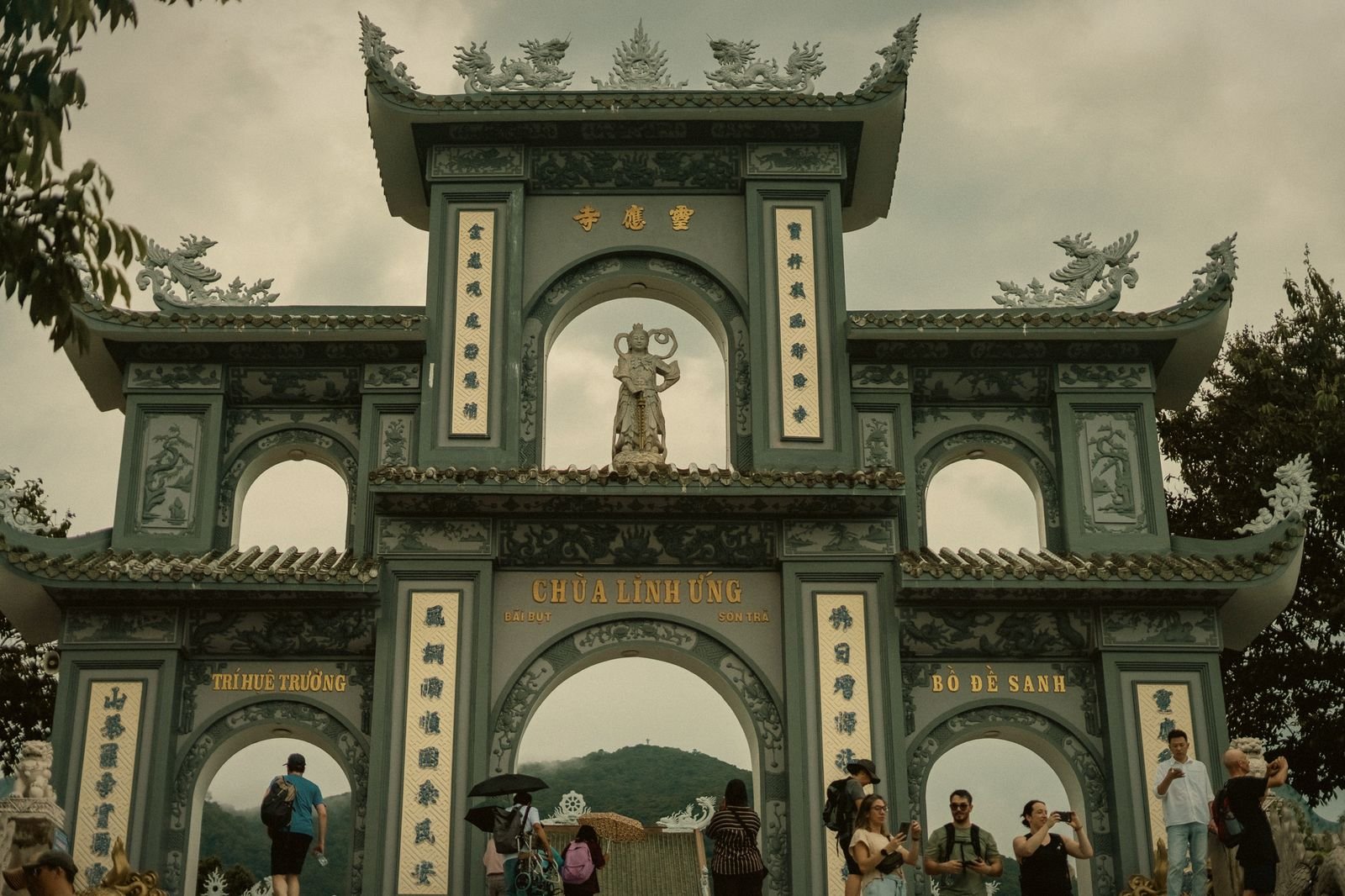
We went up in the rain, and the statue appeared and disappeared in the mist above us.
The calm side of the city is on the Sơn Trà peninsula. Linh Ứng Pagoda sits on its slope above the sea, guarded by stone dragons and bonsai gardens, and its white Lady Buddha statue, a figure of Quan Âm, the bodhisattva of compassion, stands 67 metres tall and faces the water. Fishermen say she watches over the boats. We went up in the rain, when mist was moving through the trees and the statue appeared and disappeared above us.
Field notes Đà Nẵng: culture and practical tips
Culture note
Quan Âm (Guanyin) is the most loved figure in Vietnamese Buddhism, prayed to for protection at sea and in childbirth. Remove your shoes before entering pagoda halls and keep your voice low.
If you go
- The Dragon Bridge fire show runs on weekend evenings at 9pm. Watch from the riverbank on the east side for the head-on view.
- Sơn Trà is best by Grab or motorbike. Look out for the red-shanked douc langurs that live on the peninsula.
- Đà Nẵng airport is the easiest gateway to central Vietnam, with short flights to Hanoi and international connections.
Chapter six Vietnam 9 – 12 September
Hà Nội
Hà Nội21.03° N, 105.85° E
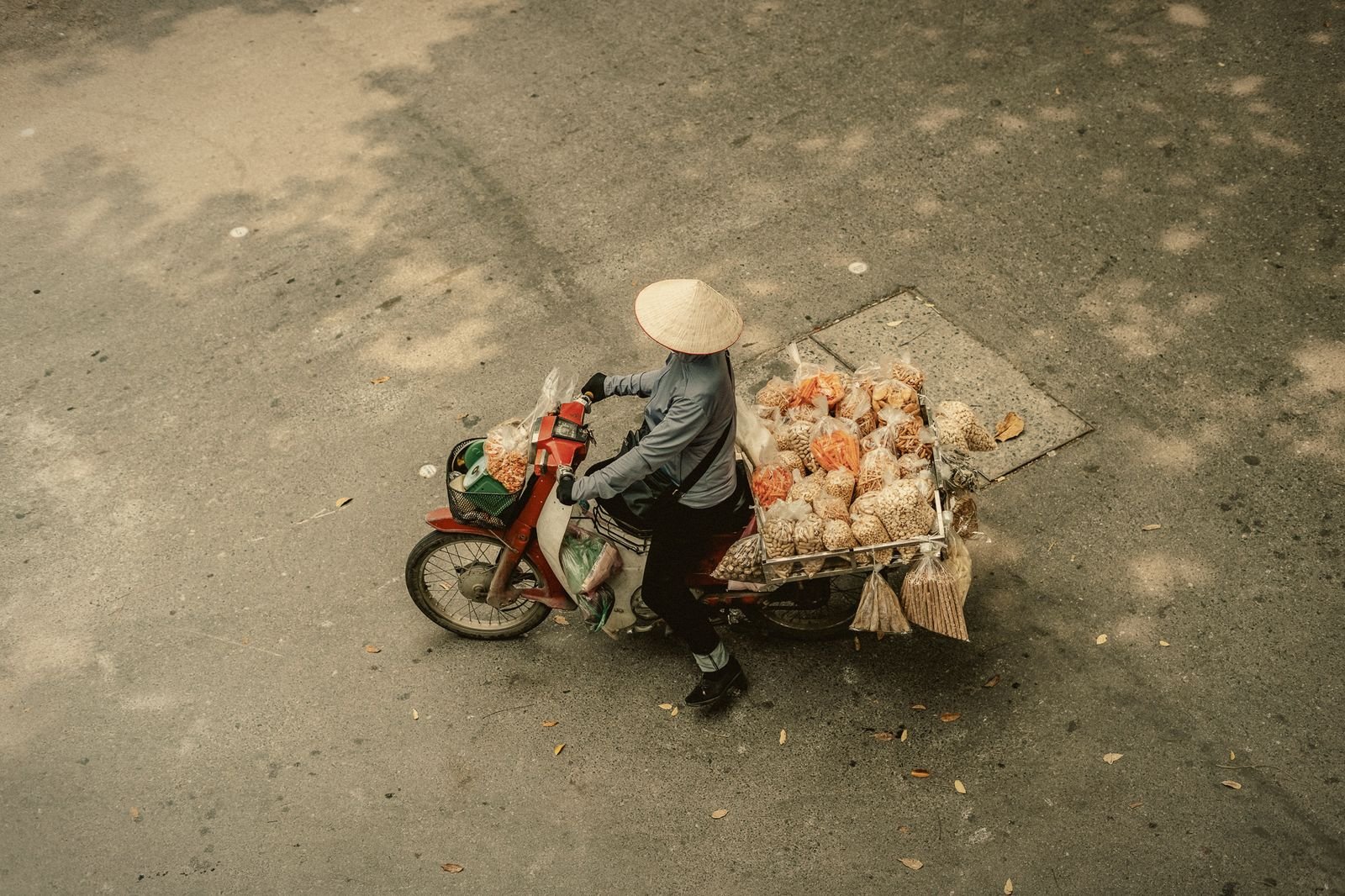
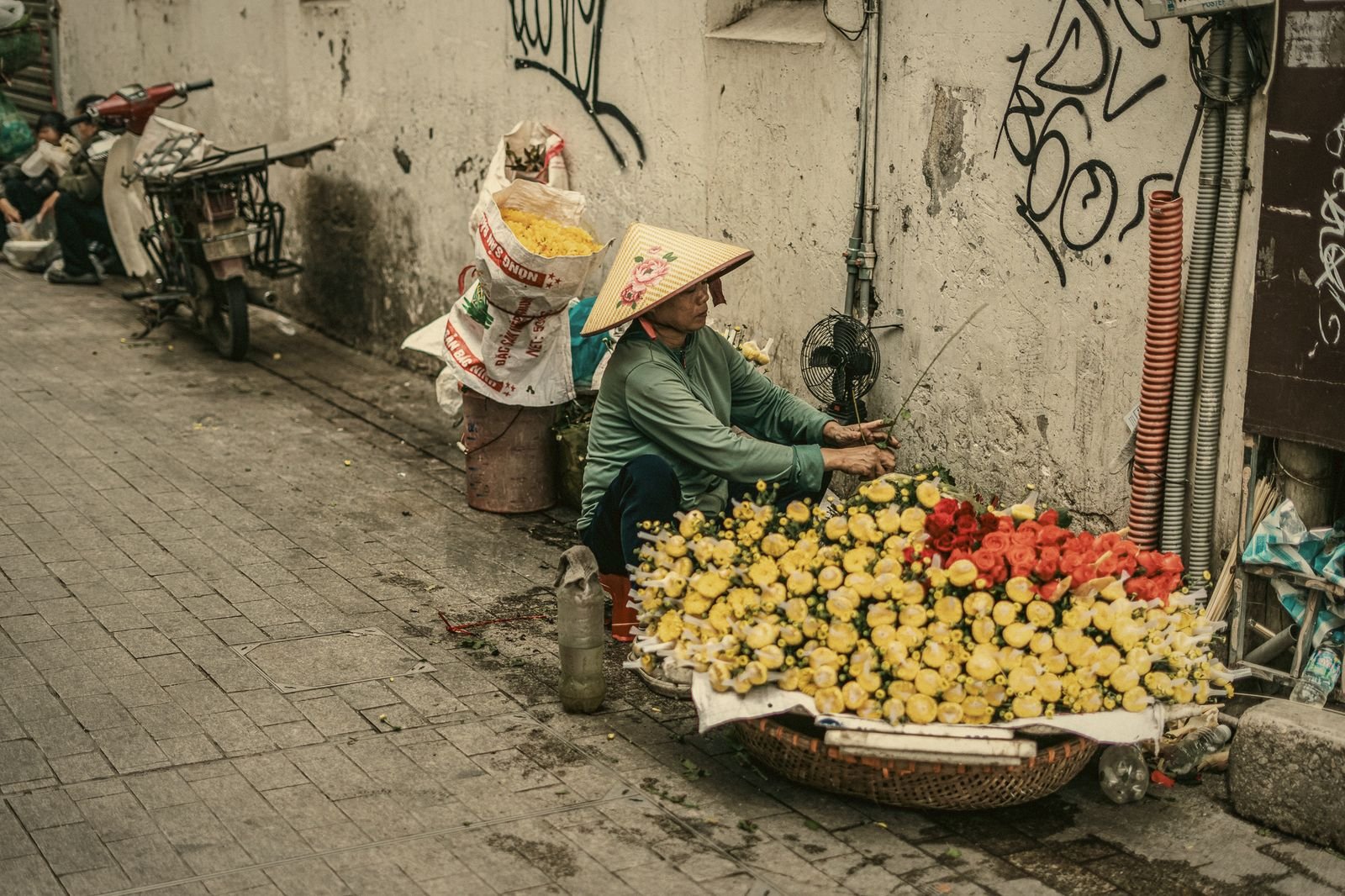
Plate 39A flower seller pushing her bicycle, seen from above, in Hanoi
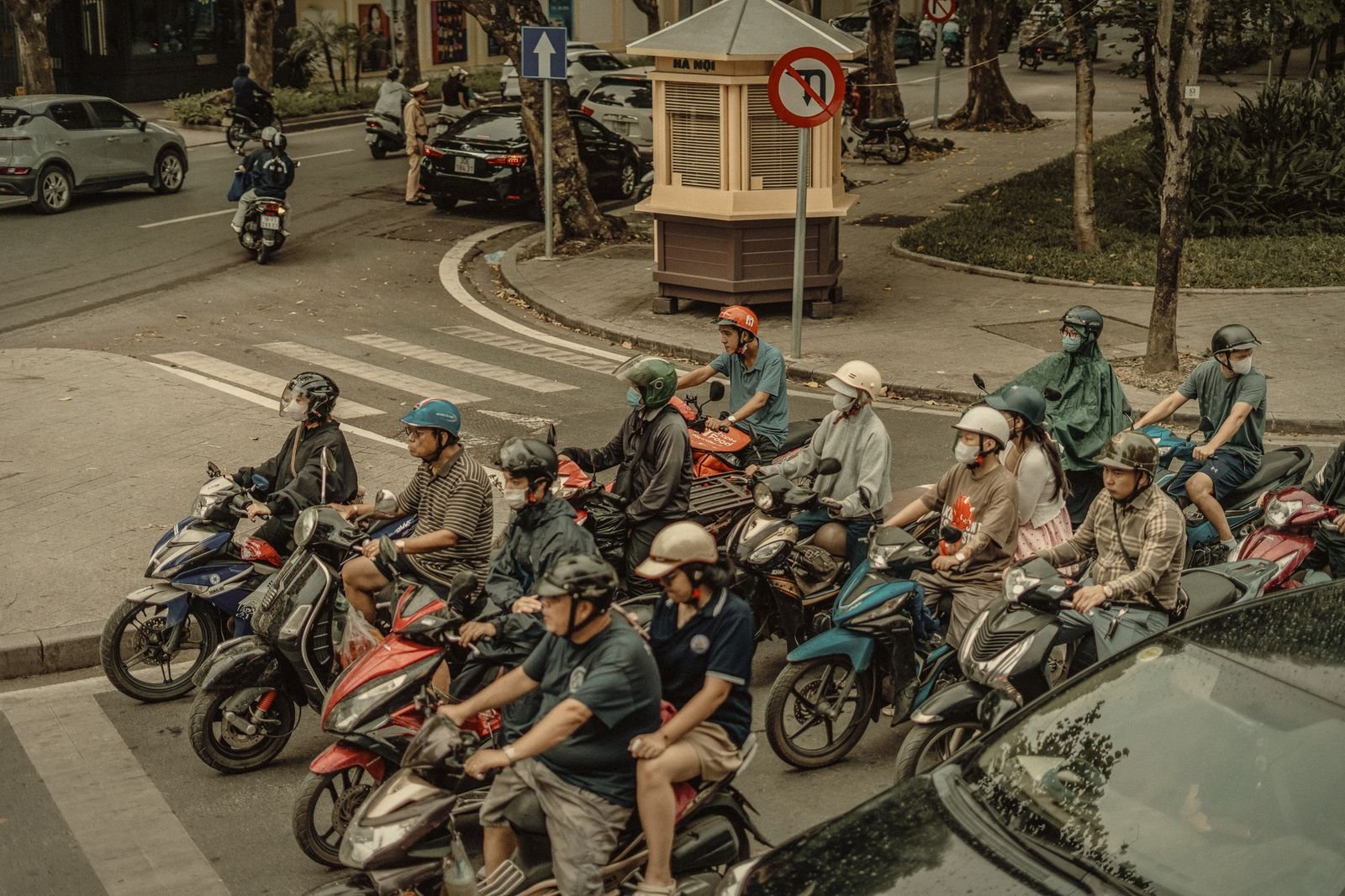
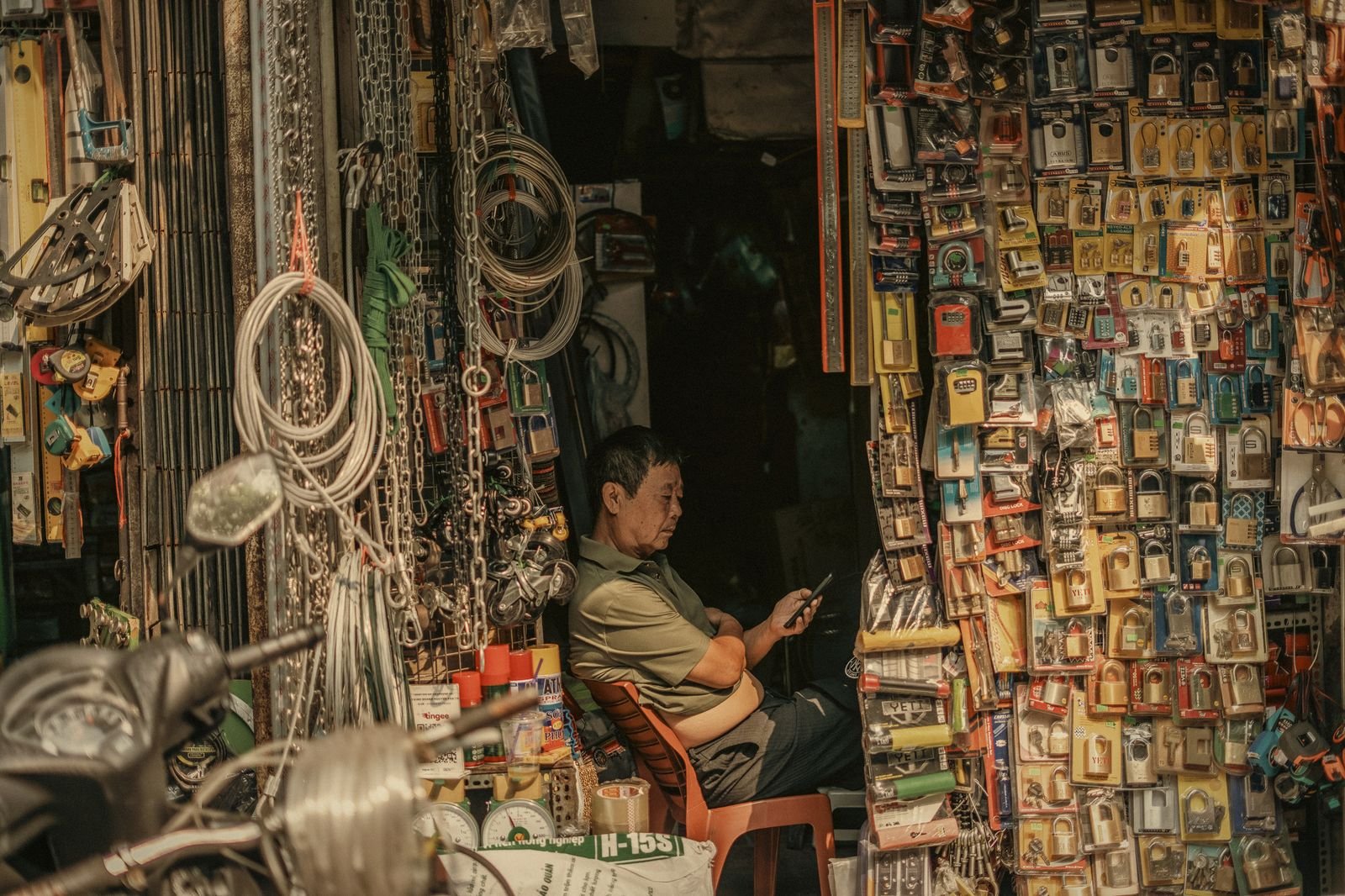
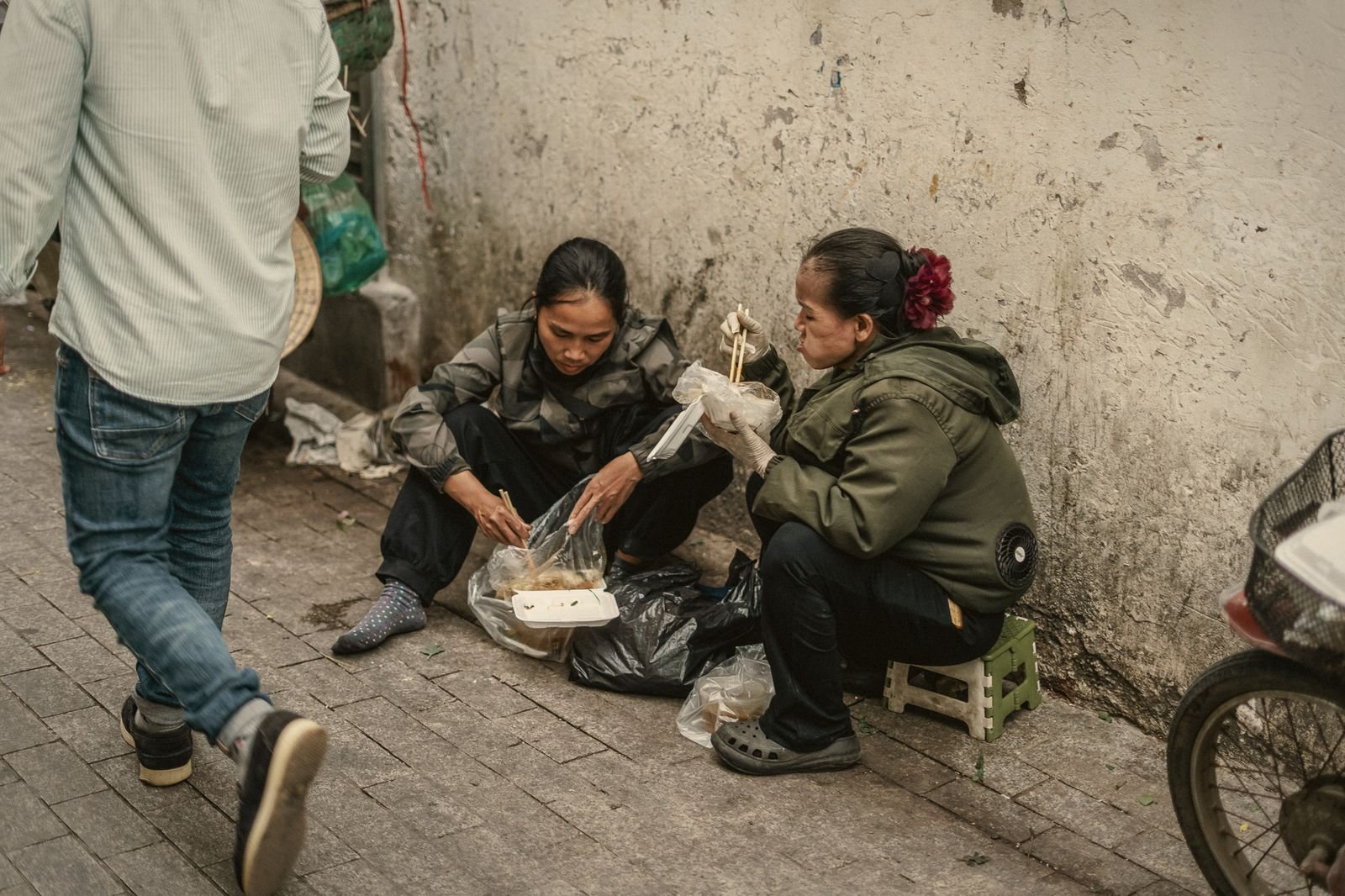
Hà Nội was the longest stop and the hardest to leave. The Old Quarter is a knot of streets once organised by trade, which is why some are still named for what they sold: silk, paper, tin, medicine. Life happens on the pavement here. People cook, eat, get haircuts and repair motorbikes on the same metre of tile, and the traffic moves around it all like water.
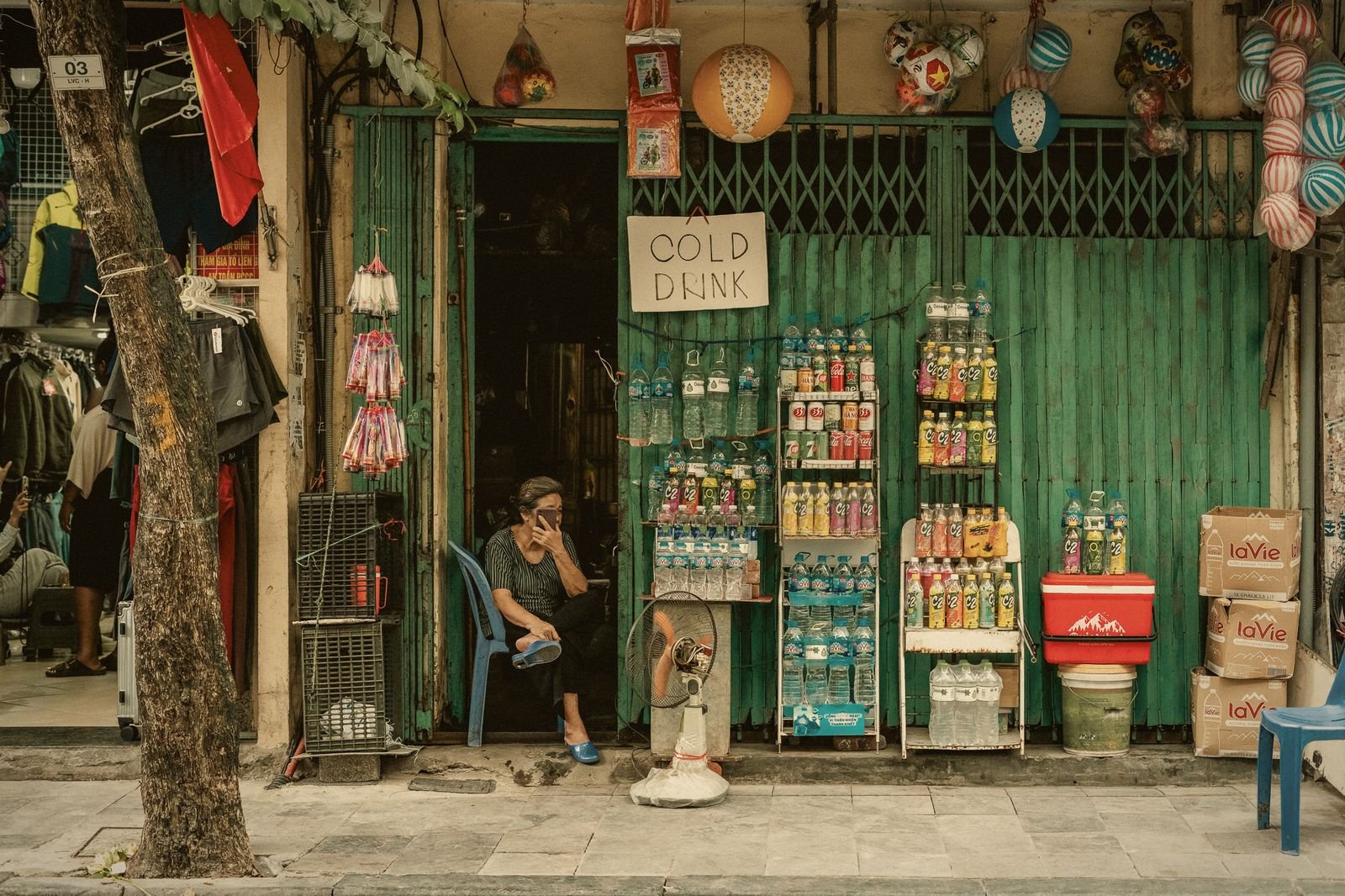
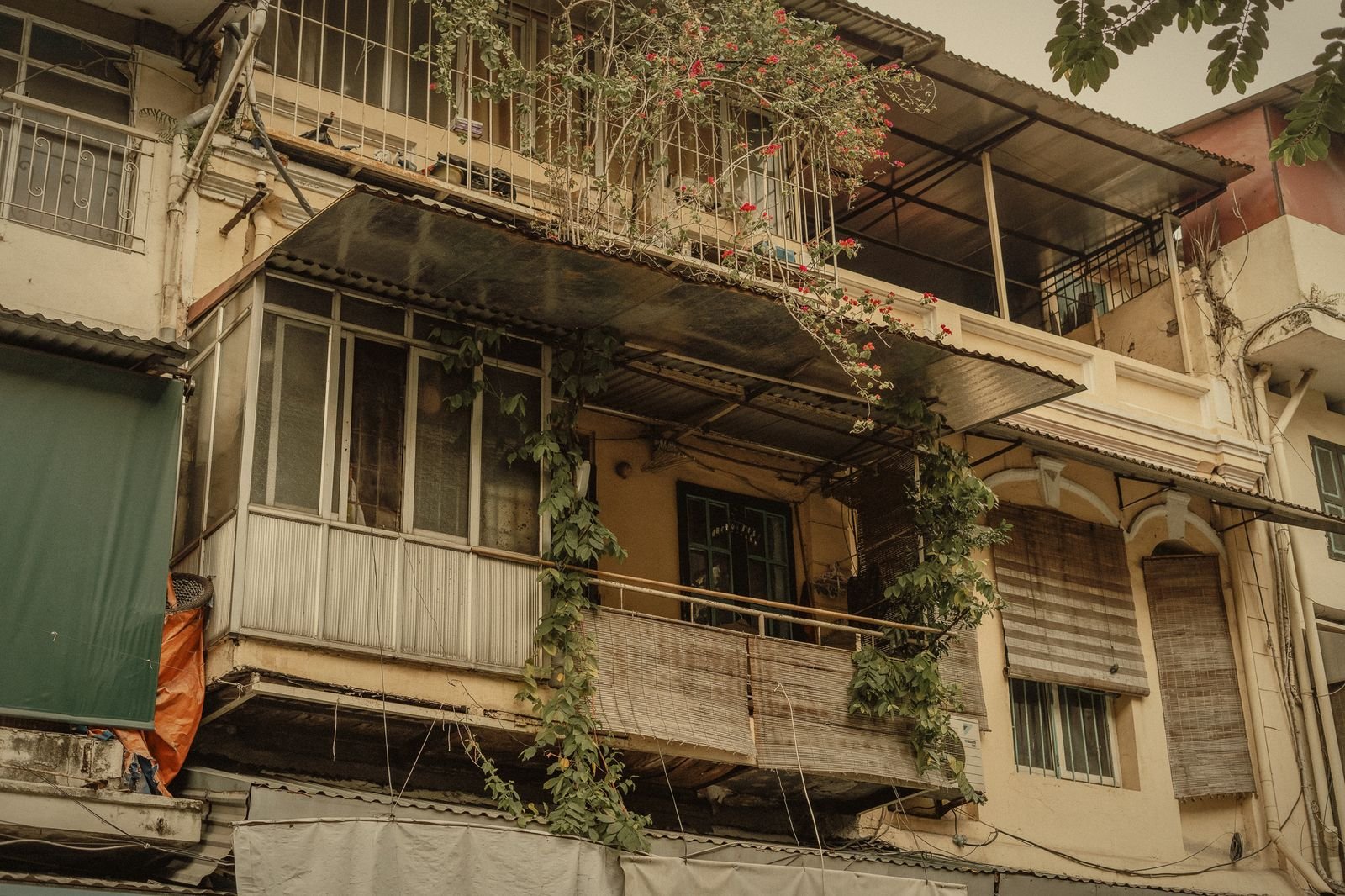
People cook, eat, get haircuts and repair motorbikes on the same metre of tile.
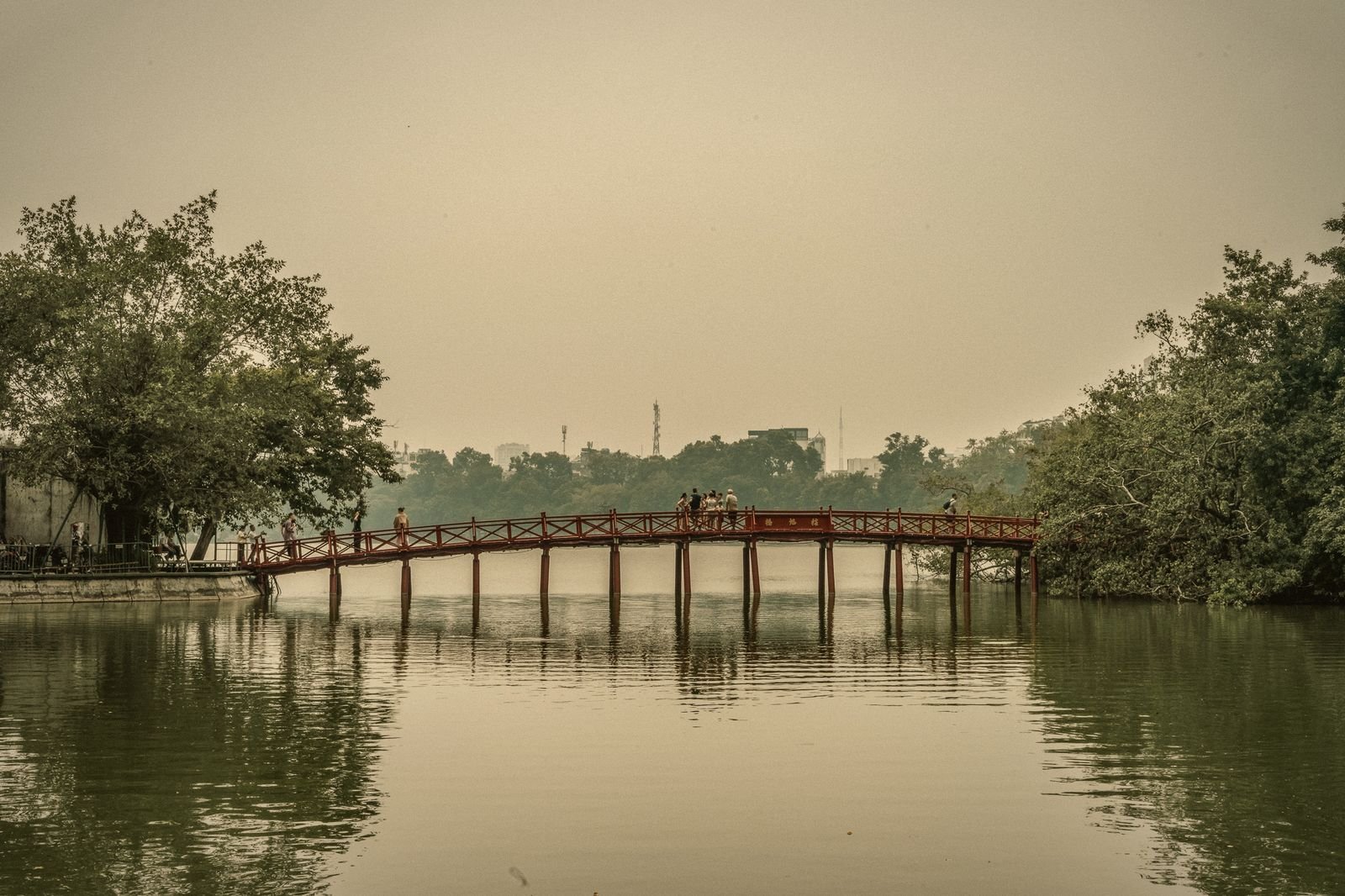
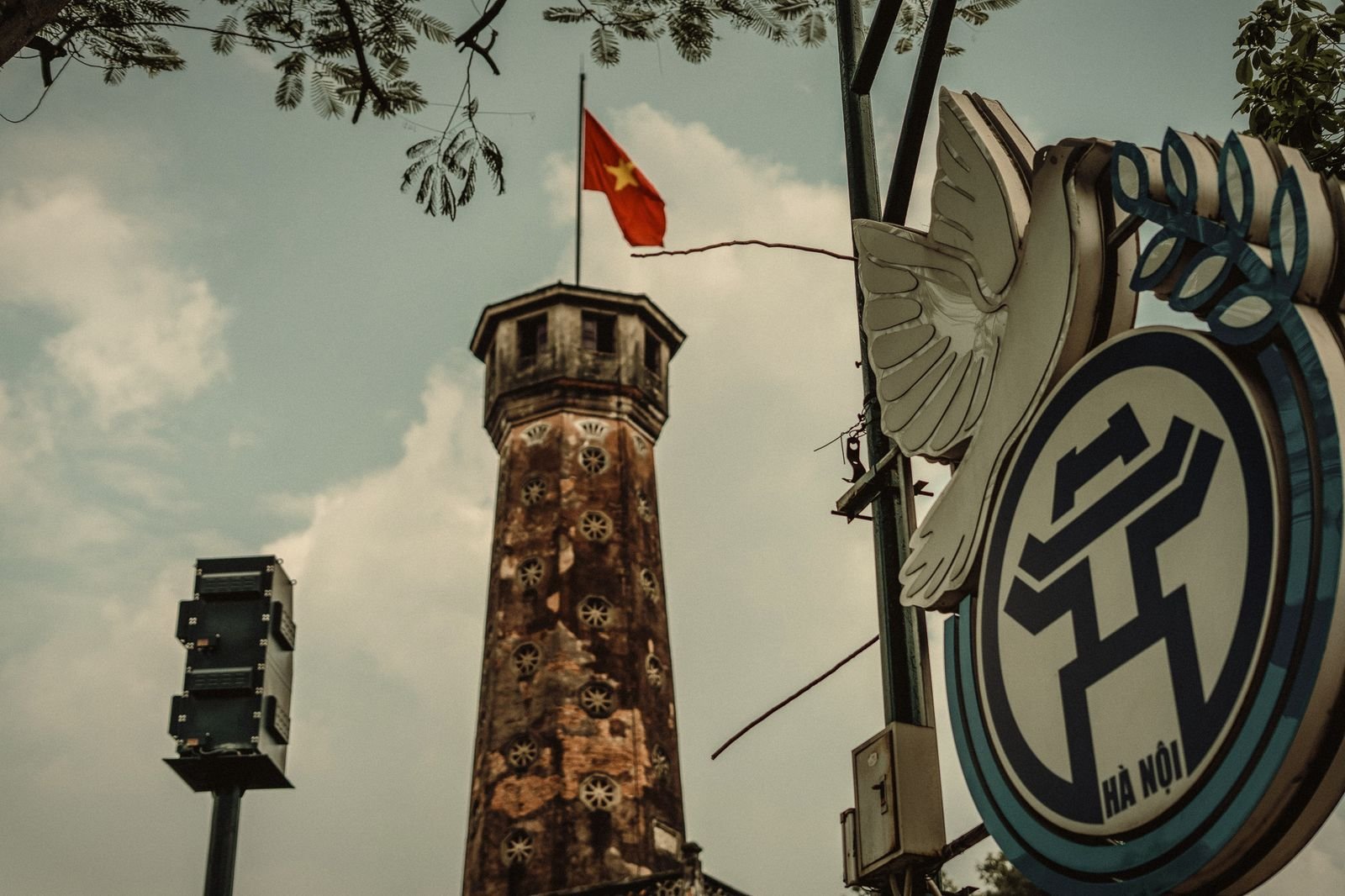
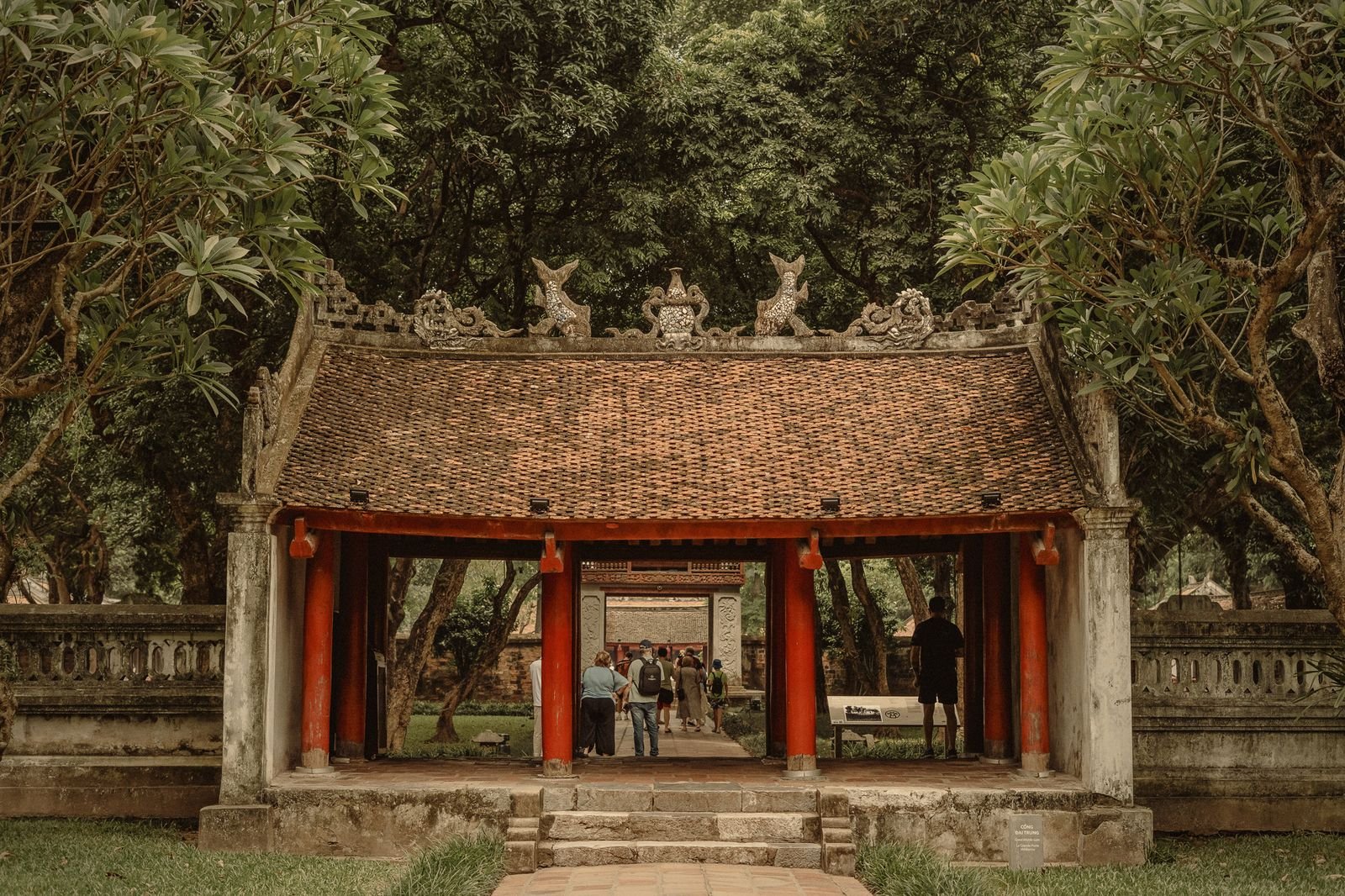
The city slows down at Hoàn Kiếm Lake. At dawn people exercise along the shore, and the red Thê Húc bridge leads to the Ngọc Sơn temple on its island. A short walk away, the Temple of Literature, founded in 1070, honours Confucius and housed Vietnam’s first national university. We spent our mornings by the water, our afternoons getting lost in the alleys, and our evenings over bún chả and cà phê trứng, the egg coffee Hà Nội invented.
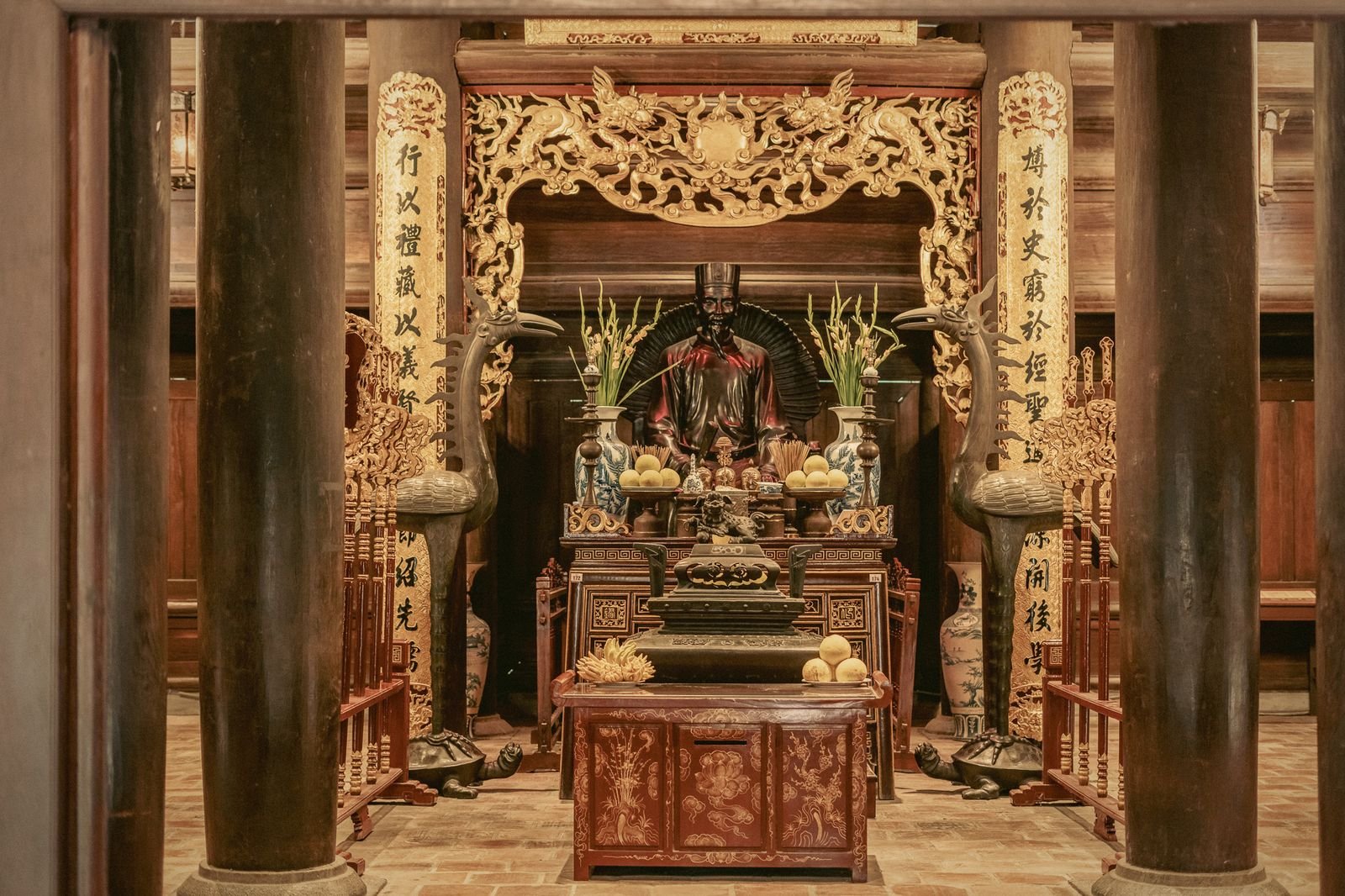
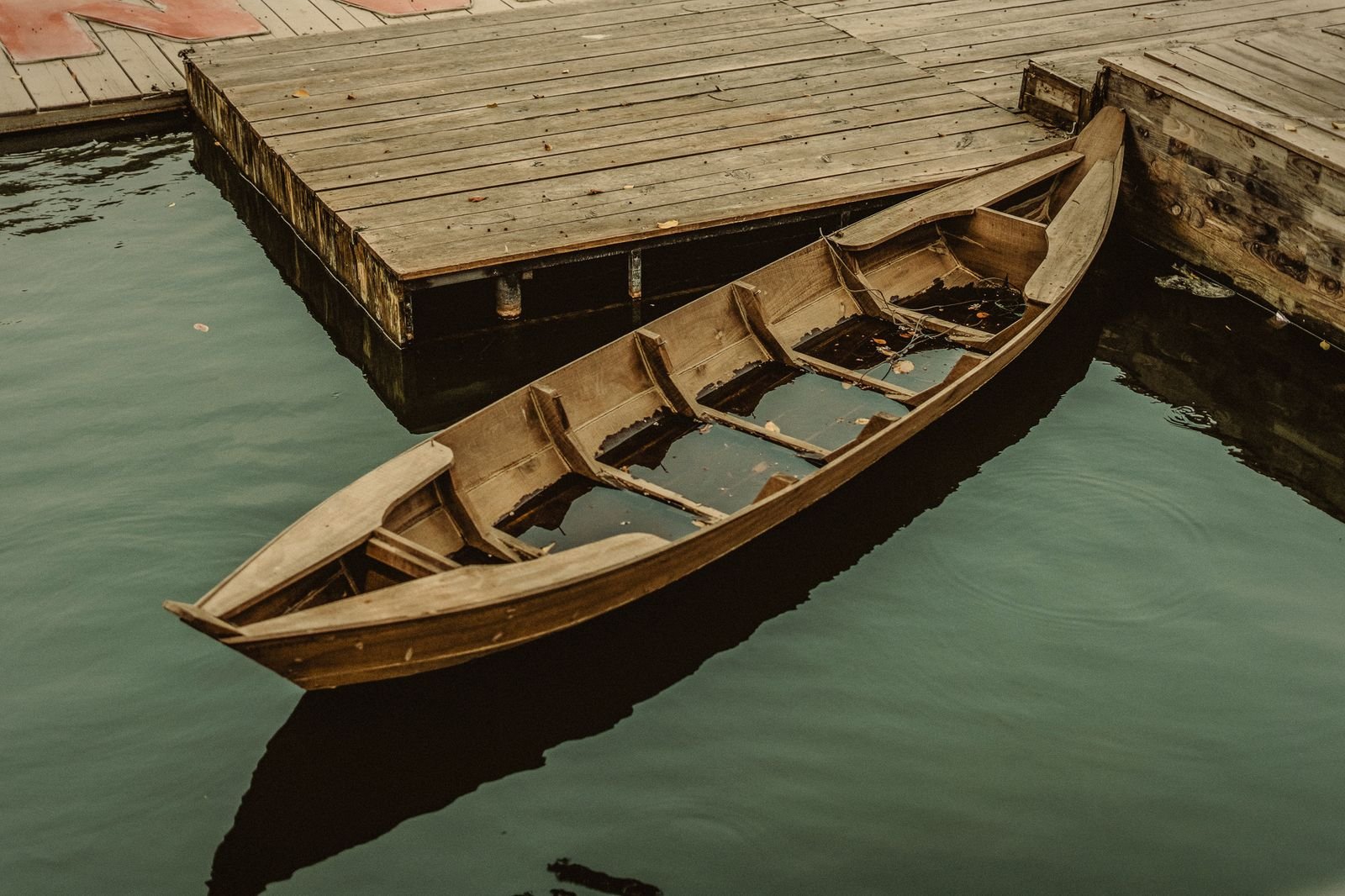
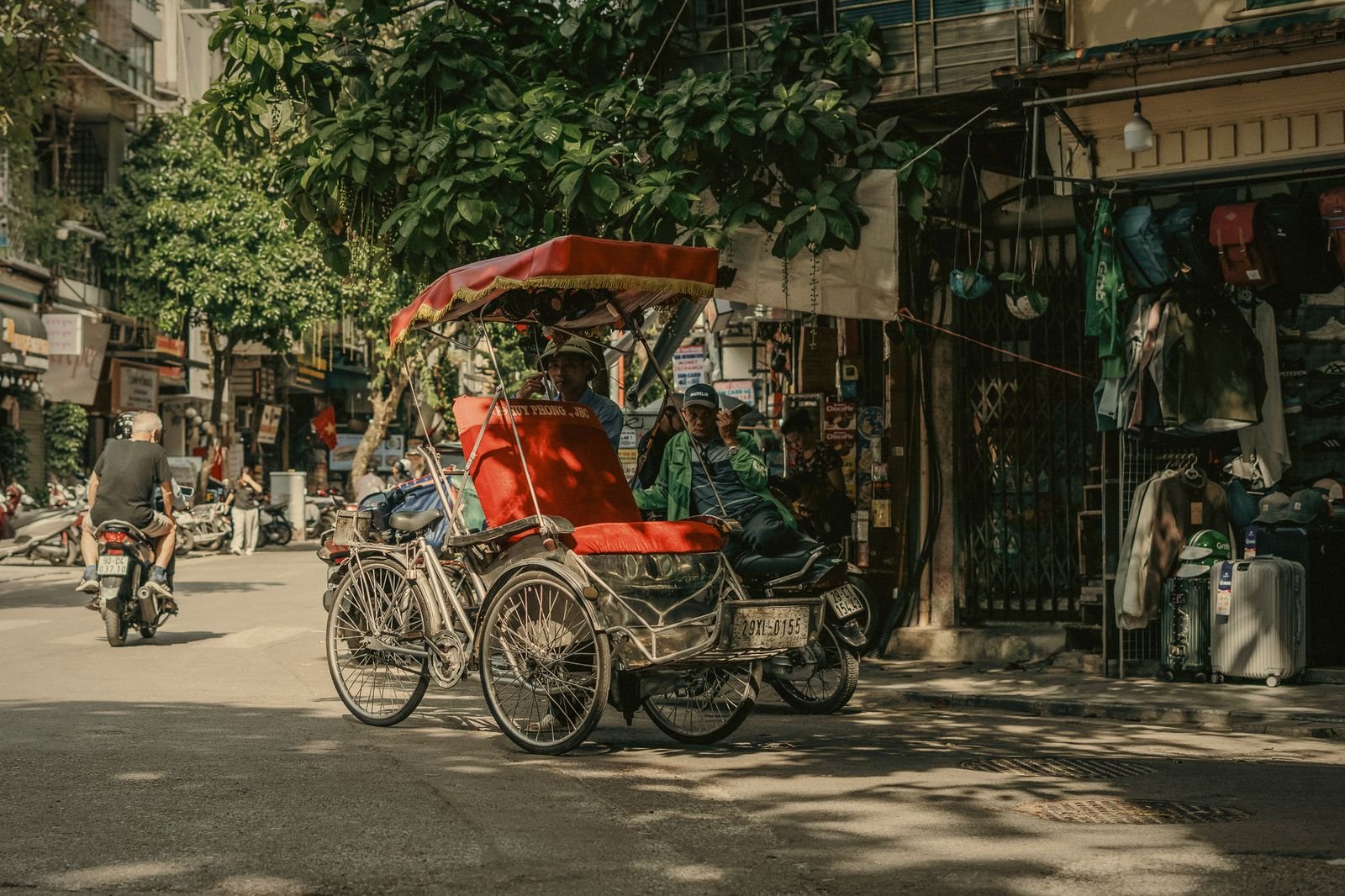
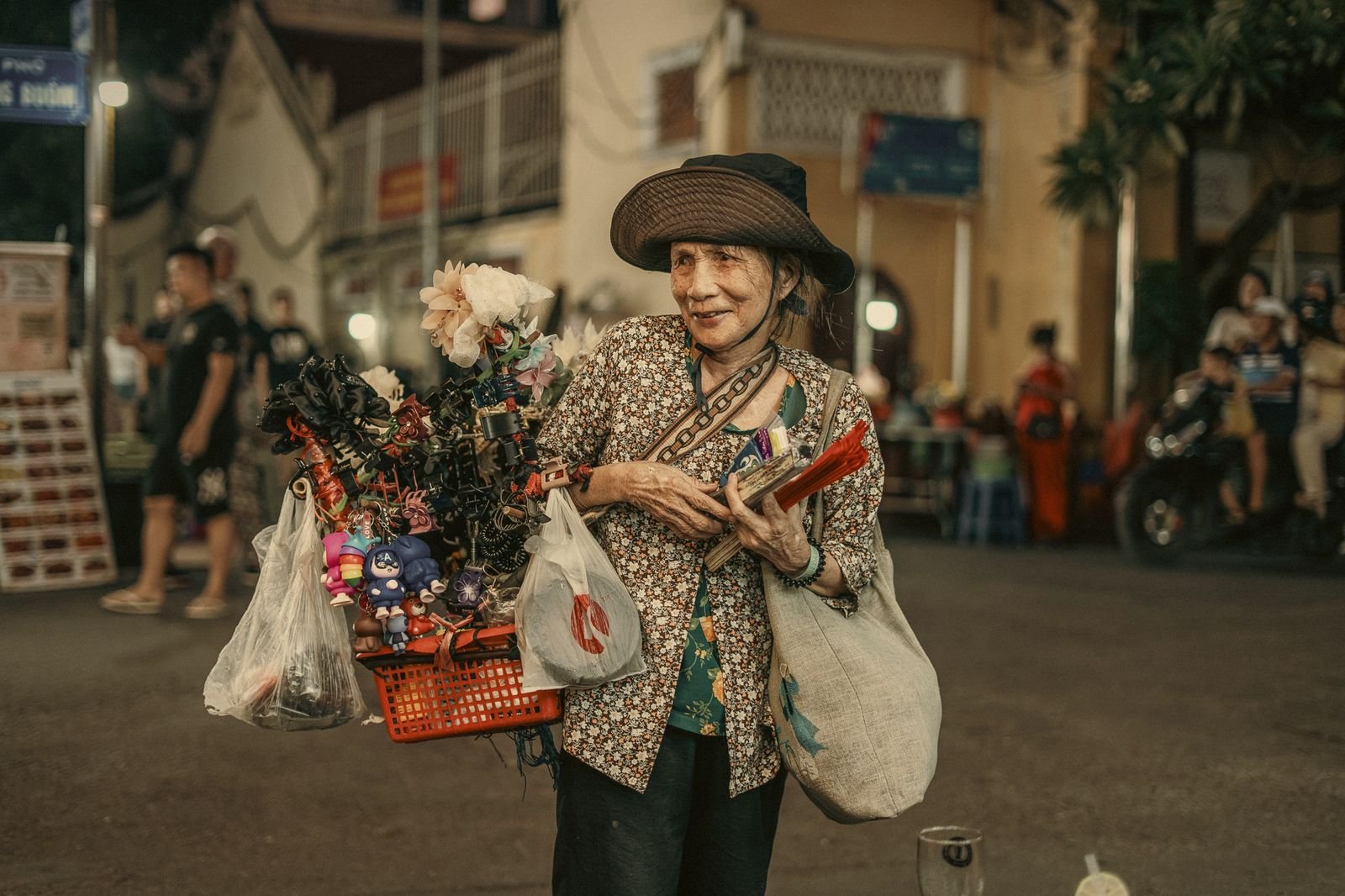
Field notes Hà Nội: culture and practical tips
Culture note
Street vendors, especially the women with shoulder poles, often prefer not to be photographed. Ask with a smile and a gesture, buy something, and respect a no. Keep your feet off small plastic stools on shared tables.
If you go
- To cross the street, walk at a slow, steady pace and don't stop suddenly; the traffic flows around you.
- Visit Hoàn Kiếm Lake before 7am. On weekend evenings the streets around it close to traffic.
- Hà Nội has four seasons. September is warm and humid with afternoon showers, and the haze softens the light beautifully.
Chapter seven Thailand 14 September
Pattaya
พัทยา12.93° N, 100.88° E
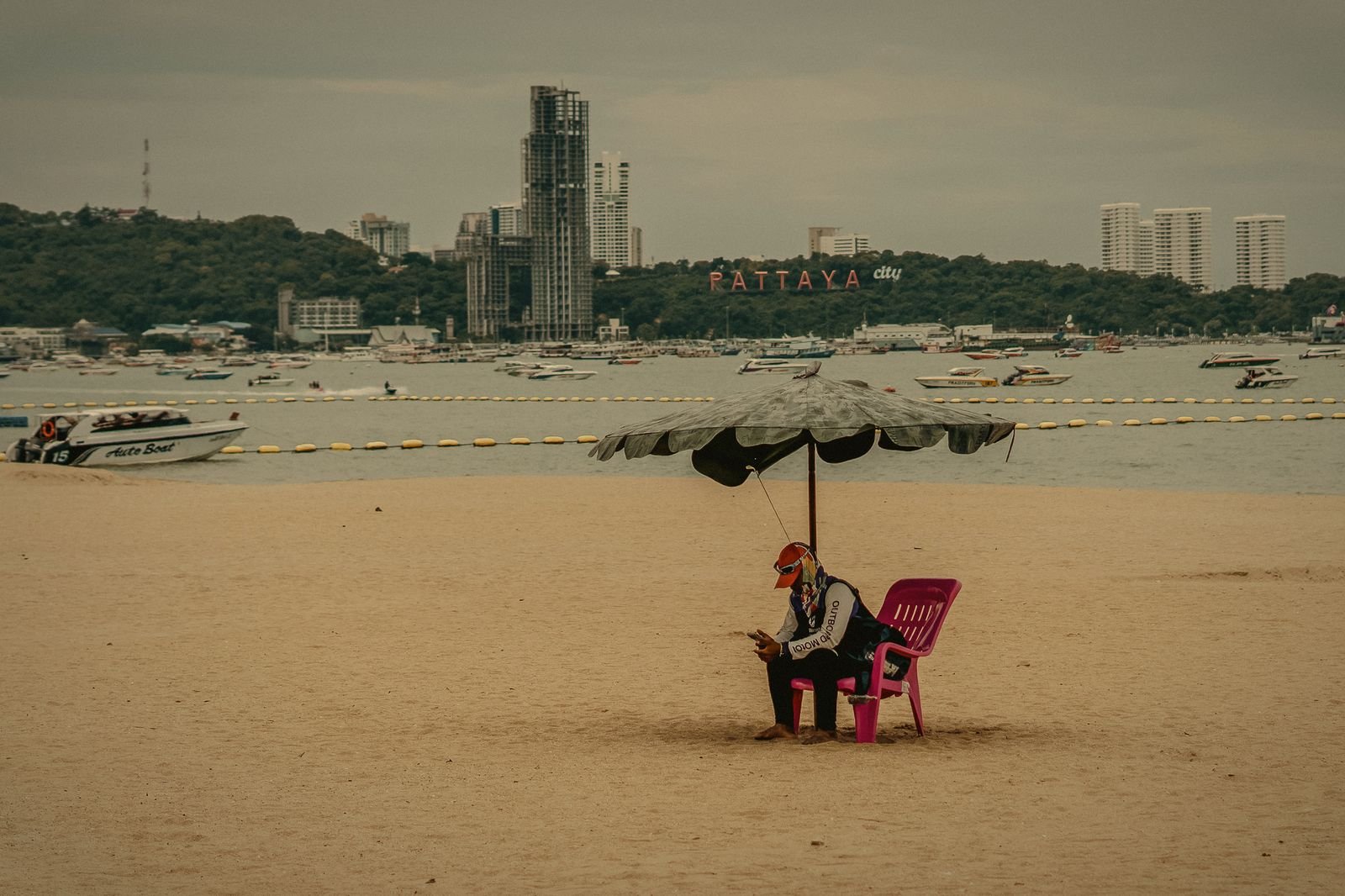
Plate 53A lone pink chair and umbrella on Pattaya Beach
Back in Thailand, we stopped for a day on the Gulf coast. Pattaya has a loud reputation, but on a cloudy Monday in the off-season it was almost empty: rows of folded umbrellas, parasails drifting above the bay, a man feeding pigeons under the palms. It was the quietest day of the trip and, in its own way, one of the most cinematic.
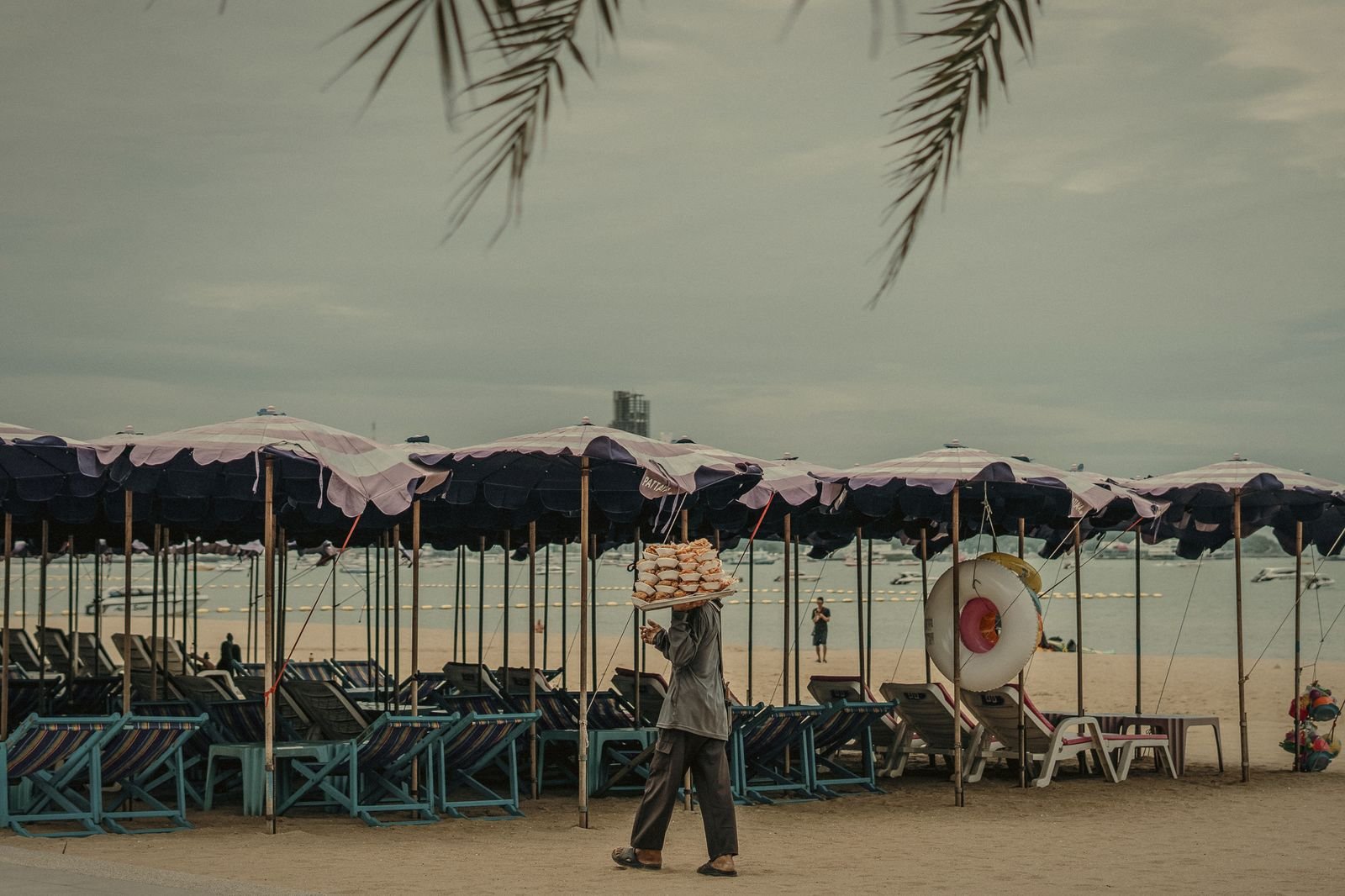
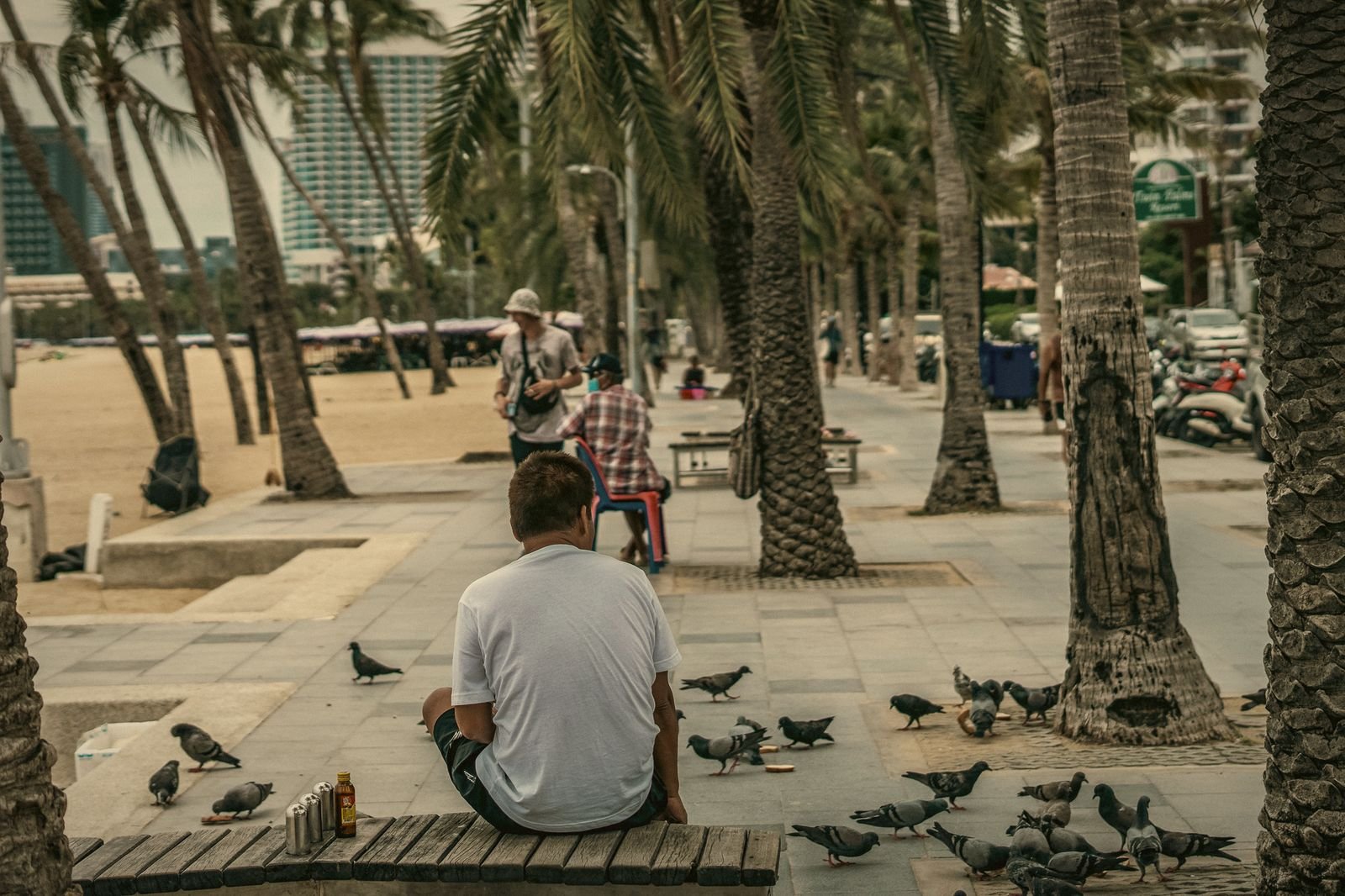
The quietest day of the trip and, in its own way, one of the most cinematic.
Field notes Pattaya: culture and practical tips
Culture note
Thai beaches are public. Many chairs and umbrellas are run by local vendors who rent them by the day, so ask before you sit.
If you go
- Pattaya is about two hours from Bangkok by road, an easy add-on before or after the capital.
- For a calmer coast, look beyond the main bay to Jomtien or the islands of Ko Lan offshore.
Chapter eight Thailand 16 – 18 September
Bangkok
กรุงเทพฯ13.75° N, 100.50° E
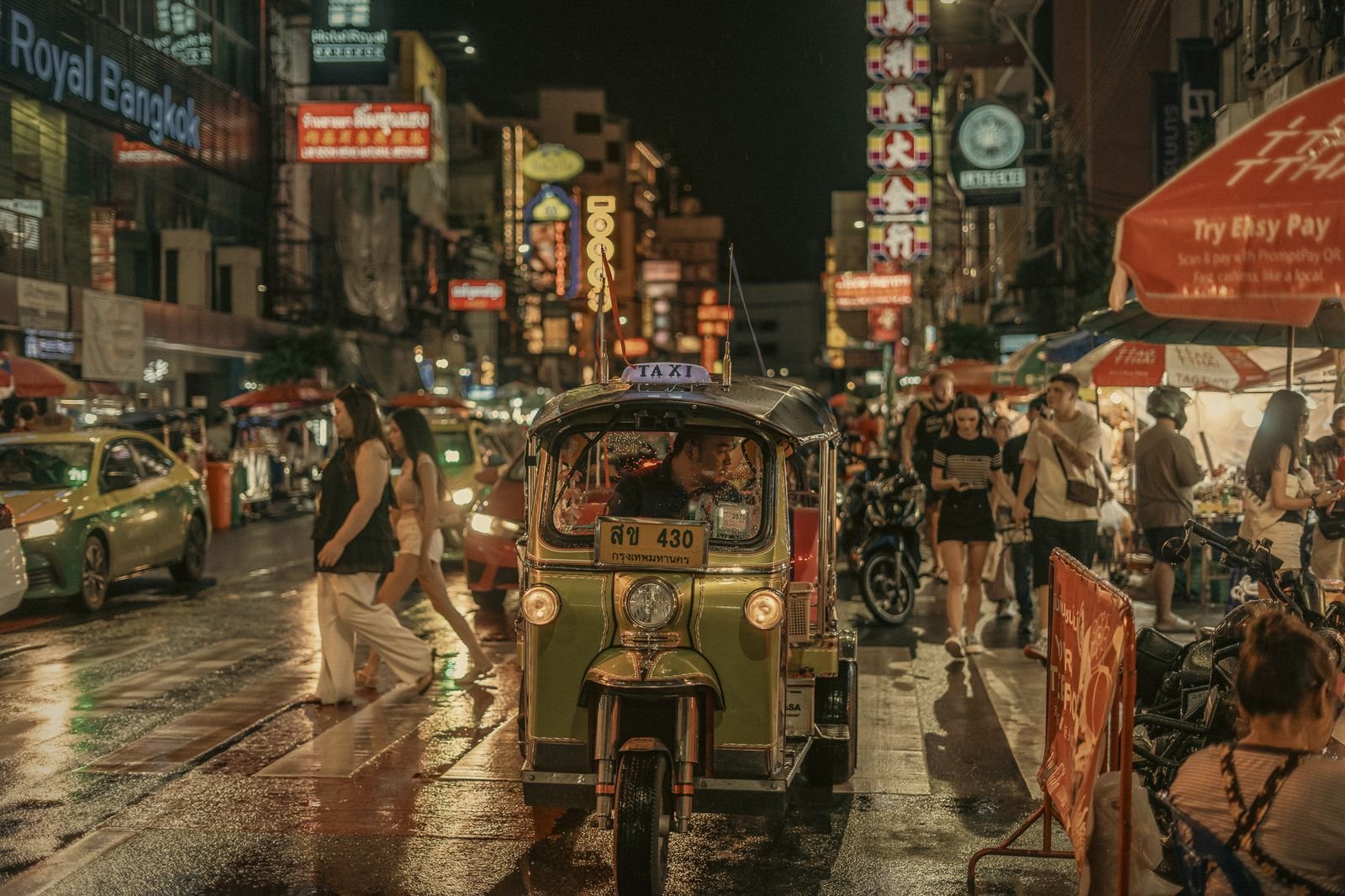
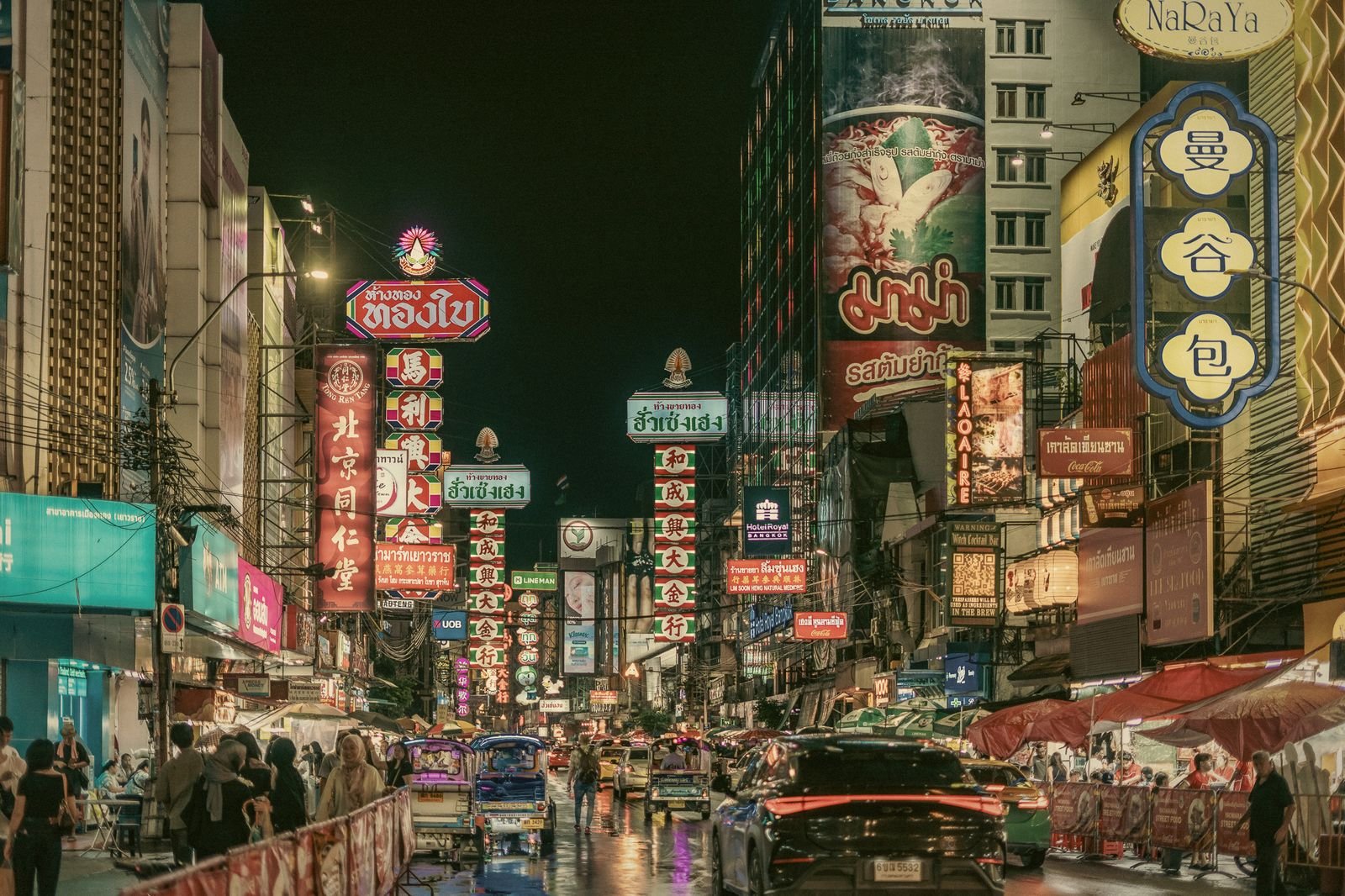
Plate 56A tuk-tuk on the rain-wet streets of Bangkok Chinatown at night
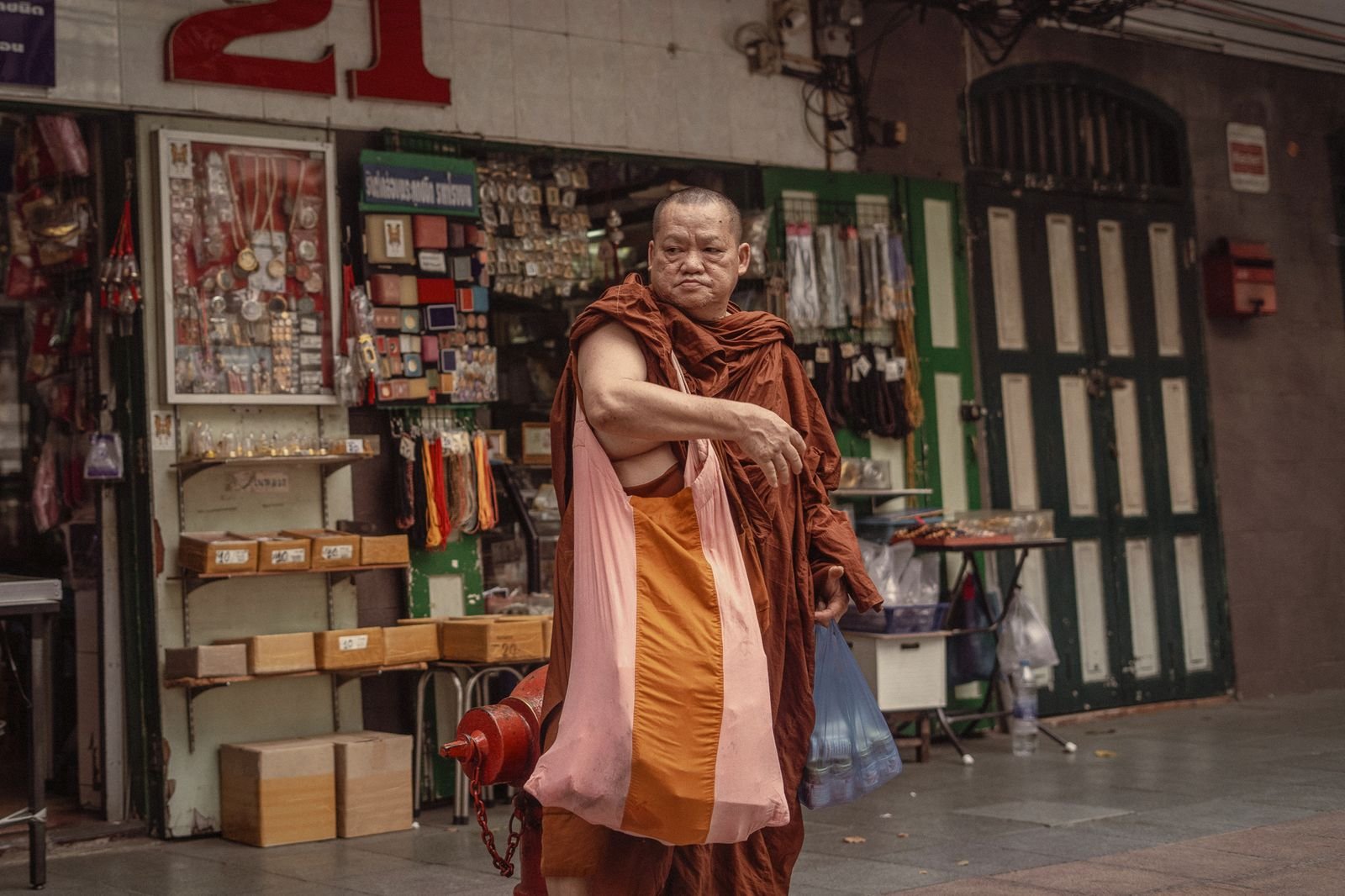
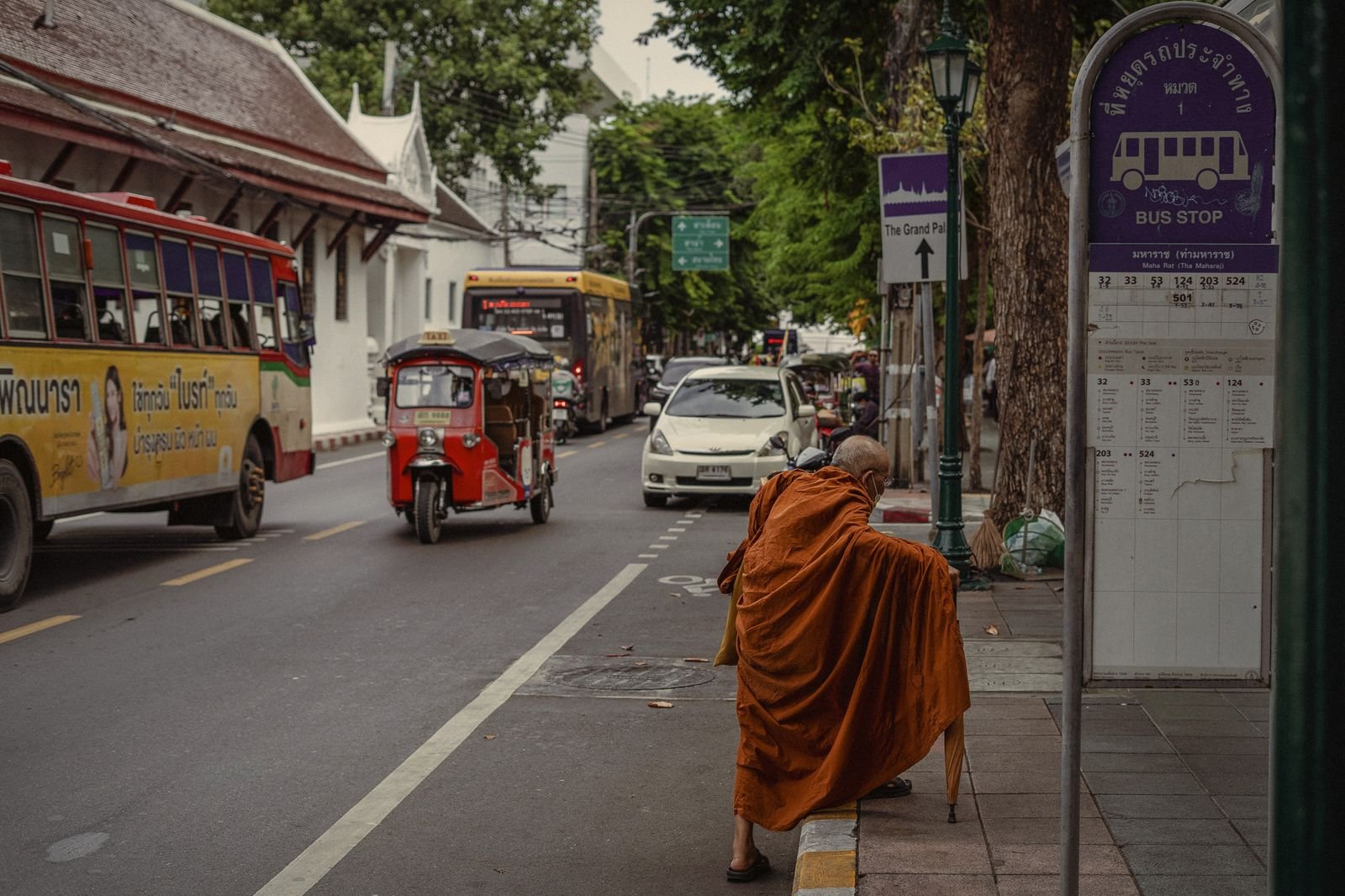
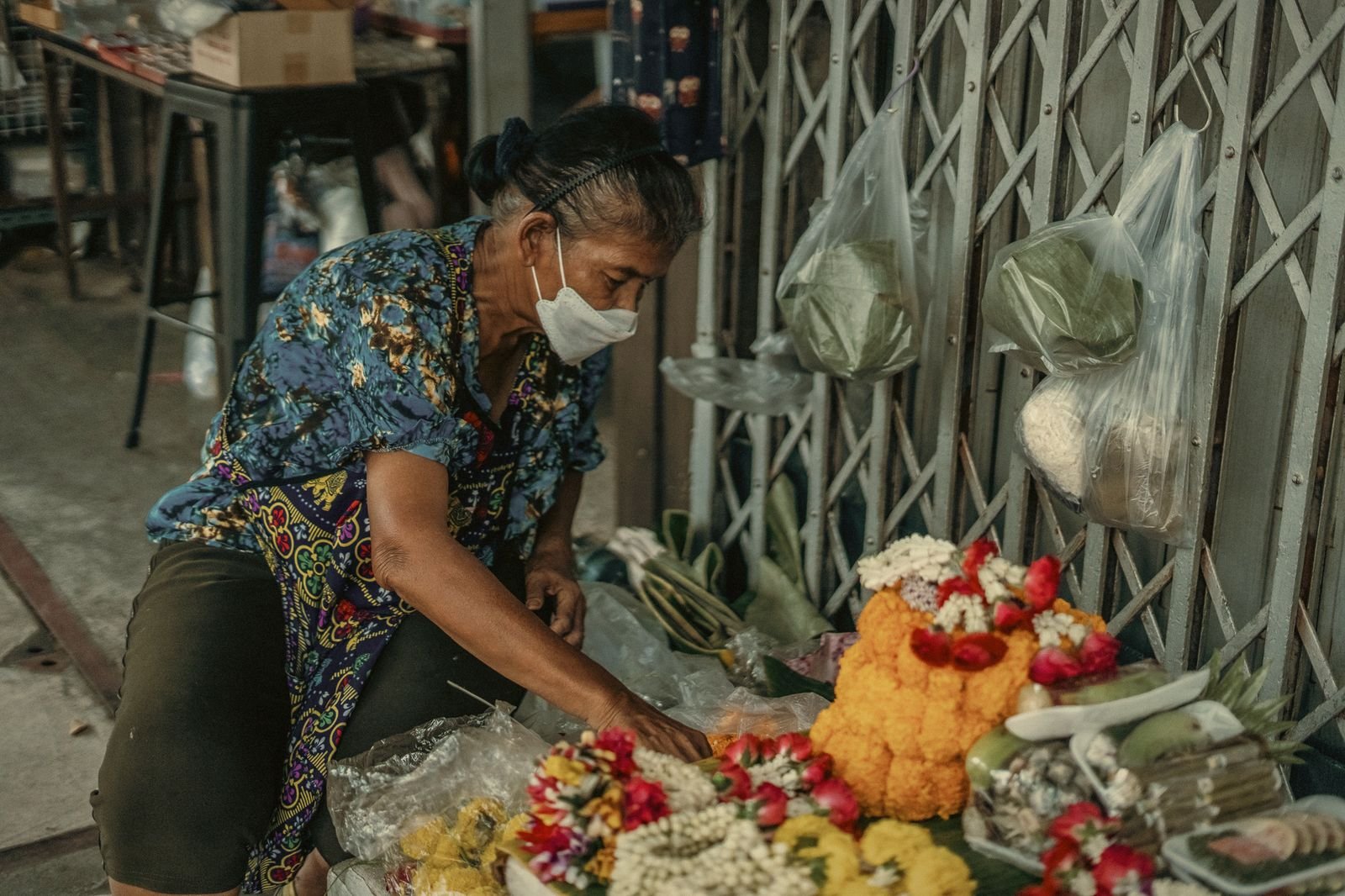
We ended where most Southeast Asia trips begin. Bangkok rewards slowness: the city is too big to see, so we chose a few neighbourhoods and walked. By day the old city around the temples is calm, all white walls, saffron robes and marigold garlands. Monks walk to the markets in the morning, and vendors thread jasmine and marigold into the offerings that end up on every spirit house in the city.
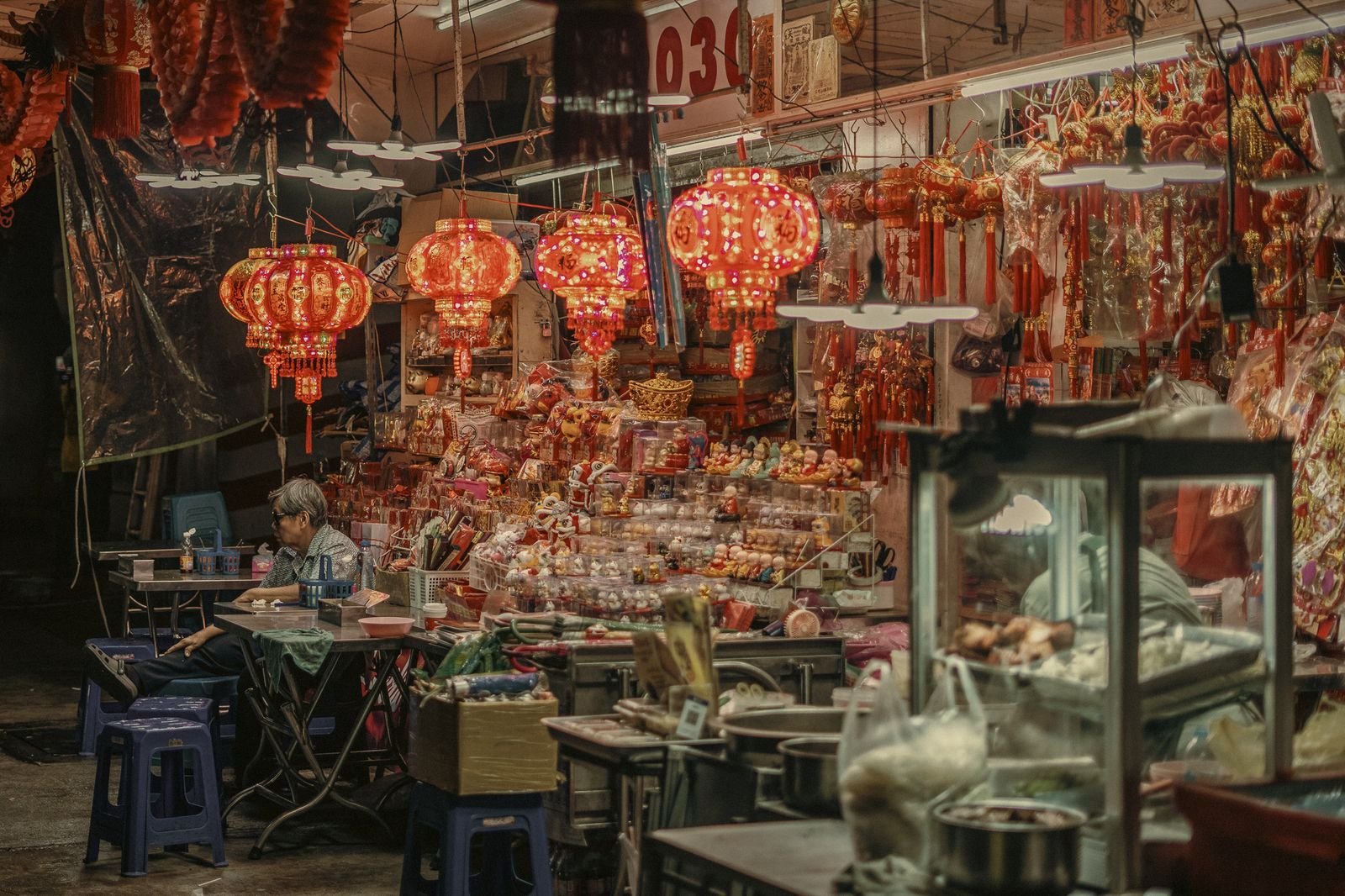
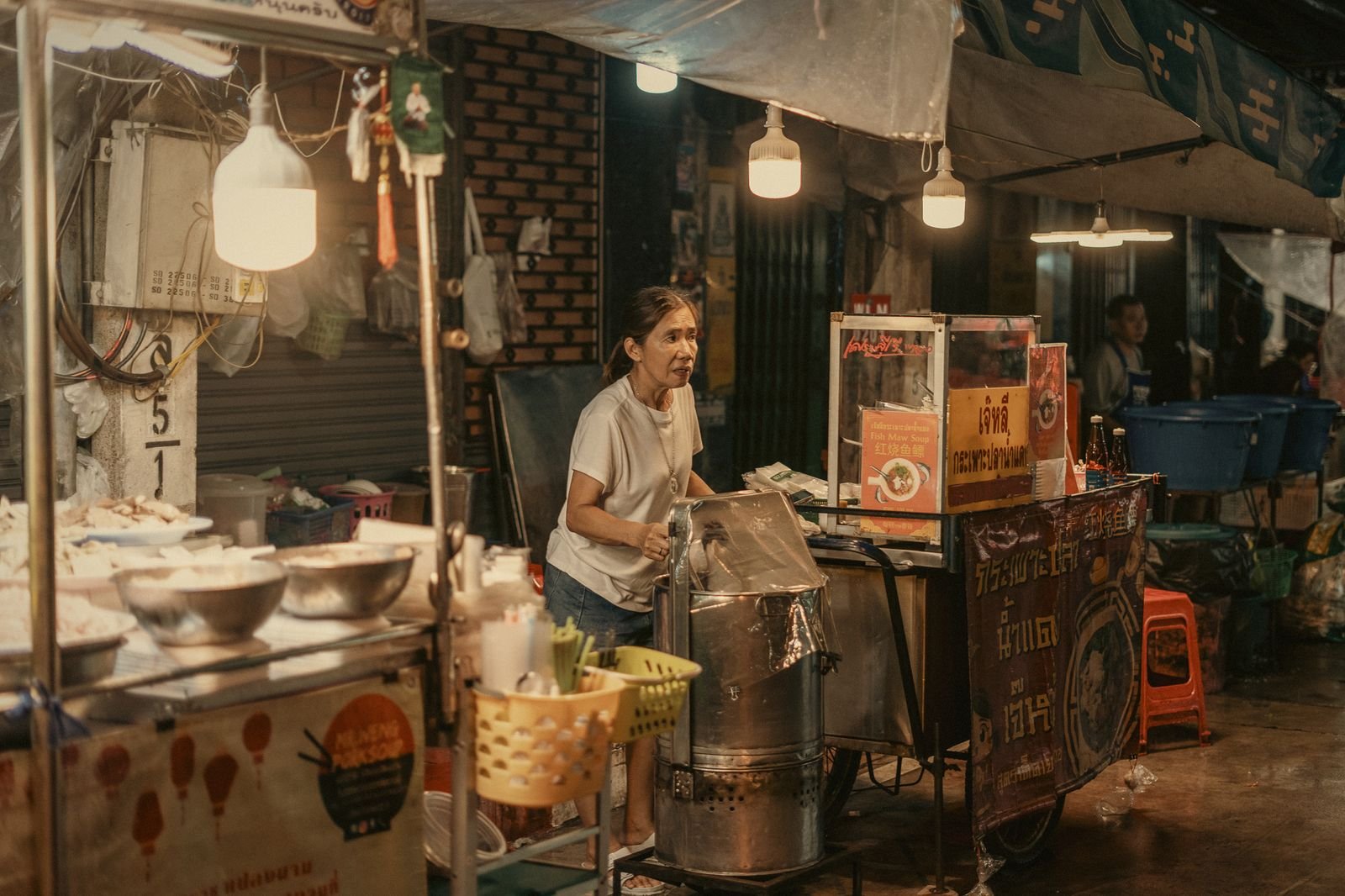
Red lanterns, steam, charcoal smoke, and the rain-wet road reflecting all of it.
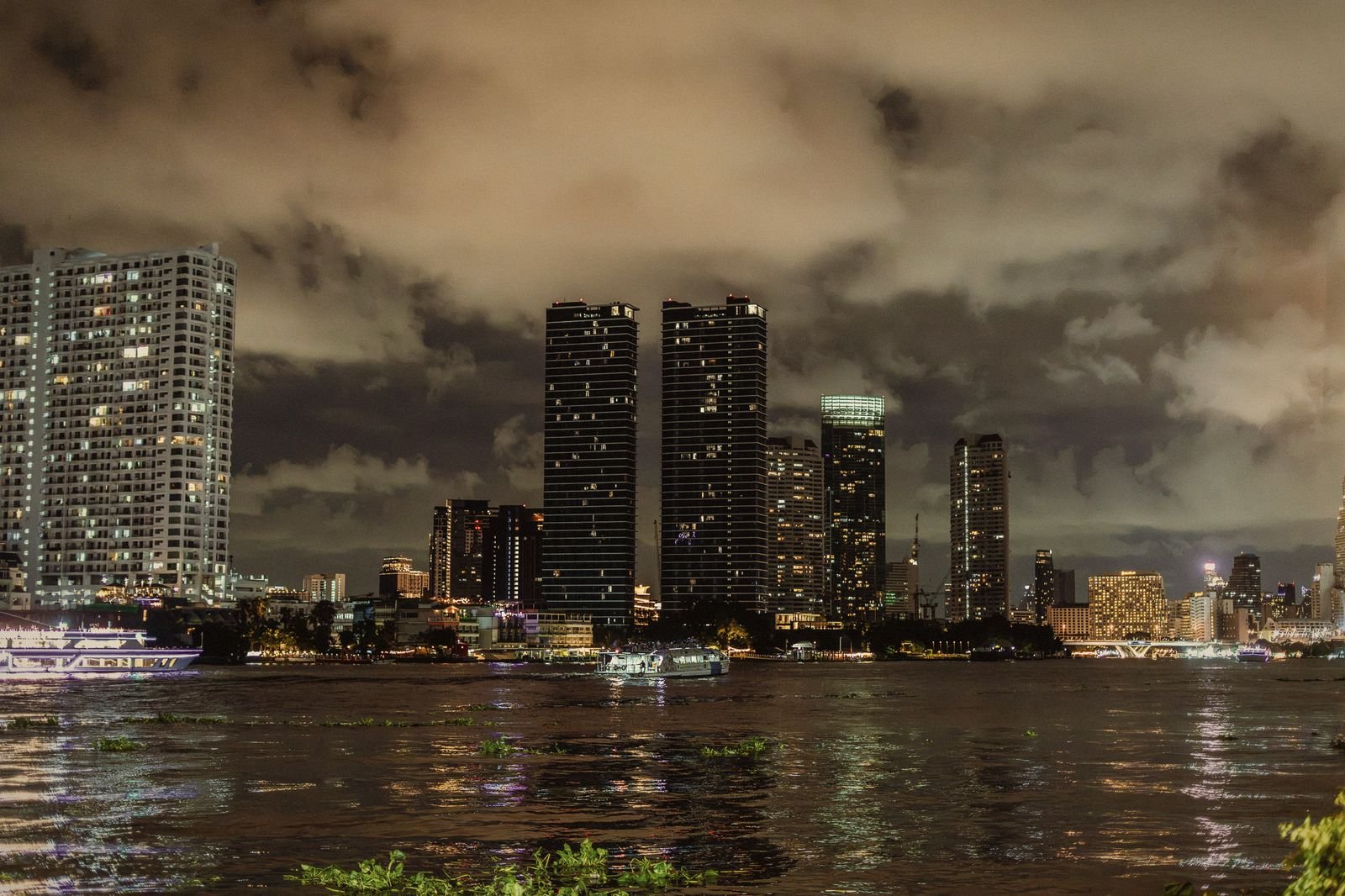
At night we went to Yaowarat, Bangkok’s Chinatown, where the neon signs climb the buildings and the street food stalls run until the early hours. Red lanterns, steam, the smell of charcoal and the rain-wet road reflecting all of it. Our last evening was spent watching the lights on the Chao Phraya, the river that carried this city’s trade for centuries, before the flight home.
Field notes Bangkok: culture and practical tips
Culture note
Women should not touch a monk or hand him something directly; place it down for him instead. In temples, cover shoulders and knees, take off your shoes, and never point your feet toward a Buddha image.
If you go
- Use the river boats and the BTS Skytrain to skip traffic; the Chao Phraya Express boat is also the most scenic way to reach the old city.
- Yaowarat's street food is at its best after 7pm. Many stalls close on Mondays.
- Spirit houses outside buildings are cared for daily. Don't move or touch the offerings.
Behind the images
Documentary travel photography on the road
We shot this trip the way we approach documentary commissions: a light kit, no added lighting and nothing staged. Two cameras, one for stills and one for moving image, and one rule, to ask before photographing anyone up close. The monsoon helped. Overcast skies work like a huge softbox, colours stay rich, and wet streets double every light source after dark.
Every frame was then graded to a single palette, warm and a little mysterious, built around lantern amber and deep shadow, so that eight very different places read as one story. The short films and the documentary were cut from the same footage. If you are planning documentary travel photography in Thailand and Vietnam, these are the habits that made the biggest difference.
Photography tips for Thailand and Vietnam
- Shoot the hour after rain. The air is clear, the streets reflect and people come back outside.
- Work blue hour in Hội An, about 30 minutes after sunset, when lanterns and sky balance.
- Arrive at temples and ruins at opening time for soft light and empty frames.
- Ask first, buy something from vendors you photograph, and accept a no with a smile.
- Carry a dry bag on longtail boats and silica gel in your camera bag; humidity is relentless.
- No flash in shrines or pagodas, and check current drone rules: both countries regulate them.
Further reading: the UNESCO listings for Hoi An Ancient Town and My Son Sanctuary, and the official tourism sites for Thailand and Vietnam.
What the trip taught us
Thailand and Vietnam share a monsoon, a love of rice and a deep layering of Buddhist, Hindu and Chinese tradition, but they feel very different on the ground. Southern Thailand is limestone, sea and Chinese shrines wrapped in incense. Central Vietnam is river light and the ruins of a lost kingdom. Hà Nội is the street, all day and all night. Bangkok holds a little of everything.
If you follow this Thailand Vietnam itinerary, go slowly. Pick fewer places, wake up early, ask before you photograph people, and leave room for the rain. Most of the images on this page happened in the hour after a storm.
Planning a Thailand and Vietnam trip: questions
How long should a Thailand Vietnam itinerary be?
Three weeks is a comfortable minimum for a combined trip. It lets you spend four or five days in southern Thailand, a week in central Vietnam and four days in Hà Nội, with a few days in Bangkok at the end. With two weeks, choose one coast in Thailand and either central or northern Vietnam.
What is the best route between Thailand and Vietnam?
Fly between them rather than going overland. A practical loop is Bangkok or Phuket, then Krabi, a flight to Đà Nẵng for Hội An and Mỹ Sơn, a domestic flight north to Hà Nội, and a flight back to Bangkok. Budget airlines connect all of these regularly.
Is August or September a good time to visit Thailand and Vietnam?
It is monsoon season on Thailand's Andaman coast, so expect showers, rougher seas and fewer crowds. Central Vietnam's rainy season usually starts in September and peaks in October and November, so early September is often still pleasant. Hà Nội is hot and humid with afternoon storms. The soft, cloudy light is a gift for photography.
What should I wear when visiting temples in Thailand and Vietnam?
Cover your shoulders and knees, remove your shoes before entering halls and pagodas, keep your voice low and don't point your feet at Buddha images. A light scarf and long trousers or a sarong in your day bag will cover every visit.
What are the must-see cultural experiences on this route?
Phuket's Por Tor (Hungry Ghost) Festival if your dates line up, a longtail boat around Krabi's limestone islands, floating a lantern on the Thu Bồn river in Hội An, the Cham temples of Mỹ Sơn, the Dragon Bridge fire show in Đà Nẵng, a dawn walk around Hoàn Kiếm Lake in Hà Nội, and street food on Yaowarat Road in Bangkok.
Is this route good for travel and documentary photography?
Yes. Southern Thailand gives you limestone seascapes, longtail boats and Chinese shrine festivals, central Vietnam gives you lantern-lit streets and Cham ruins, and Hà Nội and Bangkok are two of the richest street photography cities in Asia. Shoot early and late, ask before photographing people up close, and use the soft monsoon light rather than fighting it.
© 2026 Ghassen Oueslati. All photographs and film on this page are original work from the trip and may not be reused without permission.